
Miles Morrisseau
ICT
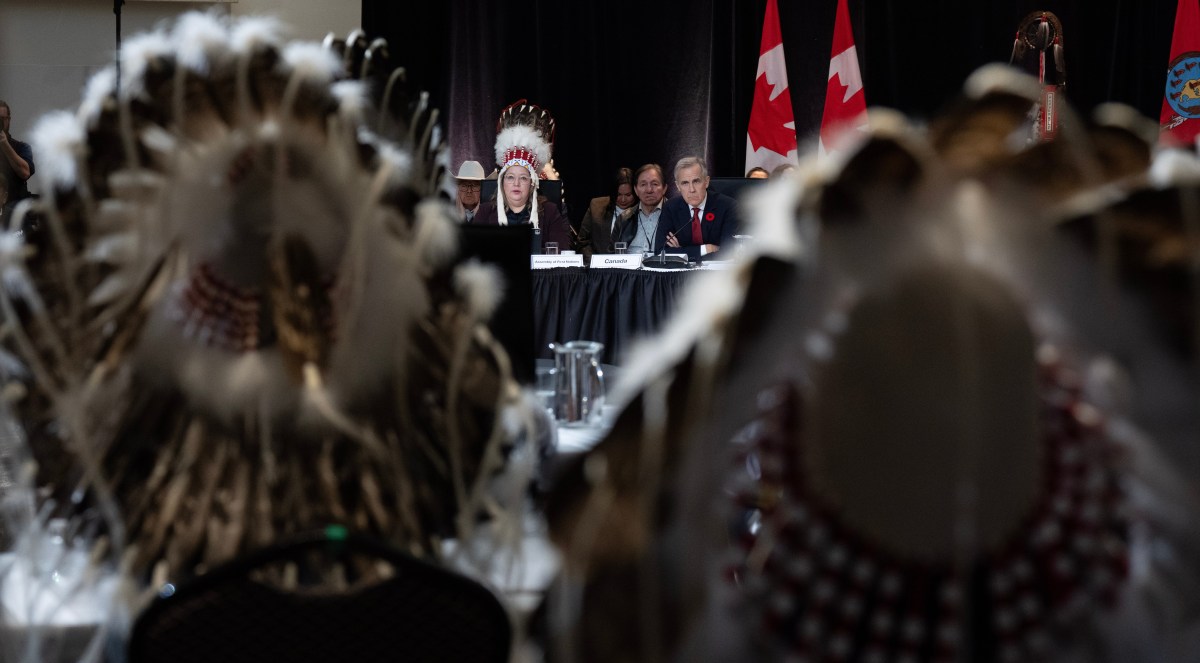
A historic gathering of First Nations leaders with Canadian and Provincial leaders was hosted by Prime Minister Mark Carney on October 26. It was the first such meeting in over two decades. Although it was considered a landmark gathering, the meeting was boycotted by many First Nations and skipped by a couple of provincial premiers.
Wab Kinew, Premier of Manitoba and the country’s first First Nations provincial premier, spoke to media before the meeting began and was asked about the historical nature of the gathering.
“It’s a great day to be Anishinaabe. It’s a great day to be Canadian. When we have everyone coming together it will make for a stronger Canada,” said Kinew. “It’s important for me to be here as a First Nations First Minister. First Nations First Minister meetings don’t happen all the time.”
Three of the 10 provincial premiers did not make it to the meeting — the newly elected premier of British Columbia Lorne Doerkson, Quebec Premier Paul St. Pierre Plamondon and Alberta Premier Danielle Smith.
Following an opening prayer by Algonquin elder Claudette Commanda, the Prime Minister made opening remarks.
“This is the first time in over two decades the first ministers and First Nations have met together. This is an important opportunity, yes to share perspectives to listen to learn but above all to commit to action,” Carney said. “So let’s seize this opportunity. We all bear heavy responsibilities to acknowledge many challenges, to recognize where there has been progress, to build on that progress and to act to improve outcomes for our peoples.”
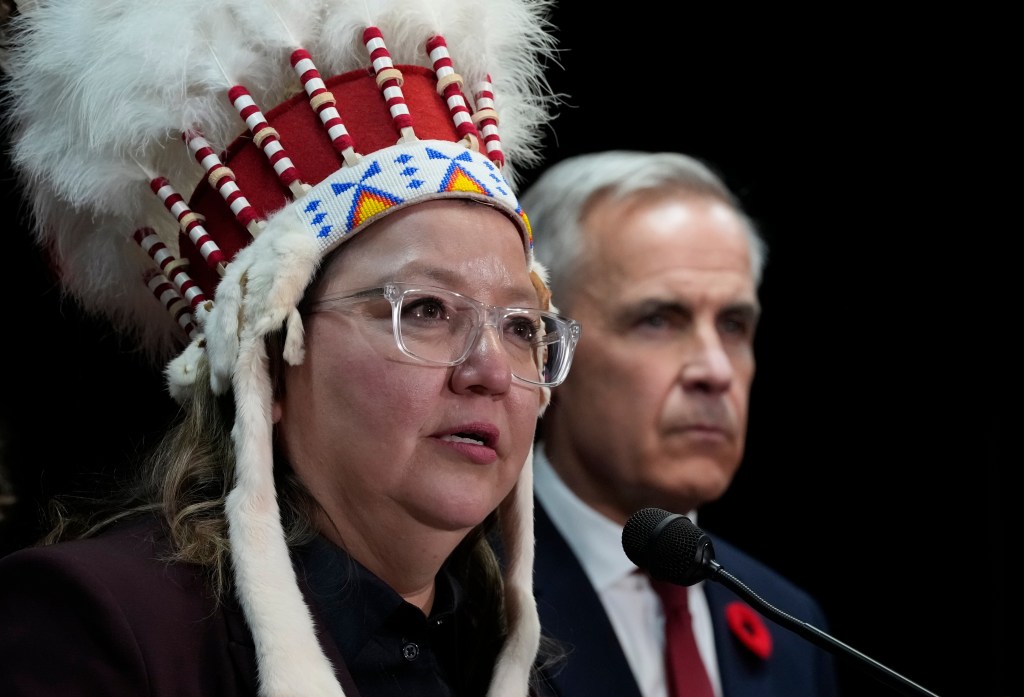
National Chief of the Assembly of First Nations, Cindy Woodhouse Nepinak stated in her opening remarks the importance of respecting the treaties and the need for solutions to be led by First Nations.
“We are here to build prosperity and well-being for our children in the next seven generations. It can’t just be about ramming through major projects as fast as we can; the national interest must also include the proposals, law and policy reforms that First Nations seek,” said Woodhouse Nepinak. “We have been persistent and patient but we cannot afford to wait many many years for results in implementation. It’s our turn to lead the change that we all need.”
Organizers of Idle No More, the grassroots movement that inspired demonstration and protest across Canada 14 years ago, weighed in on the meeting releasing a statement that Canada is once again pushing Indigenous people to make a stand.
“The conditions that gave rise to Idle No More in 2012 are confronting us again. Sweeping legislative changes, threats to environmental protections and government decisions affecting Indigenous territories without respecting the authority of the peoples who belong to those lands,” the statement said. “Idle No More emerged through grassroots organizing and public education bringing Indigenous and non-Indigenous people together to defend Indigenous rights and protect the living world. That responsibility remains urgent today.”
The statement was signed by the organizers of the movement as well as co-founders Sheela Maclean and Sylvia Mcadam.
On Oct. 22, the Onion Lake Cree Nation sent an open letter to the National Chief of the AFN stating that the organization “has no authorization to speak for, represent, negotiate for, give consent on behalf of, or ever enter into any declaration, agreement or commitment for OLCN in connection with the October 26, 2026 First Nations first ministers meeting,” the letter stated. “The AFN does not represent, speak for, or hold any authority or agency on behalf of OLCN. You are therefore directed to cease and desist immediately from making any such representation and acting or purporting to act on behalf of the OLCN.”
Sheldon Sunshine, Sturgeon Lake Cree Nation Sunshine and Deputy Grand Chief of Treaty, was speaking on behalf of representatives of Treaty 6, 7, 8 and the Blackfoot Confederacy who were at the meeting.
“I’ve heard people describe this meeting as historic, it certainly has a potential to be; but history will not remember us for gathering in a room taking photographs making speeches,” Sunshine said. “History will judge us by what we change. Prime Minister, premiers, we need your commitment for a different way forward one that is grounded in treaty, demonstrates respect for treaty nations and a shared responsibility.”
The Prime Minister’s office announced a number of initiatives and investments including the potential to repeal the Indian Act, a section of the Canadian constitution that controls much of First Nations life and administration.
There was an agreement to develop new revenue-sharing mechanisms, including the potential creation of a new First Nations Sovereign Wealth Fund. Prime Minister Carney directed the Minister of Finance to work with First Nations leaders to determine how to most effectively establish such a fund, with the clear goal of giving First Nations peoples a direct stake in major projects.
“Canada’s strength comes from what we can build and what we achieve together. That means working in partnership, government to government, to ensure that First Nations not only have the opportunity to build their community and country stronger, but to share in the wealth we create – including through new revenue tools such as a First Nations Sovereign Wealth Fund,” Carney said. “Today, the federal government, provinces, territories, and First Nations leaders built on our progress and raised our ambitions to build bigger and better, together.”
The Prime Minister announced that the federal government will amend the First Nations Fiscal Management Act to expand the First Nations Finance Authority’s lending authority. This will make it easier for First Nations to secure financing to invest in major projects and share in the returns.
There was also discussion on ways to recruit, train, and hire more First Nations workers to build these infrastructure projects and an investment of $260 million (CA) over four years to establish the new Partnerships for Indigenous Workforce Readiness Fund.
This will provide targeted funding to connect Indigenous Peoples with job opportunities created by major projects.
“Today marked more than a meeting. It marked a renewed commitment to work together, nation-to-nation, on the priorities First Nations have identified for our peoples and our communities,” said Mandy Gull-Masty, Minister of Indigenous Services, who is Cree and the first Indigenous person to head up the ministry. “The investments announced today will help First Nations strengthen emergency preparedness, improve community safety, and build the infrastructure needed for future generations to thrive. Most importantly, our discussions are helping to lay the foundation for a future where First Nations are full partners in Canada’s growth and prosperity.”
During the meeting, the leaders discussed the possibility of reforming or abolishing the Indian Act as part of a broader effort to modernize the Crown’s relationship with First Nations. The Prime Minister reaffirmed his commitment to charting a path beyond the Indian Act and is directing ministers to work in partnership with First Nations to develop that path.
There was also a commitment to closing critical gaps in emergency preparedness as First Nations continue to bear the brunt of the climate crisis with many First Nations communities devastated by wildfires and flooding. Carney announced more than $2.5 billion in funding over five years, and nearly $450 million in ongoing funding, through the Emergency Management Assistance Program, the Wildland-Urban Interface firefighting initiative, and the First Nations Fire Protection Strategy.
The government also announced more than $630 million over four years, alongside $250 million in ongoing annual funding, to renew and expand First Nations and Inuit Policing Program agreements. Based on a robust, needs-based costing assessment, these agreements will substantially close gaps between First Nations and non-Indigenous police services. The federal government also announced an additional $140 million over four years to fund crime prevention and culturally sensitive community safety initiatives in Indigenous communities across the country.
The announcements of the meeting were received positively by many First Nations representative organizations including the Chiefs of Ontario who released a statement shortly after the meeting wrapped.
“We are extremely pleased to hear numerous commitments coming out of today’s meeting with the Premiers and Prime Minister and are looking forward to starting the real work as true, equal partners,” the Ontario Chiefs stated. “A central outcome of the meeting was Prime Minister Carney’s commitment to work with First Nations to establish a process to repeal the Indian Act and address the recognition and implementation of First Nations’ inherent, Treaty, and constitutional rights.”
