
Miles Morrisseau
ICT
Desiree Dorian grew up in the rural Manitoba town of Dauphin, renowned as the Ukrainian capital of Canada. It is also home to the longest running country music festival in the country with artists like Luke Combs, Eric Church performing in the past and Jelly Roll and Cameron Whitcomb performing this past summer.
When Dorian, Opaskwayak Cree Nation, was young she would leave her house and walk out beyond the edge of town and take her place on the empty Countryfest stage and sing her songs to the fallow fields.
In 2014, she made it to the main stage of the festival sharing the stage with Grammy Award-winning artists, The Band Perry. She has travelled all over Turtle Island, across the ocean and released eight studio albums.
In 2025, her release “Remember Her Name” was nominated for five Manitoba Country Music Awards. She took home Album of the Year and Female Artist of The Year.
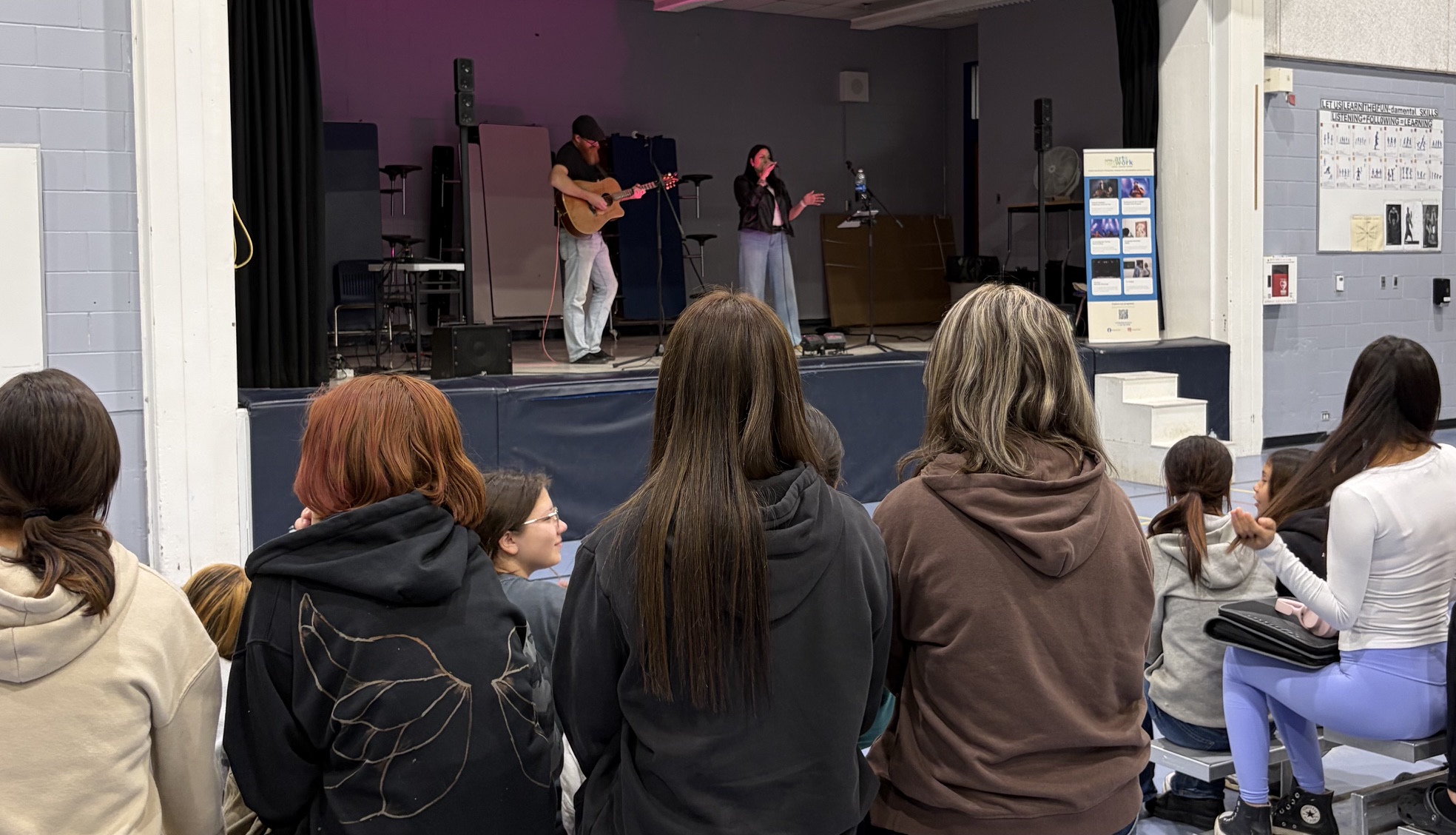
It is a story of dreams coming true and on Sept. 18, she shared her stories and songs with the junior high students at the Grand Rapids school at the final stop on her northern Manitoba tour.
Accompanied on guitar by the incredible Bram Avery, Dorian sang songs and told stories that reflected the reality of Indigenous life and the power of Indigenous dreams.
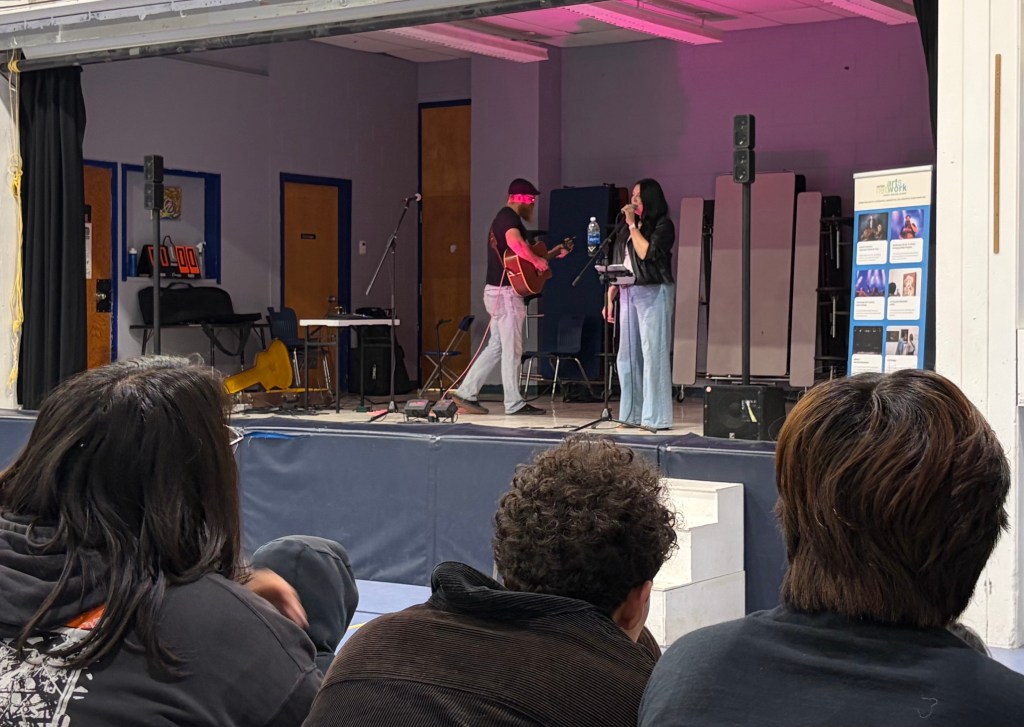
The tour made stops on First Nations and Indigenous communities across northern Manitoba with stops at Pine Creek First Nations, Chemawawin Cree Nation and Sapoteweyak Cree Nation before ending up in Grand Rapids where the students from Misipawistik Cree Nation attend school. Dorian reached a youthful audience that was connecting with the truth of music.
“I’m working primarily in the Americana roots country genre and I know that’s not super popular amongst young people now, they want to hear hip-hop and stuff like that,” Dorian told ICT on steps of the school gymnasium shortly after her performance . “I authentically and genuinely tell my story that is written throughout my songs and that seems to be resonating with them so that’s been really cool.”
The tour was funded by the Manitoba Arts Network through the Indigenous Voices program bringing Indigenous artists into First Nation schools.
“It’s so important to me as a First Nations woman who grew up in a rural area to do my part to bring music to the schools,” Dorian said. “I had a little girl give me a note the other day in Chemawawin Cree Nation and she told me that I was the first concert that she’d ever seen, you know…you have no idea as an artist what kind of impact you’re making on a young person.”
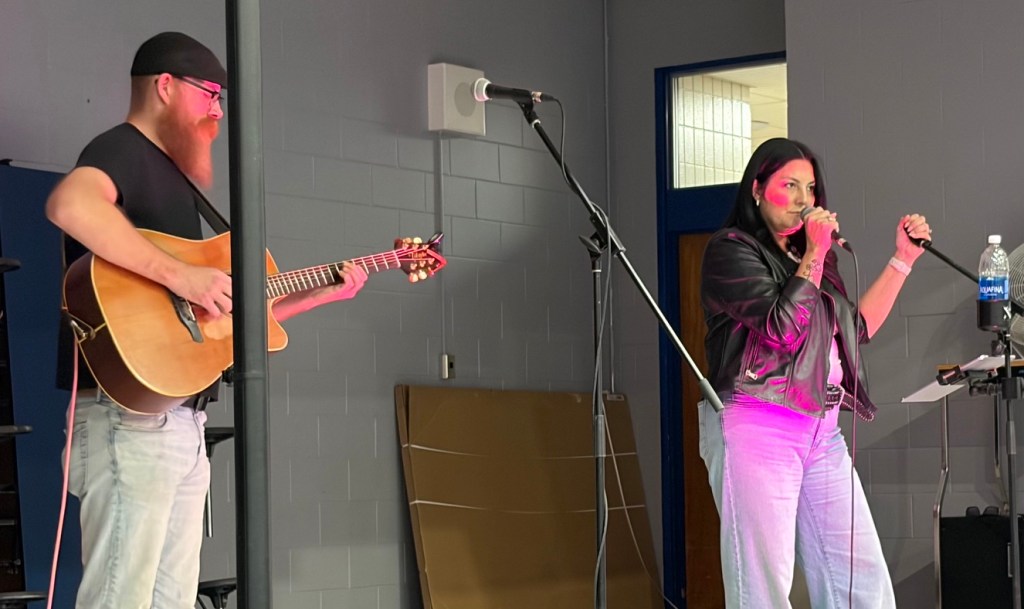
She continues to make a living at her dream job without giving up her day job, she is also a lawyer. Dorian is continuing to ride the wave of her success while giving back to the community.
“We had a heck of a year we went to the Reeperbahn Festival (Germany) and we were invited back to a music conference in Paris, France the following month and I’ve been as far South as New Orleans and I’ve been all across Canada,” Dorian says. “I was a kid that came from not a whole lot and didn’t get to travel growing up, didn’t get to see anywhere really beyond the perimeter of my small town and so the fact that music has taken me halfway around the world is…I still pinch myself, it’s almost unbelievable.”
Dorian recently covered a song by Metis songwriter Gloria Desjaralais.
“In the course of getting permission to record that song she talked to me about how First Nations, Métis, Indigenous artists weren’t allowed to play the ‘A clubs’ in Winnipeg,” Dorian said. “They were relegated to the Main Street clubs and then if you were a woman on top of that you were even less welcome in those spaces.”
Things have changed in the 30 years that Dorian has been in the music business.
“There were no funding opportunities. There wasn’t as much education or awareness around the real history of what happened to Indigenous people in Canada really until the last 15 years or so,” Dorian says. “There’s been a lot more support for you know including Indigenous artists in all spaces right across right across the country I would say.”
As the teachers hurry their students back to class, a handful of kids linger near the stage offering Dorian appreciation for her music and perhaps some dreams of their own.

