

Affirming Identities: This is part of an ongoing Underscore Native News series on how Native nations and community members in the Pacific Northwest are addressing threats to 2SLGBTQIA+ rights with continuing legislation and harmful rhetoric on a federal, state and local level.
Lyric Aquino, Underscore Native News + Report for America and Nika Bartoo-Smith, Underscore Native News + ICT
At the Affiliated Tribes of Northwest Indians’ September annual conference this year, the room broke into applause after unanimously passing a resolution opposing two Washington state initiatives that opponents have deemed anti-2SLGBTQIA+. Both measures are on the ballot this November.
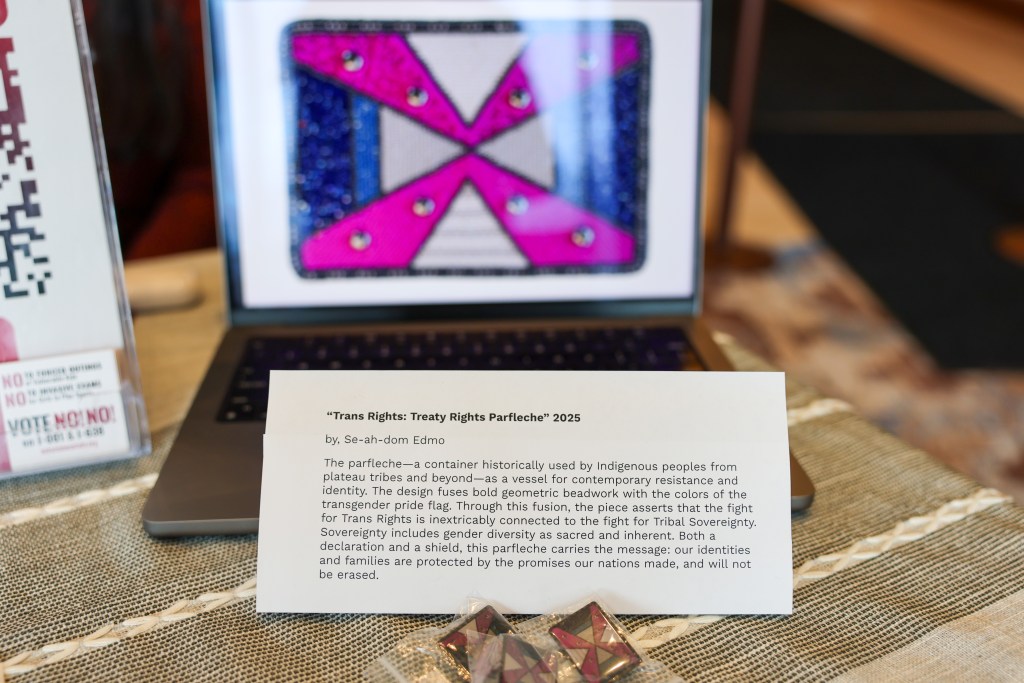
For Se-ah-dom Edmo, executive director of Seeding Justice, who was instrumental in bringing the ATNI resolution forward, this was a historic moment. Though she wasn’t in the room when it happened, Edmo was filled with tears of joy when she heard the resolution passed.
“I have been really thinking about this in terms of the context of this campaign for tribes and its meaning for tribal communities, in the long history of our commitment and work to the Two-Spirit community,” said Edmo, who is Shoshone-Bannock, Nez Perce and Yakama. “And even though this is not the ballot fight we wanted to have, it’s the one we need to show up for, as tribal people, as tribal nations.”
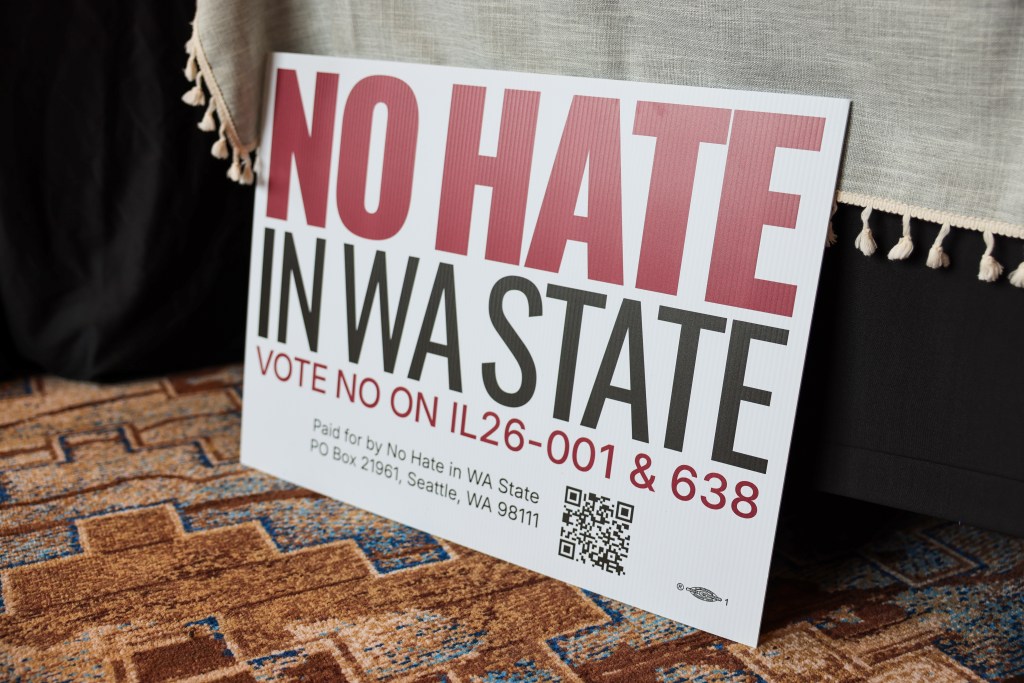
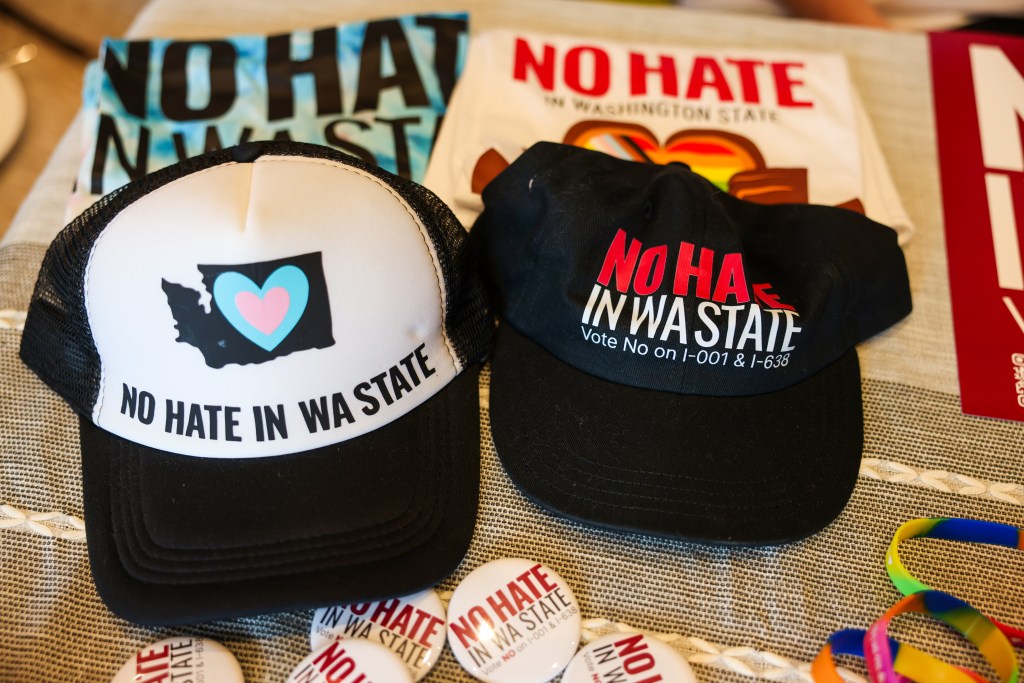
Edmo is a member of the No Hate in Washington State executive committee, the organization leading the campaign against Initiative No. IL26-001 and Initiative No. IL26-638.
Initiative 638 would ban transgender girls from participating in girls’ sports in Washington. Initiative 001 would open access to all of a students’ school records – including medical and mental health records – to parents or legal guardians, potentially increasing risks to student safety, especially for 2SLGBTQIA+ students without accepting homes.
For many Indigenous leaders and organizations, the proposed initiatives are a clear threat to Two-Spirit and Indigiqueer community members. The ATNI resolution intends to send the opposite message.
“It is saying ‘not only are we not standing for hate in our state and in our region,’ but we’re saying ‘our Two-Spirit and trans community members are valued assets of our community,’” said Shelby Chestnut, a citizen of the Assiniboine Nation on the Fort Peck reservation and executive director of the Transgender Law Center, reflecting on the passage of the resolution opposing these initiatives.
Chestnut added that Two-Spirit relatives are seeing attacks on all fronts, regardless of age.
“To say that we’re at a tipping point moment is an understatement. I think what we’re seeing is a full-out assault on trans identities, whether that’s at young people’s levels or whether that’s at [an] adult level,” Chestnut continued.
Initiatives at hand
The two ballot measures surround the rights of Washingtonian students, a population that Edmo noted is at risk for abuse and violence. In her eyes, Initiative No. IL26-001 puts students at risk and 2SLGBTQIA+ students at an even further risk.
“It actually weakens standards regarding assault and sexual assault in school,” she said. “So, if a child perhaps does not feel safe at home for any reason, whether it’s because of their identity or conflict with parents or caregivers, it would open records about any assaults that might take place to guardians or perpetrators or others.“
@indiancountrytoday A organization representing 57 tribal governments, passed a resolution opposing 'anti 2SLGBTQIA+' Washington Initiatives 638 and 001 which will appear on the state's ballots this year. Learn more at the link in the bio! ✍️ Reported by Nika Bartoo-Smith and Lyric Aquino | @underscore.news | Report for America #ictnews #indiancountrytoday #LGBTQRights #nativetiktok ♬ original sound – ICT
In the case of Initiative No. IL26-638, Lai-Lani Ovalles, the policy and coalition strategist for the NAYA Action Fund and the Native American Youth and Family Center, said excluding transgender girls from participating in girls sports is an act of forced isolation. Both organizations Ovalles works for endorsed the No Hate In Washington State campaign.
“Access to sports is such a big way for our community members to connect and express who they are,” she said. “And why should transgender youth have, or specifically transgender girls, no longer have access to that?”
Similar to Ovalles, Chestnut said eliminating transgender girls from sports sets a precedent for unequal treatment and is a dehumanizing practice.
“We need mainstream society to understand what it actually means to be supportive of trans kids playing sports, and at the end of the day, most kids play sports to be part of a team.”
Shelby Chestnut, Assiniboine Nation on the Fort Peck reservation, executive director of the Transgender Law Center
“We need mainstream society to understand what it actually means to be supportive of trans kids playing sports, and at the end of the day, most kids play sports to be part of a team,” Chestnut said. “When we’re telling young people that they don’t deserve to be part of a team, we’re essentially saying like your you maturing into an adult does not matter, and we don’t value you at the same way we value other kids, and ultimately these laws just hurt all people and not just trans people.”
By stripping away important access to socialization, Ovalles observed how this would impact confidence building opportunities and other benefits that come with participating in team sports as well as setting a precedent for the country as a “blanket ban” to transgender girls in youth sports.
“And it would, the way it’s written, outlaw case by case decisions,” Ovalles said. “So that’s really important to distinguish because right now in other states, when people are going against transgender girls playing sports, there’s a mechanism where they take it case by case, and this initiative would just say, ‘nope, we’re not going to do that. All transgender girls are not allowed to play school sports.’”
Edmo emphasized that across Indian Country, bodily autonomy is essential, particularly when looking at the history of distrust with institutions such as medical facilities and schools. She worries that the gential exams or genetic testing that could result from Initiative 638 deteriorate trust and a sense of bodily autonomy within schools. These types of exams or testing that could be required to comply with this initiative are not included in typical sports physicals.
“I think the bigger point to me is that it absolutely erodes educational institutions as a socially and psychologically safe learning environment,” Edmo said. “I think this brings up questions about whether or not a person and a child does have bodily autonomy and who gets a right to that, who gets believed, and why?”
‘We are all from Two-Spirit families’
For Edmo and many other Indigenous opponents of the two initiatives, support from tribal communities is obvious. Endorsing the No Hate In Washington State campaign herself, and leading the work on the resolution passed at the ATNI annual convention, was essential for Edmo as it continues the history of tribal communities showing up for Two-Spirit and Indigiqueer relatives.
“In Indian Country, we all know and love someone who’s a Two-Spirit person, and therefore, to me, that means that we are all from Two-Spirit families,” Edmo said. “So this impacts every family in Indian Country.”
Throughout Indian Country, Two-Spirit identities have rung in the ears of ancestors and relatives since pre-colonization. With over 150 pre-colonial tribes recognizing Two-Spirit identities, Ovalles said the traditions of the Two-Spirit community are seen as threatening during this current presidential administration.
“A lot of our tribes and tribal nations have such deep traditions of recognizing and honoring folks who identify as Two-Spirit or gender diverse,” Ovalles said, also acknowledging the attempt of colonization to erase this. “These laws are seeking to erase that connection, and that ability to self-identify and to honor all of our community members, in a way that demeans and belittles who they are.”
In her life, Edmo said she’s seen the shift in acceptance of Two-Spirit identities that have been continuously attacked by ongoing colonization and governmental influence.
“I think support for the Two-Spirit community through early colonization really went underground, and we knew that,” she said. “And my grandmothers and aunties used to say, “Oh, this is just how they are,’ and that’s how they would talk about a person who who might today identify as Two-Spirit or queer, and it was always said with love and protection, and not with disdain or shame, but really deep obligation to love and protect people.”
For Ovalles, young people getting the opportunity to express their gender identities is a newfound freedom that she hopes lasts.
“It’s so clear that young people, younger people nowadays, have come into a freedom to have, to identify as gender nonconforming, and it’s scaring the folks who don’t understand that and who don’t have a world view of acceptance,” she said.
Reflecting on the passage of the resolution opposing these two bills that passed at ATNI, along with the work of many Native-led organizations taking stances against these bills, Edmo remains hopeful.
“I really see tribes and tribal people gearing up for a fight around protecting this community with a very fierce and also deeply rooted ancestral response of ‘it is our obligation as allies and parts of Two-Spirit families to do this work,’” Edmo said.
The two ballot measures will be on the midterm election ticket regardless of the ATNI resolution being passed.
In Washington, the 18-day voting period begins Oct. 16. Election day is Nov. 3.
This story is co-published by Underscore Native News and ICT, a news partnership that covers Indigenous communities in the Pacific Northwest.

