Sandra Hale Schulman
Special to ICT
Missing children, sinister spirits, and surrealist realist Frida Kahlo are among the Indigenous stories making their screen debuts at the 2024 Sundance Film Festival, which kicks off Jan. 18 in Utah.
The Sundance Institute recently announced that eight Indigenous films are among the 82 films, eight episodic titles and a New Frontier interactive experience that have been selected for the 40th anniversary of the acclaimed festival.
SUPPORT INDIGENOUS JOURNALISM. CONTRIBUTE TODAY.
“The selection of Indigenous-made films at this year’s festival, our 40th anniversary no less, really showcases the strengths of our communities’ artists,” Adam Piron, Kiowa/Mohawk, director of the Sundance Institute’s Indigenous Program, told ICT.
“The ranges of genre and formats of these entries are a testament to how these filmmakers are innovating and expanding our traditions of storytelling, in ways that are unexpected and leave a lasting impression. We’re witnessing Indigenous cinema taking a step into a new era.”
Related stories:
—Indigenous films featured at 2023 Sundance Film Festival
—Sundance 2022 puts spotlight on Indigenous films
—‘Fancy Dance’ film moves to a new rhythm
The Indigenous films featured this year include four feature-length films – three of which are documentaries – and four short films. No Indigenous feature films were chosen for the dramatic film category, however, unlike last year, when the dramatic film, “Fancy Dance,” with Lily Gladstone, was among the offerings.
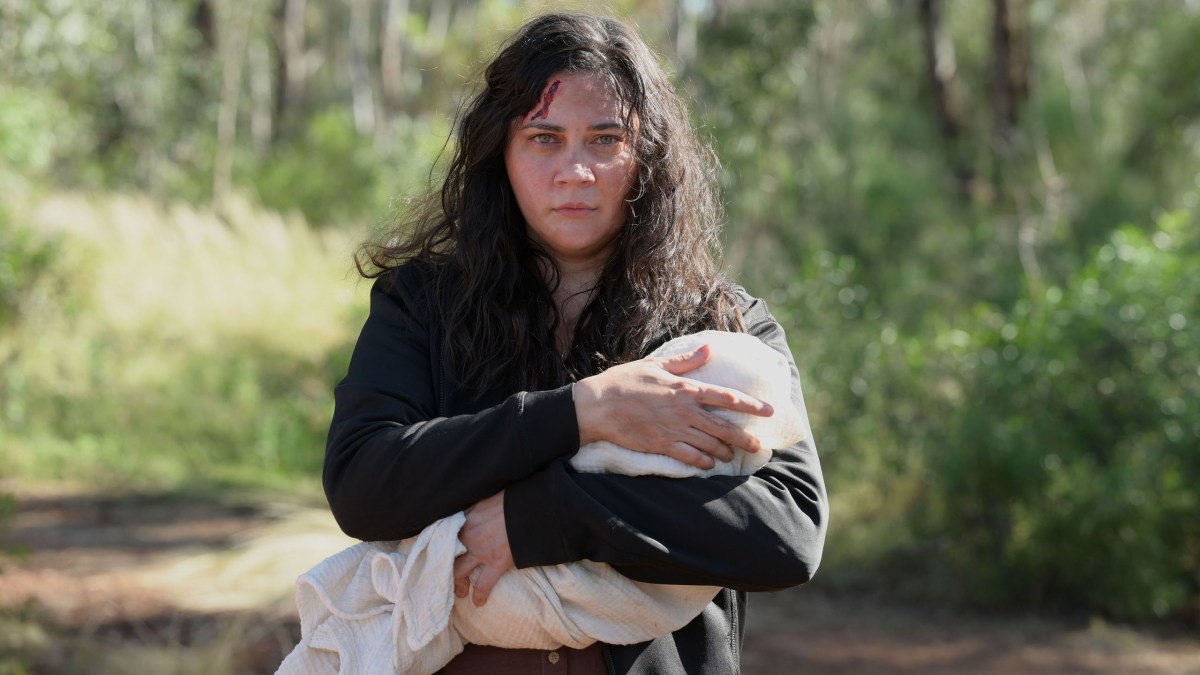
One feature-length Indigenous drama, “The Moogai,” by Jon Bell, is a psychological horror film that is included in the Sundance Festival’s “Midnight” category.

The festival runs through Jan. 28 in person in Park City and Salt Lake City, with a selection of titles available online from Jan. 25-Jan. 28. IllumiNative will also be returning with the Indigenous House on Main Street over the first weekend, with programming and panels to be announced.
This marks the 40th year the festival has brought audiences together in Utah and beyond online to celebrate Sundance’s rich history of supporting new stories and groundbreaking independent artists.
The selected films were chosen from a record number of post-pandemic submissions, with 17,435 submissions from 153 countries or territories, including 4,410 feature-length films. Of these feature film submissions, 1,679 were from the U.S., and 2,741 were international, with several titles identifying as Indigenous.
Here are the Indigenous films featured in this year’s festival.
Feature-length documentaries
—“Sugarcane” (U.S. documentary): An investigation into abuse and missing children at an Indian residential school “ignites a reckoning on the nearby Sugarcane Reserve,” according to Sundance. The film features artist Ed Archie NoiseCat, the father of filmmaker Julian Brave NoiseCat, both of the Canim Lake Band. Julian Brave NoiseCat co-directs the film with Emily Kassie, who noted on Instagram, “I am endlessly grateful that this story, that the community has been fighting to tell for generations, will finally be heard.”
—“The Battle for Laikipia” (world documentary): Unresolved historical injustices and climate change raise the stakes in a generations-old conflict between Indigenous pastoralists and white landowners in Laikipia, Kenya, a wildlife conservation haven.
—“FRIDA” (U.S. documentary): A film described by Sundance as “an intimately raw and magical journey through the life, mind, and heart of iconic artist Frida Kahlo,” is told through the artist’s own words. The story, which includes animation, is drawn from the diary, letters, essays and print interviews with Kahlo, who was of Mexican, German and Purepecha descent. The film is directed by Carla Gutiérrez, a Latinx immigrant from Peru, who edited the Oscar-nominated films, “RBG” and “La Corona.”
Feature-length film
—“The Moogai” (Midnight category): This psychological horror film tells the story of a young Aboriginal mother who believes a malevolent spirit is trying to steal her new baby. The film by Jon Bell, Bundjalung, is adapted from his award-winning 2020 short film and draws from Indigenous lore to tell a supernatural tale of a child-stealing spirit.
Indigenous short films
—“Baigal Nuur – Lake Baikal“: The formation of Lake Baikal in Siberia is reimagined in this short film that features the voice of a Buryat woman who recalls some words in her endangered Buryat-Mongolian language.
—“Bay of Herons”: The power of nature and regular change of seasons set the tone for this expansive visual essay that explores the complex emotions of a Mi’kmaq man who is witnessing the natural destruction of his homelands.
—“Ekbeh”: A chef learns to prepare the family’s traditional gumbo recipe while sharing stories about their grandparents to help preserve Indigenous heritage. The film is directed by Mariah Eli Hernandez-Fitch of the United Houma Nation in Louisiana.
—“A Winding Path”: The film tells the story of Jenna Murray, Eastern Shoshone, a medical student who begins to reconnect with her tribal lands after returning to the Wind River Reservation after her grandfather’s death.
More info
The Sundance Film Festival offerings are available through In-Person Ticket Packages and Passes and Online Ticket Packages and Passes, which are currently on sale. Single film tickets go on sale Jan. 11 at 10 a.m. MT.
Films will debut in Park City starting Jan. 18, with additional showings in Park City and Salt Lake City over the course of the festival ending Jan. 28. Select titles also become available online beginning Jan. 25, including all competition titles (U.S. Dramatic, U.S. Documentary, World Cinema Dramatic, World Cinema Documentary, and NEXT), as well as additional selections from the feature, episodic, and shorts programs.
Audiences can experience the curated online selection exclusively via festival.sundance.org.
Update: This story has been updated to note that Adam Piron is director of the Sundance Institute’s Indigenous Program. He prevously was associate director.

Our stories are worth telling. Our stories are worth sharing. Our stories are worth your support. Contribute $5 or $10 today to help ICT carry out its critical mission. Sign up for ICT’s free newsletter.