Deusdedit Ruhangariyo
Special to ICT
Around the world: An Indigenous alliance spanning borders unites to protect the Amazon, Tibetans press British Museum for apology over “Xizang’” usage, and advocates demand closure of unit 18 in Western Australia.
PERU: Alliance fights to protect Amazon
Indigenous leaders and civil society organizations from Ecuador and Peru are working together to safeguard more than 35 million hectares (86.5 million acres) of the Amazon rainforest, Mongabay reported on Dec. 23.
Uyunkar Domingo Peas of Ecuador’s Achuar and Wrays Pérez of Peru’s Wampís traveled drought-stricken rivers to visit Kandozi and Kichwa communities, advancing efforts to safeguard 35 million hectares (86.5 million acres) of interconnected territories, home to 600,000 people across 30 Indigenous nationalities.
These communities have long been connected by the rivers that sustain their lands and cultural traditions.
“Our belief is that the Amazon is a living being with a spiritual connection to Indigenous life,” explains Uyunkar Domingo Peas Nampichkai, an Achuar leader from Ecuador. “We must unite to confront the climate crisis that is threatening our world and our planet, or we will perish.”
Nampichkai and Wrays Pérez Ramírez, a Wampís leader from Peru, have joined forces as president and vice president of the Sacred Headwaters Alliance. They share a deep connection rooted in their cultural and spiritual ties to the forest. Both have witnessed the growing threats to this transboundary region, including deforestation from oil drilling, mining, logging and drug trafficking, as well as the devastating impacts of climate change.
“When I first met Wrays, we instantly connected,” Nampichkai recalls. “For us, the forest is a treasure trove of ancestral knowledge, and that shared understanding strengthens our fight. … Domingo is a visionary, always looking to the past to guide the future. We both believe we must protect the Amazon before it’s too late.”
Their current journey underscores the urgent challenges they face. After engine trouble delayed their expedition, the leaders reached Lake Rimachi, a critical resource for the Kandozi people. The lake, one of the largest in the Amazon, is shrinking due to sediment buildup from years of drought. This threatens not only fish populations but also the broader ecosystem. “This lake is the womb of the Earth,” Pérez Ramírez says, highlighting its role in supporting biodiversity, regulating water cycles and mitigating climate change.
As they met with communities to discuss local environmental crises, the leaders also reflected on the spiritual connection Indigenous people have with their rivers. “The river has wisdom; it carries a spirit,” Nampichkai says. “It connects me to my ancestors and my grandchildren.” Pérez Ramírez, too, emphasized the importance of involving the younger generation in their efforts. “Everything we do is for them,” he says.
Back in Wampís territory, Pérez Ramírez expressed concern about the rise of illegal gold mining along the Marañón and Santiago Rivers. Mining has destroyed forests and polluted water with mercury, endangering fish – a key food source for local communities.
“This area has been neglected by the state,” he notes, pointing to the lack of government resources to combat illegal activity. In response, the Wampís have established their own monitoring systems to protect their land. “We won’t let this region turn into another disaster like Madre de Dios,” Pérez Ramírez says.
Returning to his Achuar community, Nampichkai was greeted warmly but also faced the reality of climate change. A recent windstorm had uprooted trees and damaged farms – an event previously unheard of in the area. “We’ve never seen anything like this before,” said a local teacher.
For both leaders, the link between preserving forests and combating the climate crisis is undeniable. At COP26 in Glasgow, they warned of the Amazon’s precarious state and called for global action. Despite commitments to halt deforestation, progress has been minimal. “We must act now to protect our forests,” Nampichkai urges. “This is a fight for our future and for the survival of the planet.”
TIBET: Tibetans press British Museum for apology
The British Museum’s labeling of Tibetan artifacts with the term “Xizang” in its Silk Roads exhibition has sparked strong criticism from Tibetans and human rights groups. They have demanded the removal of the Beijing-promoted term and a formal apology from the museum, Radio Free Asia reported on Dec. 24.
Using “Xizang” – a term officially adopted by China in 2023 to refer to Tibet in all its documents – aligns with Beijing’s efforts to diminish and erase Tibet’s cultural and historical identity, critics argue. Advocates insist that the British Museum should exclusively use the term “Tibet.”
Earlier this year, France’s Musée du Quai Branly-Jacques Chirac faced similar backlash for using “Xizang” in its exhibits. Following weeks of protests and petitions by Tibetans, the museum announced in October that it would revert to using “Tibet.”
The British Museum’s Silk Roads exhibition, which delves into the history of the ancient trade route between 500 and 1000 AD, features over 300 artifacts from the museum’s collection as well as loans from at least 29 institutions. Open since late September, the exhibit is scheduled to run until Feb. 23, 2025.
In its labels and catalogue materials for Tibetan artifacts, the museum employs the phrase “Tibet or Xizang Autonomous Region.” For instance, a Seventh Century silver vase, gifted by the Tibetan Empire under King Songtsen Gampo to Tang China, is labeled as originating from “Tibet or Xizang Autonomous Region, China.”
Tsering Passang, founder and chairman of the Global Alliance for Tibet and Persecuted Minorities, called the use of “Xizang” both “inaccurate” and “deeply offensive to Tibetans.”
“It reflects the Chinese Communist Party’s agenda to erase Tibet from the global map, distort its history, and suppress its peaceful culture,” Passang stated.
Tibetan advocacy groups, including the Global Alliance for Tibet and Persecuted Minorities and the Tibetan Community in Britain, expressed their concerns to the British Museum in letters sent on Nov. 25 and Dec. 18, urging the institution to stop using the Beijing-promoted term.
AUSTRALIA: Advocates seek youth justice reform
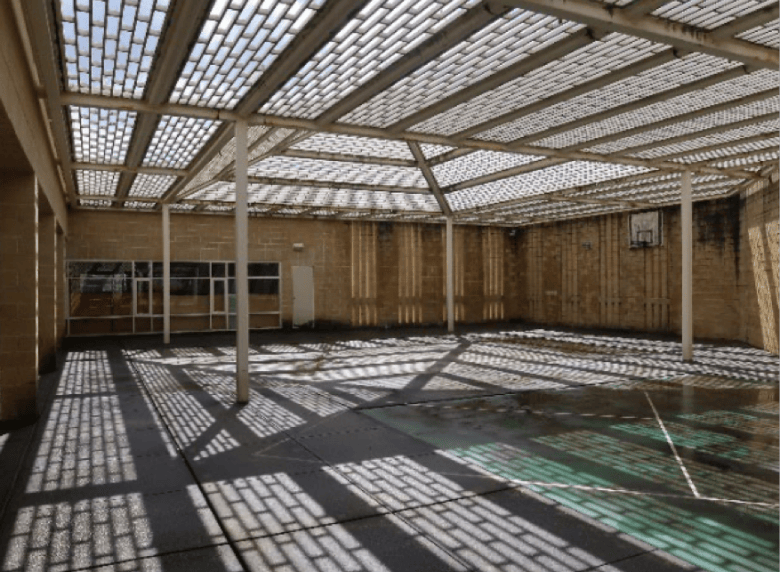
A yarning circle has been introduced at Western Australia’s Unit 18 youth detention center, offering cultural programs for young detainees. However, justice experts argue the notorious facility’s closure is critical to addressing systemic issues and ensuring better outcomes for youth, the National Indigenous Times reported on Dec. 27.
The move follows the opening of a cultural ground at Banksia Hill Detention Centre earlier this year.
Aboriginal Services Manager Will Hayward described the initiative as part of efforts to create spaces for cultural healing. “We’ve been building and creating cultural spaces that young people can utilize in programs, cultural healing, and yarning with Elders,” he said. Hayward added that the space would be used by Western Australia Department of Justice staff and Aboriginal service providers for regular activities.
Despite these efforts, calls to shut down Unit 18 continue. Legal and human rights experts, including former and current Western Australia Children’s Court presidents and the former Inspector of Custodial Services, have long advocated for its closure.
Noongar human rights advocate and law academic Dr. Hannah McGlade expressed support for the cultural initiatives but maintained that Unit 18 must be closed. “Two children’s deaths are linked to Unit 18,” she said. “Its use violates the UN Convention on the Rights of the Child, which Australia has ratified. Children should never be incarcerated in adult prisons.”
McGlade, a member of the UN Permanent Forum on Indigenous Issues, called for trauma-informed care and criticized the state government’s handling of youth incarceration. “WA has the highest rate of Aboriginal youth incarceration in the nation. These systemic racial injustices must end,” she said.
Western Australia Corrective Services Commissioner Brad Royce defended the yarning circle, describing it as a way to support young detainees. “It’s important to give them their own space where they can share stories and reflect on their journey,” he said.
However, advocates remain critical of Unit 18’s continued operation. Megan Krakouer, who works with youth detainees on a class action against the Western Australia government, argued the facility is beyond redemption. “While a yarning circle is important, without practical solutions, new truths, and pathways for healing, this will not improve outcomes,” she said. “Unit 18 must be closed, consistent with the Cleveland Dodd inquest findings. Anything less is disgraceful.”
McGlade echoed these concerns, urging the state to invest in prevention and diversion programs. “WA is a wealthy state with billions in surplus. It’s time to redirect these funds to Aboriginal-led initiatives and end the systemic racism fueling this crisis,” she said.
My final thoughts
My final thoughts are in Western Australia where Unit 18 stands as a glaring failure of youth justice, embodying the unacceptable practice of incarcerating children in facilities designed for adults.
This approach violates the fundamental rights of children and perpetuates systemic injustices. Its continued operation is a stain on the principles of care and protection owed to society’s most vulnerable. Such facilities are incompatible with the developmental, cultural and rehabilitative needs of young people and must be unequivocally condemned.
First, Unit 18 has been directly linked to the deaths of some children, highlighting its failure to provide a safe environment. Second, its existence violates international agreements such as the UN Convention on the Rights of the Child, which Australia has committed to uphold. And third, the facility fosters further harm by failing to deliver trauma-informed care or effective rehabilitative services, instead reinforcing cycles of violence and marginalization.
These reasons not only demand the closure of Unit 18 but also of all similar units globally.
The practice of incarcerating children in adult-style facilities is not unique to Western Australia. Across the world, similar institutions expose children to conditions that exacerbate trauma, perpetuate social inequalities, and deny them the opportunity to heal and reintegrate.
Governments must take immediate steps to dismantle these facilities and replace them with community-based, culturally informed interventions that prioritize prevention, healing and rehabilitation.
Closing such units would mark a profound shift in youth justice, reducing recidivism and creating pathways for young people to build meaningful lives. By investing in preventative programs and culturally grounded support systems, societies can address the root causes of youth crime, break cycles of systemic oppression, and foster stronger, more equitable communities.
The closure of Unit 18 and similar facilities worldwide is not just a moral imperative but a vital step toward a just and compassionate future.
Happy new year 2025.

Our stories are worth telling. Our stories are worth sharing. Our stories are worth your support. Contribute $5 or $10 today to help ICT carry out its critical mission. Sign up for ICT’s free newsletter.