
Sandra Hale Schulman
Special to ICT
The latest: Mysterious spiky yucca, Native art in photography, painted hotel rooms.
ECO ART: High-altitude plants root exhibit
The beauty and weirdness of the threatened Joshua Tree and the fragile Mojave Desert ecosystem that sustains it is the star of this new multi-artist multimedia show “Desert Forest: Life with Joshua Trees” at the Lancaster Museum of Art and History in the desert of California.
The museum has partnered with the Getty and more than 70 other organizations for the show as part of “PST ART: Art & Science Collide.” Opening Sept. 7 through Dec. 29, the exhibition incorporates natural history, Indigenous knowledge, public policy, scientific research, and artistic expressions to shed light on the challenges facing the Joshua tree – actually a yucca plant that only grows at high elevations – and conservation efforts.
With a focus on the impact of climate change, development, wildfires and other threats, viewers can learn about Joshua trees, soil fungi, and moth pollinators.
The show features more than 50 historical and contemporary artists, including Indigenous creators Cara Romero (Chemehuevi), Gerald Clarke (Cahuilla), Chip Thomas (Lumbee/African American), and many more.
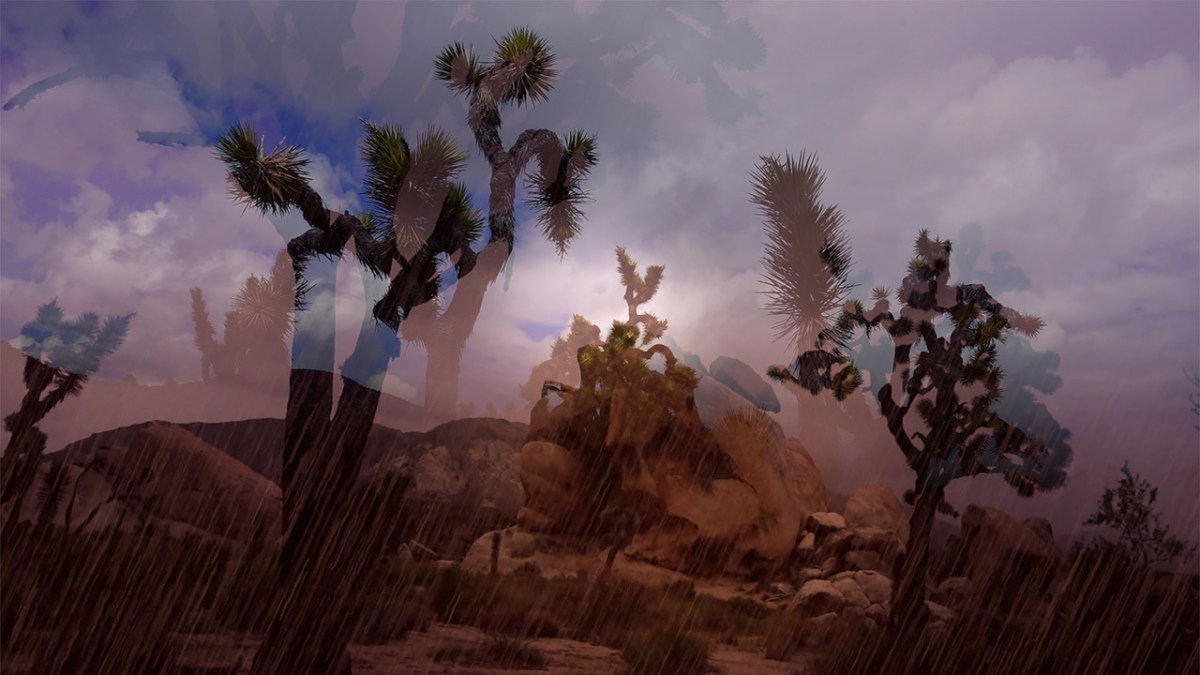
Photographer, filmmaker and painter Diane Best who lives in Joshua Tree, Calif., will be screening her new film “Tree Moves” in a separate theater within the exhibit. The moody, moving images mesmerize with the contrast of the spiky limbs and the fast-moving watercolor sky.
“I have been drawing and painting Joshua trees for over three decades,” Best told ICT, “and am blessed to have several trees at my home base in Joshua Tree, resulting in endless inspiration right outside my door. My primary medium is painting, and I consider this work a moving painting – or rather hundreds of paintings within 7 minutes.
“In September 2022, the remnants of Hurricane Kay passed through the area. This was a first in my many years here, and the cloud formations and light were unique and amazing. I spent long days shooting and making timelapses, as the conditions were finally perfect for the film I had always wanted to make, celebrating the Joshua Tree.
“I shot high elevation (~6000 ft) Joshua trees in Burns Canyon above Pioneertown, the trees in Joshua Tree National Park, and the Mojave National Preserve. Shooting in stormy weather is exhilarating, but the real work happens back in the studio, painting with film.”
ART: Lens-based media in translation
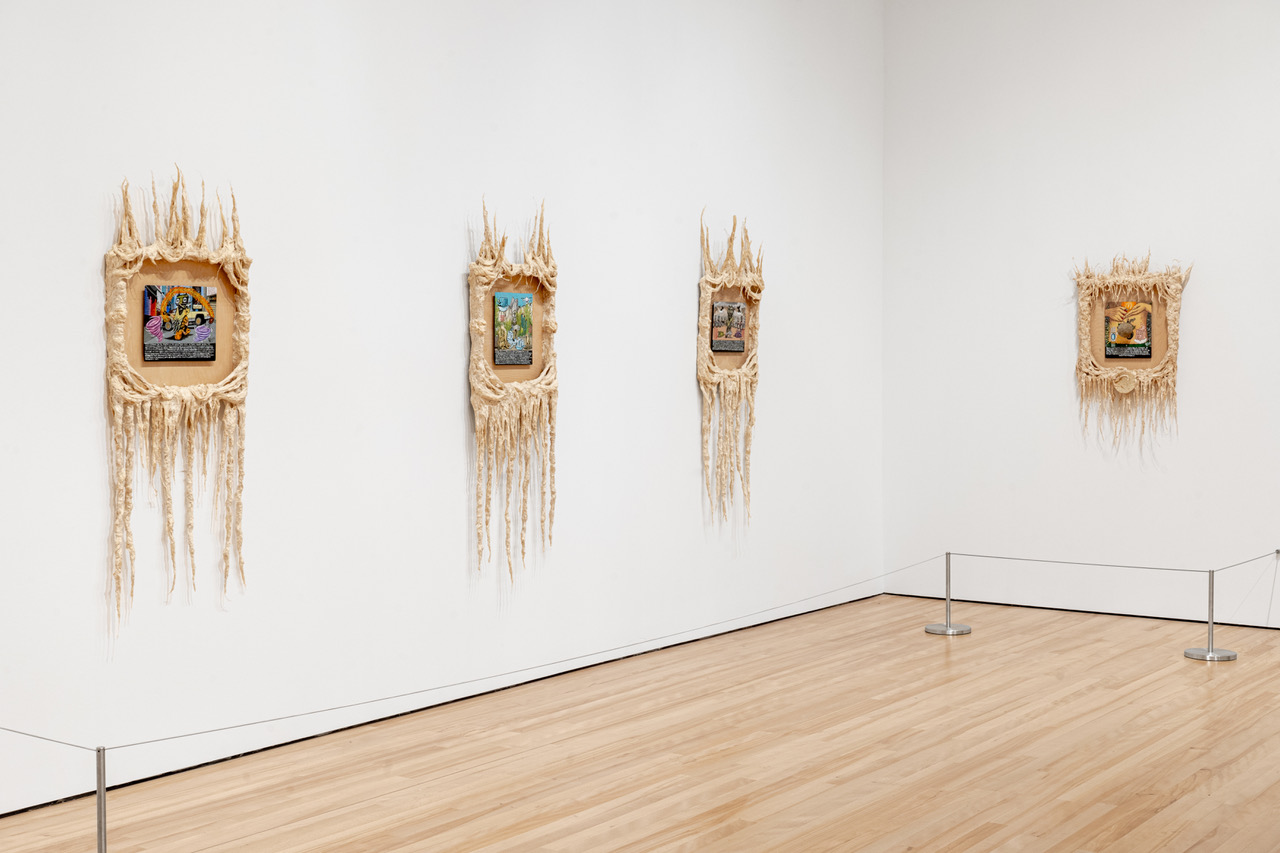
Indigenous photography is in a spotlighted show curated by Apsáalooke artist Wendy Red Star and organized by Aperture. The Blanton Museum of Art at the University of Texas at Austin presents “Native America: In Translation,” a group exhibition that features nine Native American and First Nations artists working in photography and other lens-based media.
More than 60 artworks offer contemporary perspectives on dual identity, collective and solo memory, tradition and the history of photography.
Red Star, born in Billings, Montana, is a Portland-based artist raised on the Apsáalooke (Crow) Reservation. Her cultural heritage and her engagement with many media, including photography, sculpture, video, fiber arts, and performance, have created a distinct body of work that clashes pop culture with Native identity. She is an avid researcher of archives and historical narratives, offering new and unexpected perspectives in work that is as humorous as it is unsettling.
Her monograph, “Wendy Red Star: Delegation,” was published by Aperture in 2022. “Native America: In Translation” extends Red Star’s work as guest editor of the Fall 2020 issue of Aperture magazine.
Opened Aug. 4 and running through Jan. 5, 2025, “Native America: In Translation” beautifully “centers artistic voices and highlights a wide range of Indigenous lens-based art in the Americas,” said Blanton Director Simone Wicha in a statement.
“The artists and artworks Wendy Red Star has selected delve into universal themes like memory and identity with remarkable depth and creativity. The exhibition’s photography and other powerful visuals will no doubt be deeply moving for our visitors and foster insight and understanding of our rich American heritage.”
In putting together the exhibition, Red Star said, “I was thinking about young Native artists and what would be inspirational and important for them as a road map. The people included here have all played an important part in forging pathways, in opening up space in the art world for new ways of seeing and thinking. The ultimate form of decolonization is through how Native languages form a view of the world. These artists provide sharp perceptions, rooted in their cultures.”
The nine intergenerational artists represent various Native nations and work in lens-based mediums from photography and video to installation and mixed media.
Featured artist and land rights activist Marianne Nicolson (Musgamakw Dzawada’enuxw First Nations) says, “There has been a gap in our transmission of our knowledge, and we used photography as a memory device.”
After traveling to five U.S. institutions since its tour began in 2022, the Blanton will be the exhibition’s first and only stop in the Southwest. Works include a monumental installation by Nicolson, where light projects through etched glass boxes that reference Kwakwaka’wakw songs, stories and spiritual connection to the land; a 23-image installation by Duane Linklater (Omaskêko Ininiwak from Moose Cree First Nation), sourced from a 1995 issue of Aperture spotlighting contemporary Native American photographers; and a six-image installation by Alan Michelson (Mohawk, Six Nations of the Grand River) of historic maps projected onto busts of George Washington that reference the 1779 military campaign against Iroquois villages.
ART LODGE: Hotel Indigenous art
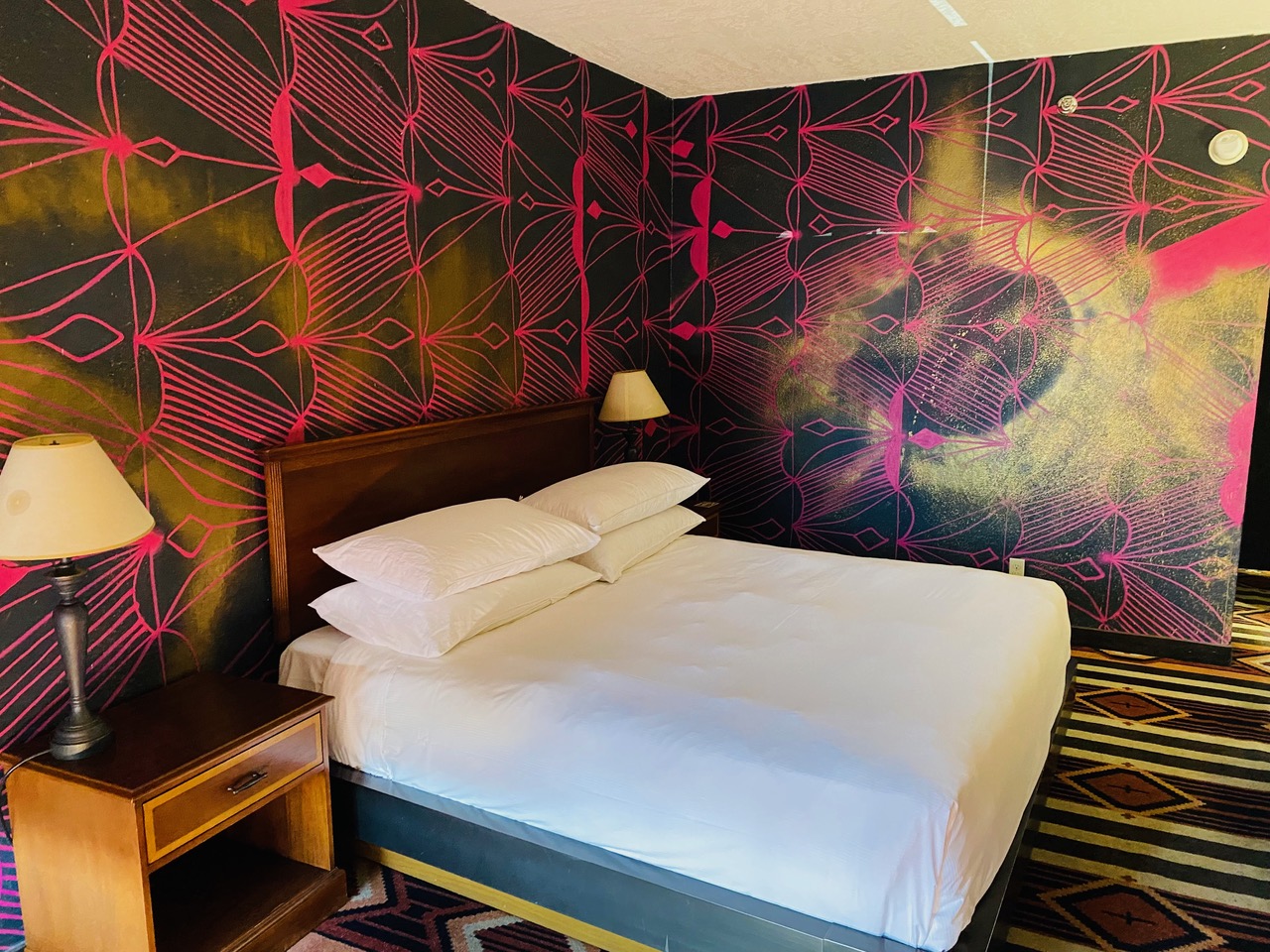
Certainly, one of the coolest Native hotels in America – and maybe the world – the Nativo Lodge in Albuquerque, has commissioned Native American contemporary artists to transform the guestrooms into large-scale, livable installation works of art you can sleep in.
The list includes artists currently showing in museums – Rose B. Simpson, Nani Chacon, Mateo Romero, Kayla Shaggy, Geraldine Tso, Felix Vigil, Jaque Fragua, Lynette Haozous, Jodie Herrera, Marina Eskeets, Ishkoten Dougi, Ricardo Caté and DeAnna Suazo.
Wildly vibrant room murals offer images of saints, women, wildlife, abstract geometrics and punk-fueled graffiti. The room I stayed in recently just after the Santa Fe Indian Market was painted by Jesse LittleBird in an explosion of color that extended onto the balcony and bathroom.
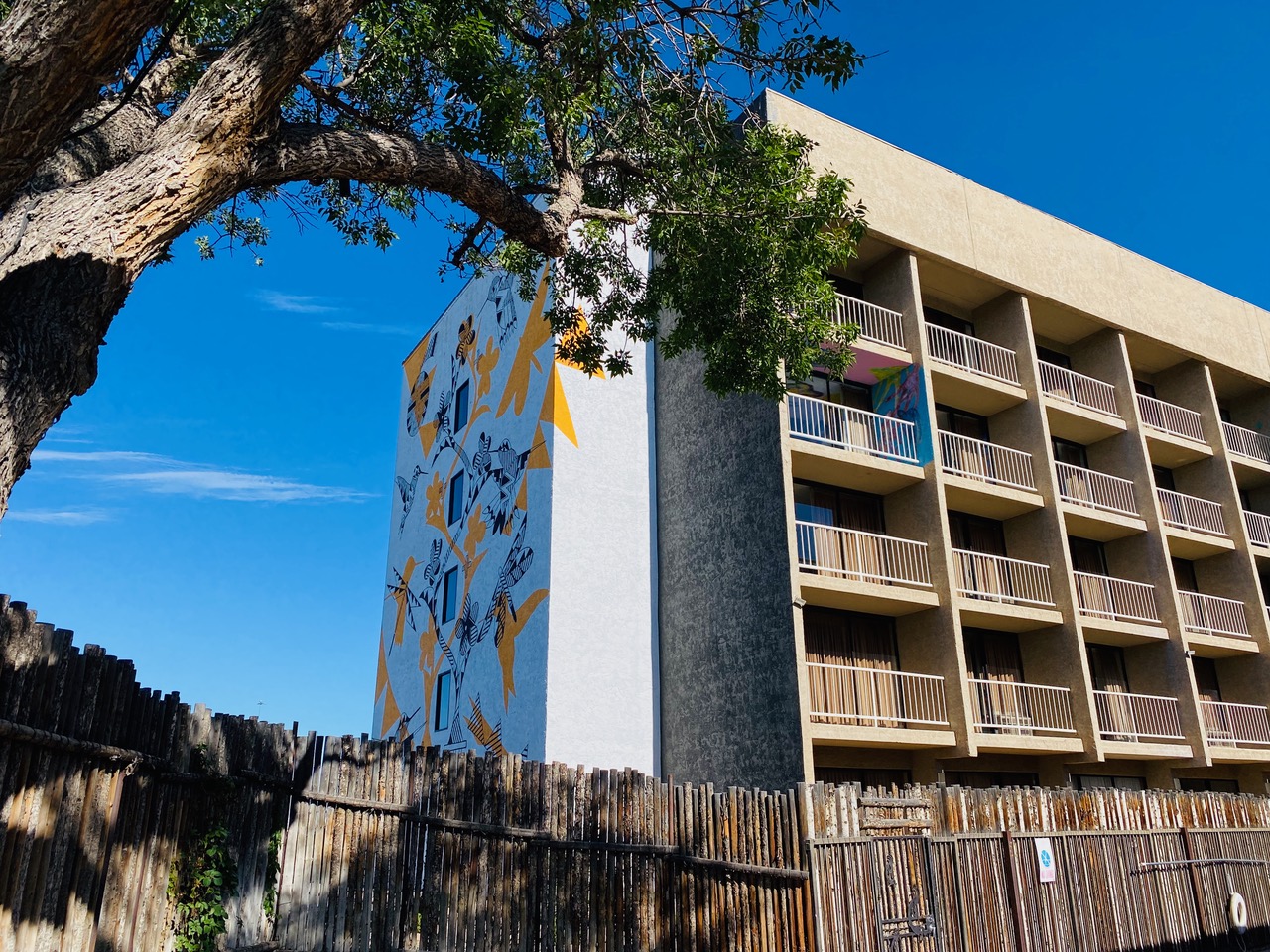
The eye-catching façade features a large-scale, five-story mural by local artist Michael Toya. Painted in black and gold depicting Indigenous designs and geometric shapes, the mural highlights Pueblo culture and the spirit of New Mexico. It was completed in August 2022.
“I’ve never done a mural or anything to this magnitude or scale,” Toya told the Albuquerque Journal. “At the beginning, it was intimidating. The idea behind this work and this style stems from what my ancestors brought to us. They told stories by painting on pottery or on petroglyphs. I’m doing the same thing with a modern twist and telling my own story.”
Toya also painted a room – Room 412 – called “If You Believe.” The goal for the Nativo Lodge is to have all 145 rooms painted by artists. Sixty rooms have already been painted.
The lobby atrium holds a large statue and multiple video screens have been looping Robert Mirabal’s “Music From a Painted Cave.”

Our stories are worth telling. Our stories are worth sharing. Our stories are worth your support. Contribute today to help ICT carry out its critical mission. Sign up for ICT’s free newsletter.
