
Richard Arlin Walker
Special to ICT
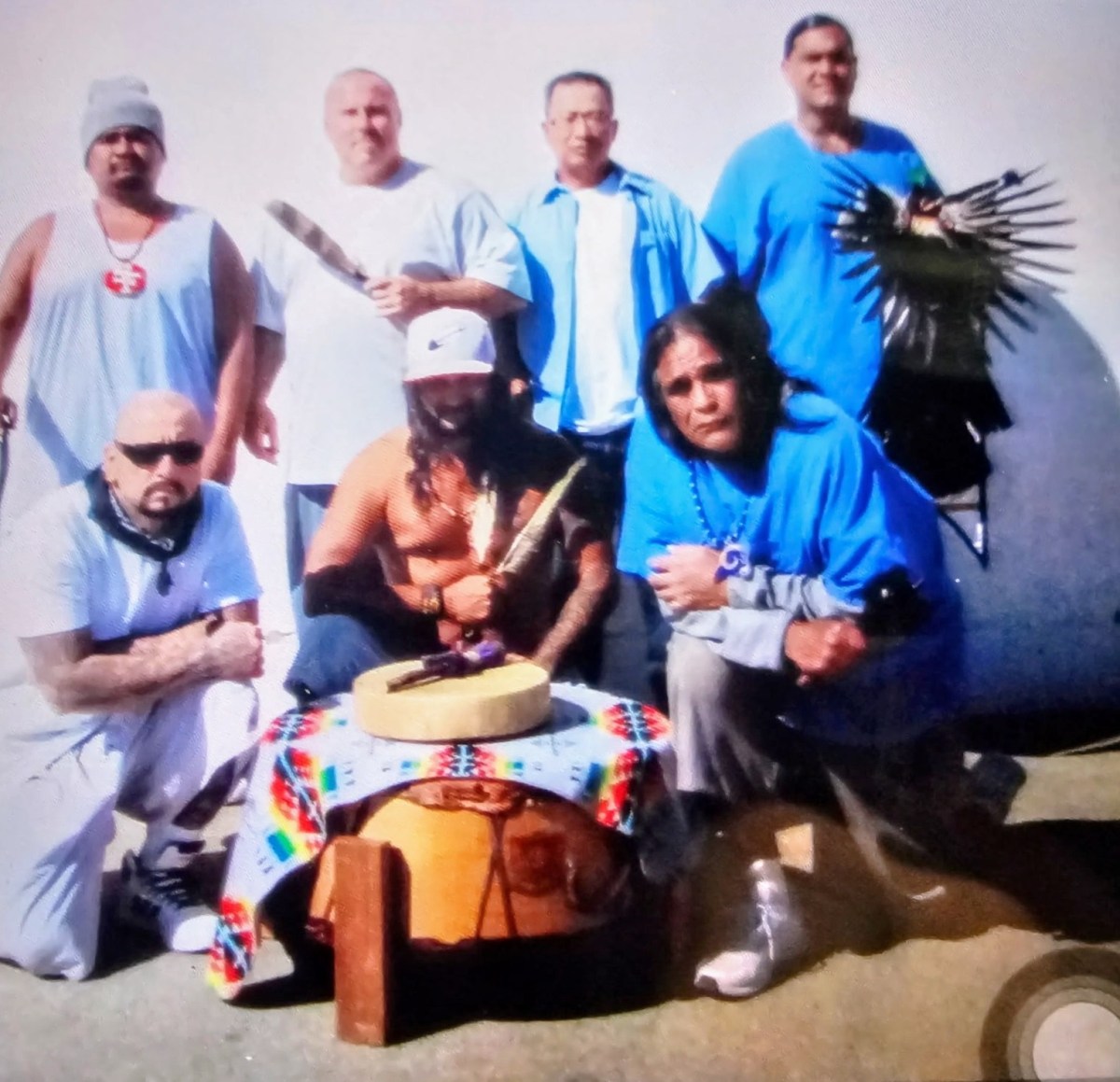
A Mescalero Apache man incarcerated at the Centinela State Prison in California has filed a federal civil rights lawsuit saying Native inmates’ personal religious items have been mishandled or confiscated by the prison’s intake officers and that sacred sweat lodge objects — including a buffalo skull and the post that holds it – have been desecrated.
The lawsuit filed by Robert Paul Blalock, 53, in June in U.S. District Court in the Southern District of California names warden Andre Green, six prison officers and a chaplain as defendants.
In the lawsuit, Blalock seeks a court order requiring that prison staff be trained in “respectful and dignified” handling of Native American spiritual items during searches. The case file includes a page from California Department of Corrections and Rehabilitation’s Department Operations Manual outlining those procedures.
Blalock also is asking that the prison hire a Native American spiritual adviser and someone to care for the sweat lodge, which Blalock said needs repair. He asks that the prison restore Indigenous inmates’ access to a big drum stored in the prison chapel, and that the prison’s community resource manager solicit donations of firewood for the sweat in accordance with CDCR’s Department Operations Manual.
Blalock said the sweat lodge helps inmates adjust to life behind bars and prepare for societal reentry by providing a structured path to spiritual renewal, emotional healing, and cultural reconnection.
“The sweat lodge can help change a lot of people’s trajectory,” Blalock told ICT in a phone call from prison. “We have a little bro that’s here. He’s from Mojave. Arizona child welfare adopted him out to a White family. He’s learned everything through the sweat lodge. You gain perspective and humility in the sweat lodge. The Creator teaches you to humble yourself.”
Blalock has been incarcerated since 2007 and is serving life without parole for a robbery and murder. Since being transferred to the Centinela prison on Oct. 15, 2025, he has filed several religious rights grievances with the state.
Prison officials denied those grievances, but the California corrections department sided with him in one appeal —that he and other Native American inmates had been denied access to the sweat lodge on the prison grounds in retaliation for filing grievances.
He is seeking compensation for the loss of personal spiritual items and for days he was not allowed in the sweat lodge. The lawsuit was filed June 11 but no hearing date had been set as of Oct. 24, according to federal records.
Green and the prison’s public information officer did not respond to ICT’s request for comment.
Making a difference
The sweat lodge ceremony is as important spiritually to the Indigenous inmate as Mass is to a Catholic inmate or synagogue is to a Jewish inmate. Programs incorporating Indigenous sweat lodge ceremonies and Indigenous cultural practices for incarcerated Native Americans are associated with lower recidivism and improved emotional and spiritual well-being.
In Canada, for example, participants in sweat lodge ceremonies and other Indigenous cultural practices had a 54 percent lower risk of reoffending, according to a 2022 study by the Correctional Service of Canada. In the U.S., programs such as Minnesota’s Red Road Home — which includes traditional teachings and sweat lodge ceremonies — found repeat offenses decreased by a third.
Organizations such as Huy and Unkitawa support sweat lodges, drum circles and traditional teachings to help Native American inmates process trauma and prepare for reentry.
Huy (pronounced “hoyt”) was founded by Gabe Galanda, a Seattle-based lawyer and inmate rights advocate who is enrolled with the Round Valley Indian Tribes. In the Coast Salish Lushootseed language, “Huy” means “See you again,” or, “We never say goodbye.”
“Indigenous religious activities and ceremonies reduce recidivism,” said Galanda, who is not involved in Blalock’s case “I think it’s beyond debate, which is why most states are allowing these exercises to occur, not only because they’re required by federal law but because it serves their penological interests in reducing recidivism.”
He added, “A lot of these brothers fell down in part because they didn’t know who they were to begin with. They weren’t taught that and they may not have been taught religious activities or ceremonies or received any sort of traditional teachings. For a lot of these brothers, they might be receiving teachings in these ways for the first time while they’re incarcerated, and it becomes life changing.”
And yet, Native American religious rights are the most ignored of religious rights, said Laura Wass, Mountain Maidu, a prevention/treatment counselor and Central California director of the American Indian Movement.
“About 10 to 15 years ago, I went to all the prisons in California and met with the Native circles, and I also met with wardens and lieutenants,” Wass said. “One of the things that the wardens and lieutenants would say is that the Native circles — the ones that are doing ceremony or gathering together as Native group — are the least troubled for them, the very least, and yet they are the most ignored.”
California has 31 state prisons operated by the California Department of Corrections and Rehabilitation and 10 federal prisons operated by the Federal Bureau of Prisons. Of those, Wass said, 24 Native American spiritual adviser positions remain unfilled. Chaplains from other faiths are often assigned to fill in, she said. Sweat lodges are neglected.
The National Congress of American Indians and the Affiliated Tribes of Northwest Indians passed resolutions in 2013 denouncing California Department of Corrections and Rehabilitation’s restrictions regarding Indigenous peoples’ religious properties and sweat lodge ceremonies. Those restrictions “violate federal, state and international law … and are contrary to the penological interest of rehabilitating incarcerated American Indigenous Peoples.”
The organizations called on the state prison system to “take all reasonable steps to commend, support, and facilitate incarcerated American Indigenous Peoples’ inherent rights to believe, express, and exercise traditional Indigenous religion.”
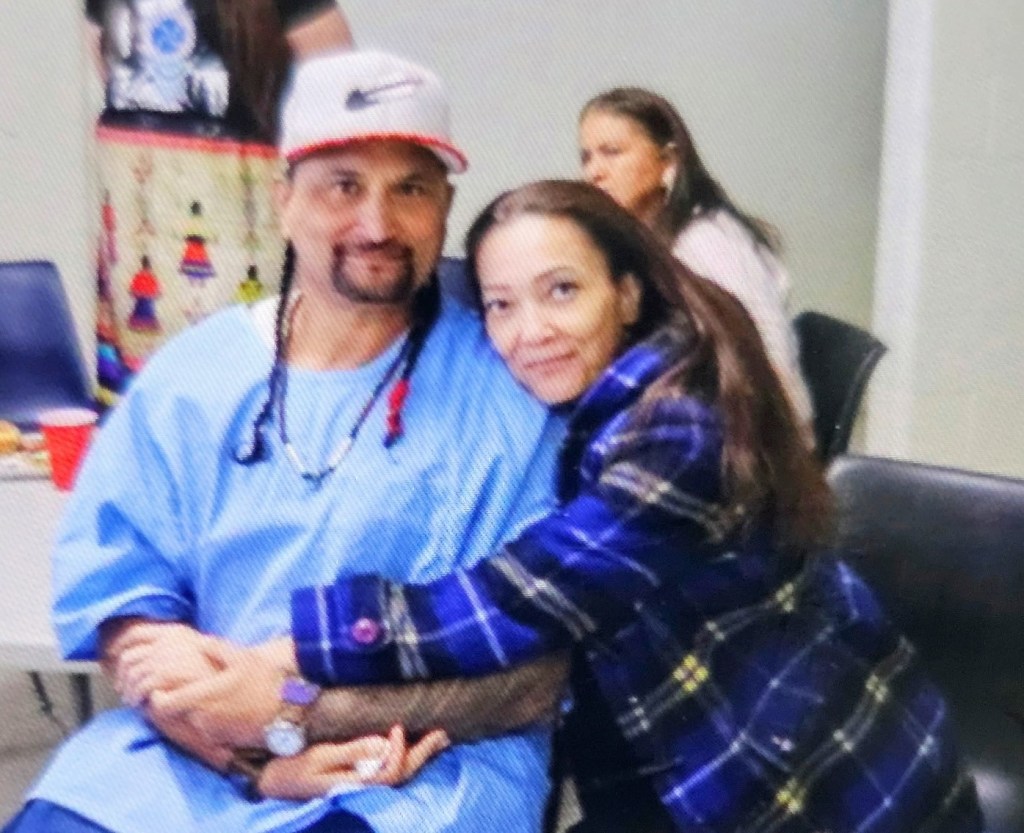
Blalock’s wife, Somkit Glinin, said Native Americans incarcerated at Centinela are being deprived of their religious rights. Lacking firewood, there hasn’t been a sweat lodge ceremony at Centinela since her husband has been there, she said.

“He still goes to the lodge although there are no ceremonies,” she told ICT. “When he was able to sweat, I saw a difference in him. He was able to clear his mind and get peace. Right now he’s going through the motions [to restore the sweat lodge ceremony] and the prison is putting so many obstacles for them to practice their religion. They won’t even give them access to their drum. They don’t understand their beliefs but dictate what happens.“
Blalock said of the sweat lodge ceremony, “It gets us focusing on where we should be on our road and our path. Without the sweat lodge ceremony, we have no way to actually cleanse ourselves. The ceremony takes us back to who we are and brings us closer to our Creator and purification and healing.”
The Centinela paradox
Centinela State Prison is located in Southern California’s Imperial Valley, some 104 miles east of San Diego. It was designed for an inmate population of 2,308, but as of April 1, the population was 3,215, according to CDCR. California’s overall prison population has fallen by roughly 27 percent since December 2019, CDCR reports.)
Centinela has a robust education program. Inmates study for diplomas and certificates; train as apprentices and earn job certifications in in-demand fields; and earn degrees from San Diego State University thanks to a $1 million grant from the Mellon Foundation. The Centinela Fire Department firehouse, on the prison grounds, houses eight inmates trained as structural and wildland firefighters. Inmates raise money for youth sports and children with cancer.
Yet, paradoxically, deadly violence still strikes. Four inmates at Centinela died in separate attacks by other inmates between 2022 and 2024, according to online reports. And this year, an inmate allegedly used an edged weapon to attack a correctional counselor in her office inside a housing unit.
Advocates say inmates need the transformative power of religious activities and ceremonies – and, for Native inmates, the sweat lodge ceremony. “They still deserve the best that we can give them, because they’re dehumanized anyway,” Wass said. “You know, anything that we can give them to make a little peace for them. Then, hopefully, they’ll teach other Native inmates, ‘Don’t do what I did.’”
Blalock said he could be transferred to another prison someday, and he’s made it his mission to get the sweat lodge at Centinela to its proper state and to introduce more Native inmates to the physical, mental and spiritual renewal of the sweat lodge ceremony.
Blalock was transferred to Centinela from the state prison in Lancaster, and before that was incarcerated at the state prison in Blythe.
“I would like to get the sweat lodge where it’s supposed to be before I go and use what knowledge I have to give to the people and fight for the people,” he said. “I was always taught by my grandfather: Family, band, your tribe and all your people.”
