
Darren Thompson
Special to ICT
SUPAI, Arizona — Over strong opposition from the Havasupai Tribal Council, Arizona regulators approved a request to raise the acceptable levels of arsenic in a groundwater well at the Pinyon Plain Mine near the Grand Canyon.
The Arizona Department of Environmental Quality on Monday, July 6, agreed to raise the levels of arsenic allowed from 0.05 to 0.055 milligrams per liter at the request of Energy Fuels Resources, which operates the uranium mine formerly known as Canyon Mine.
The state agency “has chosen to weaken environmental protections instead of strengthening them,” the Havasupai Tribe in a statement Monday. “Arsenic is a known toxic substance and ADEQ knowingly chose to lower the bar for pollution rather than raise the standard for protecting Arizona’s groundwater.”
The Sierra Club, which has long opposed the mine, says the site already contains “dangerously high levels of arsenic and uranium,” putting groundwater in the Grand Canyon and the water supplies of local communities, including the Havasupai, at risk, according to a statement on the organization’s website.
Energy Fuels Resources did not respond to a request for comment from ICT.
The Pinyon Plain mine sits within the Kaibib National Forest, in the Baaj Nwaavjo I’tah Kukveni, the Ancestral Footprints of the Grand Canyon National Monument, about six miles southeast of the Town of Tusayan. The mine is near the Havasupai Reservation, where it operates on top of a water aquifer that is the sole water source for the Havasupai Tribe at the bottom of the Grand Canyon.
The national monument was declared by then-President Joe Biden on Aug. 8, 2023. Energy Fuels acquired mining permits prior to the designation of the national monument, and is seeking to extract more than 1.6 million pounds of high-quality uranium ore throughout the operation over the next few years, according to the company’s permit application..
The mine began extracting uranium in early 2024, transporting the ore across two routes on the Navajo Nation to a processing facility in Blanding, Utah. In June, a tractor-trailer truck hauling uranium ore from the mine crashed into a passenger vehicle on the Navajo Nation.
It was the first known accident involving ore since the mining began nearly two years ago. There were no reports of injuries in the accident or of uranium leakage.
Questionable findings
Energy Fuels Resources filed the initial application asking the state to raise acceptable arsenic levels on Nov. 19, 2025, and later revised the request on Jan. 14, 2026.
The request was classified as a “minor” amendment, which would allow the state to avoid notifying the public about the request.
After the proposal was unanimously opposed by the Havasupai Tribal Council, the application was changed on June 23, 2026, to reflect an “other” amendment in consultation with the tribe, which requires the state to notify the public.
The Arizona Department of Environmental Quality violated state guidelines by initially designating the request as “minor.”
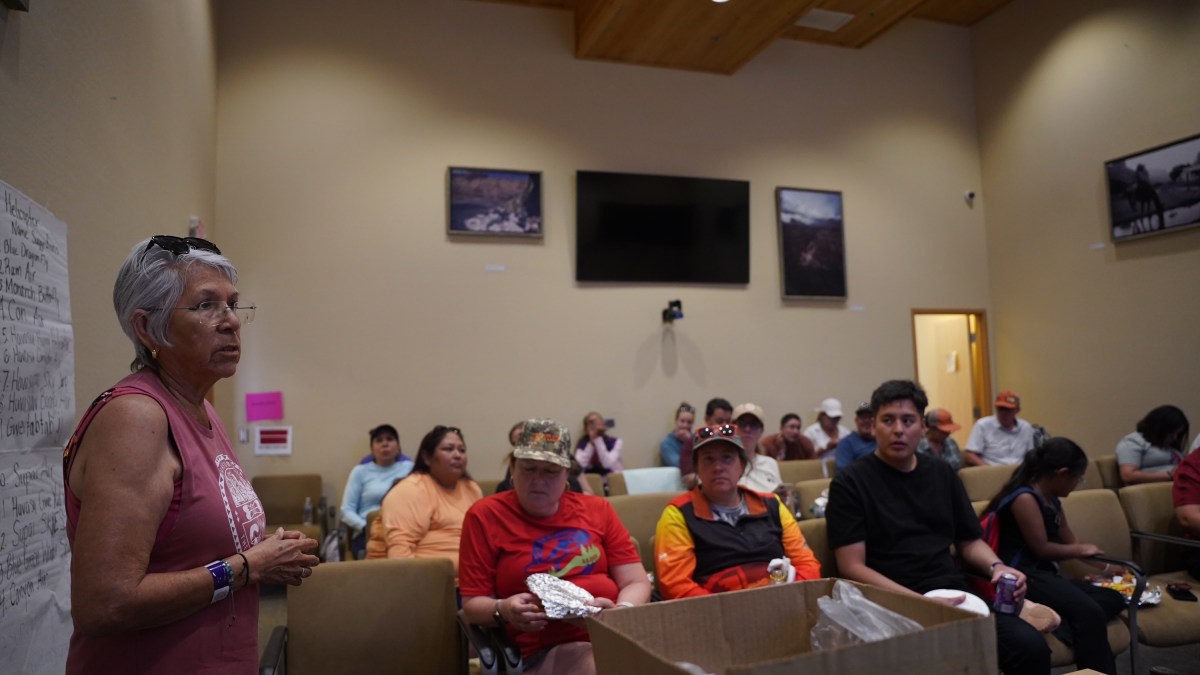
“This decision did not comply with state regulations,” the Havasupai Tribe said in a statement to ICT. “The Tribe strongly disagreed with ADEQ’s classification and expressed its concerns and opposition over the course of several meetings with ADEQ.”
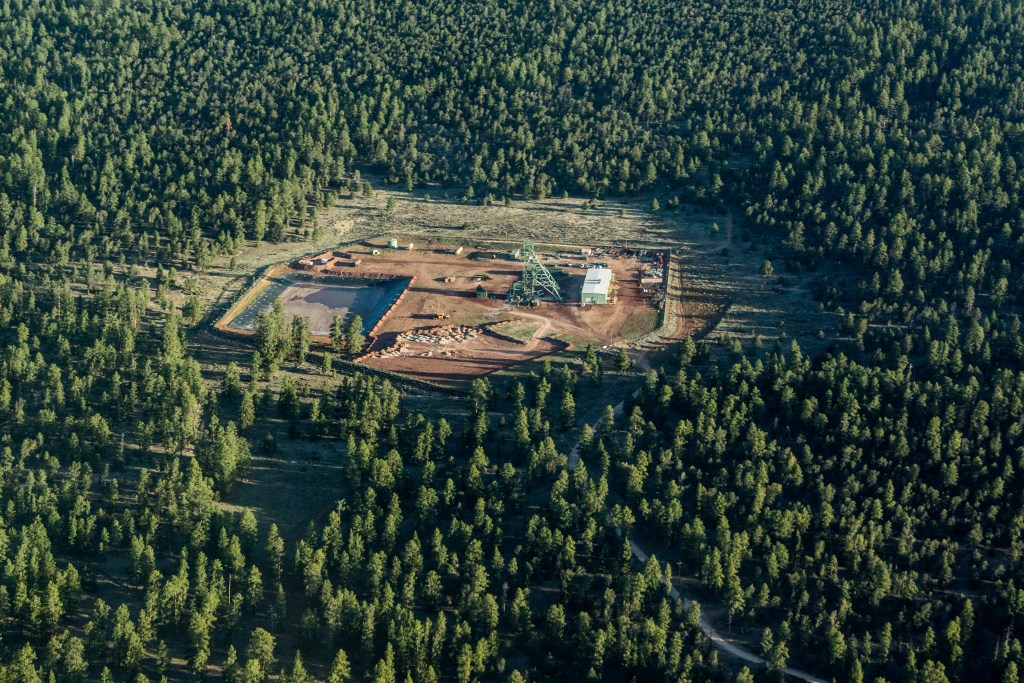
The company told state officials that it was seeking to revise the arsenic levels that would trigger an “alert” and that would be acceptable for the aquifer after the company’s own monitoring detected an increase in arsenic concentrations in groundwater.
The company maintains that the increase in concentrations was caused by a “natural phenomena” unrelated to the mining operations. The proposed amendment to the Pinyon Plain Mine Aquifer Protection Permit (“APP”) was subject to public notice under the Arizona Administrative Code beginning on June 25.
The amendment approved by the state raises the Aquifer Quality Limit for arsenic for one groundwater monitoring well known as the North Coconino Well. Energy Resources made the request based on about 4.5 years of data collection and has enhanced monthly groundwater monitoring since January 2025, according to documents filed with the state.
The company, which is responsible for monitoring its own wells, has been collecting samples and sending them to Pace National Laboratories in Mount Juliet, Tennessee. The state also collects samples, but on a less-frequent basis.
Amber Reimondo, energy director for the Grand Canyon Trust, a local conservation organization, said the public was not alerted to the increase in arsenic levels when they were first discovered.
“Monitoring wells are one of the most important tools the public and tribes have for peace of mind that a mine operation isn’t impacting groundwater,” Reimondo told ICT. “The mine operator is asking for a regulatory pass based on a poorly justified assumption that the arsenic increases are natural. Energy Fuels and ADEQ know that the public is very concerned about the risks the mine poses to groundwater, yet we discovered the issue by chance almost a year after arsenic increases were first detected at the well.”
In a stakeholder letter to the public, the Arizona Department of Environmental Quality said officials based their approval of the change on the data that Energy Fuels had collected. According to the data, arsenic is moving toward the facility’s perimeter wells due to an “hydraulic sink” created by the mineshaft – a naturally occurring event and not the company’s operations.
“ADEQ values its consultations with the Havasupai Tribe, deeply understands their stance, and is empathetic to the historical context of uranium mining in the Southwest,” Caroline Oppleman, the agency’s communications director, said in a statement to ICT.
“In direct response to the Tribe’s specific concerns during this process, ADEQ acted by adding an early-indicator Alert Level and upgrading the permit modification to an ‘Other’ amendment to ensure public transparency,” Oppleman said. “However, ADEQ is a regulatory agency bound by state law. Under Arizona law, if an application fully complies with all rules and law, ADEQ does not have the legal discretion to deny it.”

Looking ahead
The aquifer is the sole water source of the Havasu Creek, a tributary that flows through the Havasupai Reservation into the Colorado River.
Each year, tourists travel globally to experience the Havasupai Reservation, which is known worldwide for its turquoise waterfalls. The only way to get to the tribal lands are by hiking a 10-mile trail with a 2,500-foot descent into the Grand Canyon, or by helicopter, which doesn’t operate every day.
The trek to Havasu Falls is two miles from where the helicopter lands in Supai Village and is difficult because of the rough terrain and the Arizona desert heat. In June, the Grand Canyon National Park announced three hikers had died from heat-related incidents as temperatures exceeded 100 degrees.
Reimondo, with the Grand Canyon Trust, said the amendment was “deeply disappointing,” and said officials will continue to push for more-thorough oversight of the operation.
“Given the level of concern about the mine from the Havasupai Tribe …,” Reimondo said before the state’s decision was announced, “we continue to believe ADEQ should take a harder look at groundwater data in the region before rubber-stamping this amendment request.”
Darren Thompson is a multi-media journalist enrolled at the Lac du Flambeau Band of Lake Superior Chippewa in Northern Wisconsin, where he grew up. He covers breaking news, missing and murdered Indigenous people, environmental and social justice, tribal sovereignty, art, music, and film. He can be reached through his website, www.darrenthompson.net.

