
Greetings, relatives.
A lot of news out there. Thanks for stopping by ICT’s digital platform.
Each day we do our best to gather the latest news for you.
Okay, here’s what you need to know today:
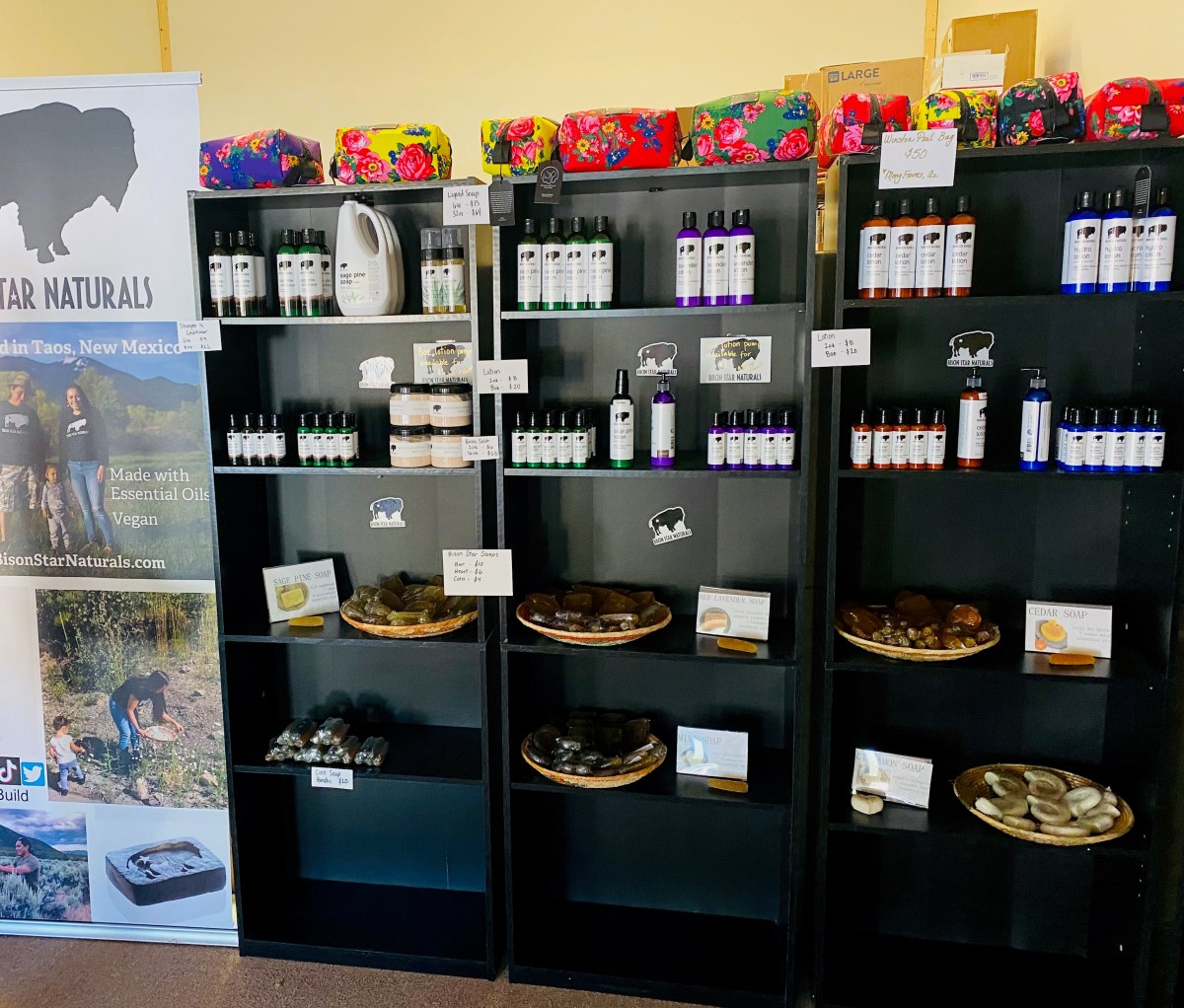
The heady scents of the New Mexico countryside after a warm rain greet customers to the small storefront tucked into a plaza just outside the Taos city limits.
Sage-pine soap has the quick hit of pine trees and the musky scent of sage. The lavender lotion offers a lush floral scent with no cloying sweetness. The cedar lotion sounds unusual, but with one whiff, the warm, earthy aroma wins you over.
The soaps and lotions and other skin-care products that line the display shelves at the Indigenous-owned Bison Star Naturals are made from wild-harvested herbs and flowers without animal products, dyes or perfumes, hand-crafted by husband-and-wife team, Angelo McHorse, Taos Pueblo, and his wife, Jacquelene.
With attractive packaging, clever marketing and luxurious quality, the brand is a hit after just five years in business. The products are now carried just about everywhere, from the Albuquerque Airport and major museums to four-star hotels and farmers markets. READ MORE. — Sandra Hale Schulman, Special to ICT
SUPPORT INDIGENOUS JOURNALISM. CONTRIBUTE TODAY.
At 18 years old, Basil Brave Heart found himself in a military plane flying over Korea, moments away from parachuting into the middle of the war. A few months earlier military recruiters had come to the Holy Rosary Mission boarding school, where he was living.
On a whim, he took a chance and signed up. Brave Heart’s parents had to sign off on his decision because he was 17 at the time. The decision was final and made quickly. That night, he was put on a bus to Chicago headed to training.
In general, Native Americans serve in the United States Armed Services at a higher rate than any other demographic. Brave Heart was one of 10,000 Native Americans who served in the Korean War. Of those 10,000, only 194 never came home. READ MORE. — Amelia Schafer, ICT + Rapid City Journal
The sun wasn’t quite high in the Oklahoma sky when Nona and Wayne Roach piled into their old pickup truck, their teenage granddaughter Shaylee perched in the back. It was a hot September morning, but Osage County is known for searing summer temperatures that stretch into the fall. The heat and the hot air swirled around the two-lane road to their horses and cattle.
The Roaches have about 160 acres just outside the tiny town of Avant — population 320 — in the eastern part of Osage County, land that Wayne has worked since the mid-1970s and that his family has owned since the 1930s. He’s a former steer roper who lost two fingers trying to rope a calf on a bet in nearby Nelagoney. His grandfather gave him a calf a year, which is how he got his start.
The terrain is rock-ribbed and full of bluestem prairie, long grasses that are good for grazing livestock. The landscape is graced by bois d’arc trees, sometimes known as Osage orange or horse apple trees.
Then there are the oil wells, both active and abandoned. It’s Osage County, after all, and stories often lead back to oil. For a time in the early 20th century, oil made citizens of the Osage Nation some of the wealthiest people in the world. Martin Scorsese’s recent film Killers of the Flower Moon unravels one thread of that story. READ MORE. — Grist
Gov. Mike Dunleavy appointed Kotzebue Republican Thomas Baker to fill the House District 40 seat left vacant by Josiah Patkotak when he resigned to become Mayor of the North Slope Borough last month.
The Republican members of the Alaska House of Representatives will vote to confirm Baker’s appointment.
Baker ran for Alaska Senate in 2020 and lost. He served on the Kotzebue City Council and as the Vice-Mayor of Kotzebue. He was also a tribal council member for the Native Village of Kotzebue.
Baker graduated from Dartmouth College with a degree in English and later earned a Commercial Driver’s License through Northern Industrial Training in Palmer. READ MORE. — Alaska Beacon
Sign up here to get ICT’s newsletter
On the Monday edition of the ICT Newscast, it’s harvest season. It takes months to grow and seconds to eat. We speak to the winner of the best red chile in New Mexico. Can’t decide? It’s Christmas–the season of red and green chile. Plus, pine nut gathering in Idaho
Watch:
The U.S. Department of the Interior announced last week the most recent batch of funding to help the federal government meet its requirement to pay tribal water rights settlements.
Out of the $326.5 million announced for nearly a dozen settlements and projects, $235.1 million will go to two water supply projects in New Mexico.
The bulk of the money coming into the state from the Interior Department and the largest allocation announced is $164 million for the Navajo-Gallup Water Supply Project. An additional $2 million in separate funds will also go toward operation and maintenance on the project.
Another $69.1 million will go toward the Aamodt Water Rights Settlement, a water claim and use agreement now under the Aamodt Litigation Settlement Act that involves the Pueblos of Nambé, Pojoaque, Tesuque, San Ildefonso, Santa Fe County and the state of New Mexico. READ MORE. — Source New Mexico
- Barbie’s Village is Portland’s latest Land Back achievement: After years of planning and fundraising, a tiny home village for Indigenous families experiencing houselessness has a permanent home at the former Presbyterian Church of Laurelhurst.
- South Dakota inspired ICWA but still has high rate of Native children in foster care: The Lost Children: Overrepresentation of Native American children in the state foster care system.
- The Lost Children: Overrepresentation of Native American children in the South Dakota foster care system.
- How an American meat broker is fueling Amazon deforestation: A little-known Utah-based meat trader, PMI Foods, has shipped more than $1.7 billion in Brazilian beef over the last decade, almost all of it to China.
- Judge upholds Joe Biden’s approval of the Willow oil-drilling project: The administration’s action alienated and outraged some supporters, particularly young activists who launched a TikTok campaign to oppose the project ahead of its approval.
- ‘Still not visible:’ Events in Mississippi raise awareness of state’s Native Americans.
- One Woman Died on an Alaska Mayor’s Property. Then Another. No One Has Ever Been Charged.
- The Pacific Northwest trees shaped by generations of people.
We want your tips, but we also want your feedback. What should we be covering that we’re not? What are we getting wrong? Please let us know. dalton@ictnews.org.

