Greetings, relatives.
A lot of news out there. Thanks for stopping by ICT’s digital platform.
Each day we do our best to gather the latest news for you. Okay, here’s what you need to know today:
In 1977, Norma Rendon, Oglala Lakota, had just left an abusive relationship that had escalated into an attempt to take her life. Her healing journey was complicated, inspiring her to lead a lifelong career helping other women who’d experienced what she had.
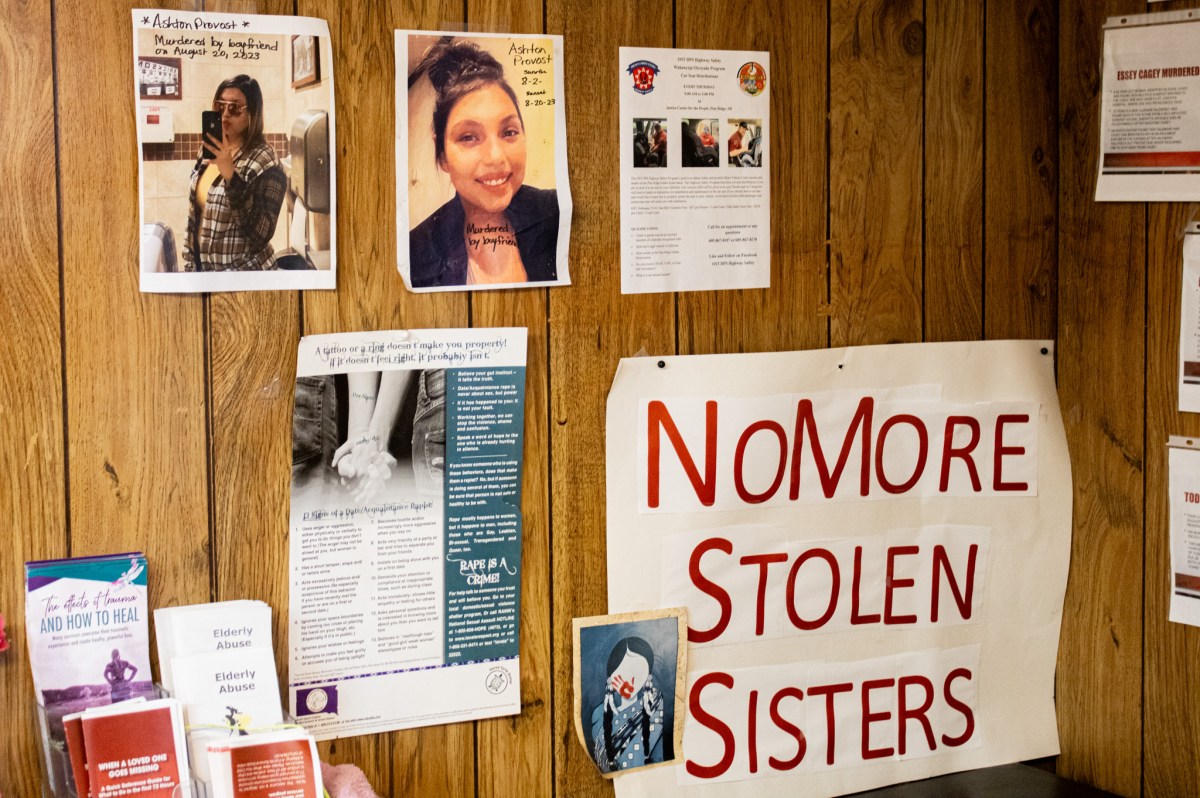
Nearly 85 percent of Indigenous women experience violence in their lifetime. A lack of jobs and housing leaves many financially dependent on their abuser. Despite experiencing disproportionate rates of violence, Indigenous women are less likely to have access to victim services. During Domestic Violence Awareness Month, several survivors and allies used their own grassroots efforts to raise awareness.
After moving to Minneapolis, Rendon said she hit a point where she asked her ex-partner to take her back. Her children wanted to go home, they wanted to sleep in their own beds. Exhausted and overwhelmed, Rendon called her ex and asked him to take her back. Luckily, Rendon said, he didn’t. READ MORE. — Amelia Schafer, ICT + Rapid City Journal
SUPPORT INDIGENOUS JOURNALISM. CONTRIBUTE TODAY.
Some of Andres “Dre” Mason Thornock’s childhood memories are warm and wholesome: As a 3-year-old, surrounded by siblings at home on Tulalip tribal lands. Playing near a crystal-clear lake. Learning the Lushootseed language from an aunt. Nestling into a blue dragon sleeping bag.
Other memories are fuzzier, and they hurt more.
“It got to the point where my older brother and sister were stealing money from their teachers to be able to feed us,” Thornock recalled in a series of conversations since January.
Thick files crammed into manila envelopes filled in gaps. Thornock, now 23, is believed to be the first former foster youth to petition the Tulalip Tribes in Washington state for child welfare case files. The documents revealed troubling details of why the young tribal citizen was removed from home. They also showed how, over 15 years, chances for family reunification and proximity to kin and culture were repeatedly challenged. READ MORE. — Nancy Marie Spears, The Imprint
A day that had a sad, painful start ended with a celebration of the raising of a Boarding School Healing Totem Pole.
U.S. Secretary of Interior Deb Haaland, Laguna Pueblo, held a hearing on boarding schools on the morning and afternoon of Sunday, Oct. 22 at the Alaska Native Heritage Center in Anchorage. Like her prior stops in the Lower 48, devastating stories and painful memories were shared with the secretary.
Anchorage is the 10th stop on the Interior department’s Road to Healing, which is part of an initiative on boarding schools. It’s a year-long tour across the country to hear from Indigenous survivors of the boarding school system and their descendants about their experiences. That sharing is healing, and will contribute to a permanent oral history, Haaland told about a hundred people. READ MORE. — Joaqlin Estus, ICT
This is tricky territory … but here goes anyway. I am writing about this weekend’s National Native American Hall of Fame induction ceremony in Oklahoma City. I was one of six inductees this year (and, so, yes, a personal pronoun warning because I am writing about myself.)
I am doing that because there is a bigger story; the importance of foundational stories about ourselves that include a narrative of excellence. The National Native American Hall of Fame celebrates what’s been done and in doing so, calls attention to our collective efforts toward a better future. READ MORE. — Mark Trahant, ICT
Sign up here to get ICT’s newsletter
On the Tuesday edition of the ICT Newscast, an Arizona city wants to make it safer for pedestrians, but its plans are to build on top of a Hohokam village that is believed to be over a thousand years old. Meet the woman behind the amazing healing story of the moccasins that finally made it home after more than a century. Watch these scary Indigenous movies for Halloween.
Watch:
In the first few minutes of the short film, “The Roof,” a Northern Cheyenne teenager approaches his grandfather’s house out in the woods. His grandfather is up on the roof, banging away with a hammer.
“Grandpa, what are you doing?,” the kid asks.
When the grandpa doesn’t respond, the kid walks back inside the house, calling home and asking when he can leave.
That scene is one writer of the film, W.A.W. Parker, Northern Cheyenne, knows well. The film stars Phoenix Wilson, M’Chigeeng First Nation, and Wes Studi, Cherokee. READ MORE. — Nika Bartoo-Smith, ICT + Underscore News
- Anchorage’s oldest building gets new life in restoration project: A refurbishing effort in Eklutna will breathe new life into Anchorage’s oldest standing building, a simple Russian Orthodox log church dating from the era of Russia’s colonization of Alaska.
- ‘Inca Ice Maiden’s’ face unveiled: Experts reconstruct the face of Peru’s most famous mummy, a teenage Inca sacrificed in Andean snow.
- Study: Indigenous knowledge vital to ecosystem restoration: However, outdated science and views lead many researchers to ignore traditional knowledge.
- Legislation would boost teacher recruitment efforts at tribal schools: The proposed Parity for Tribal Educators Act would offer educators at all tribal schools the same benefits.
- Students grow with garden: An Omaha Nation school garden is teaching students valuable employment skills and life lessons.
- Russia’s Slaughter of Indigenous People in Alaska Tells Us Something Important About Ukraine.
- Alaska state-owned corporation intends to spend $7 million in 2024 on Ambler Road.
- Landmark Lingít-language children’s book is an ‘orphan’ with a very large family.
We want your tips, but we also want your feedback. What should we be covering that we’re not? What are we getting wrong? Please let us know. dalton@ictnews.org.