
Greetings, relatives.
A lot of news out there. Thanks for stopping by ICT’s digital platform.
Each day we do our best to gather the latest news for you. Remember to scroll to the bottom to see what’s popping out to us on social media and what we’re reading.
Also, if you like our daily digest, sign up for The Weekly, our newsletter emailed to you on Thursdays. If you like what we do and want us to keep going, support and donate here.
Okay, here’s what you need to know today:
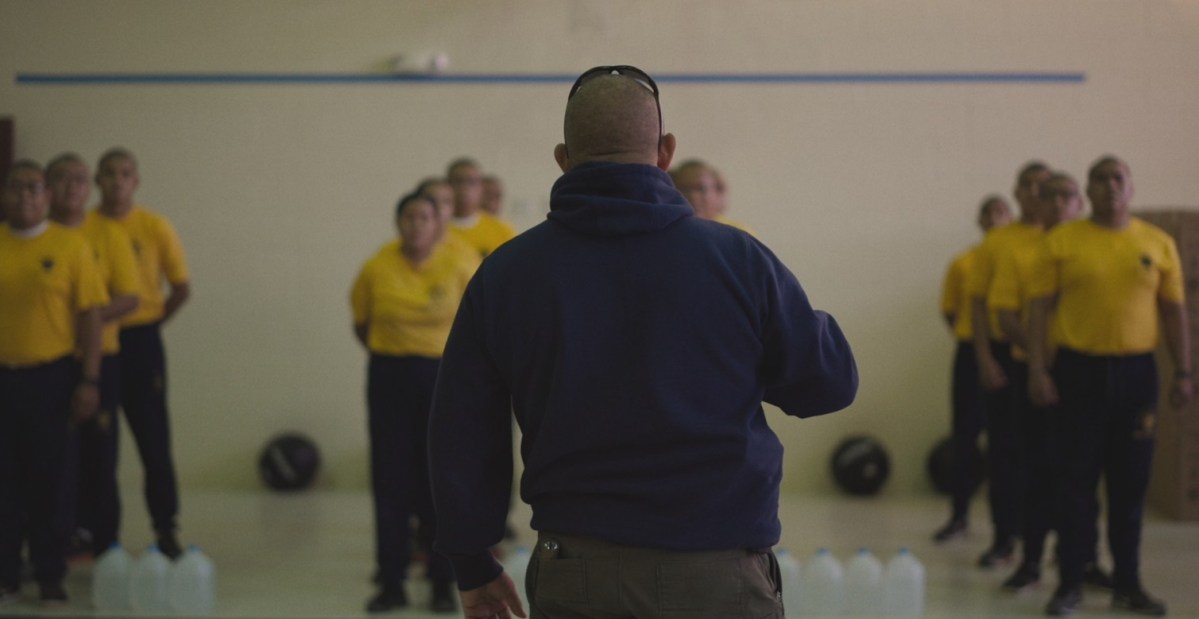
Navajo Police Officer Antwan Gray has been first on the scene of a massive car wreck. He’s seen strangers open fire around a group of children. And he’s tried to de-escalate rising domestic tensions before they end in violence.
Sometimes his hands shake and adrenaline rushes through him.
But he knows it’s an important job.
“I just told my wife, ‘If it gets to that point, I will take a bullet for somebody,’” Gray says in a new documentary series about the Navajo Police Training Academy. “And she just asked me, ‘Why would you do that?’ READ MORE — Sandra Hale Schulman, Special to ICT
SUPPORT INDIGENOUS JOURNALISM. CONTRIBUTE TODAY
Hundreds gathered earlier this year at the Tulalip Tribes’ annual General Council meeting. Young couples pushed babies in strollers. Elders wore ribbon skirts made of silk and satin, jeans, cowboy boots and turquoise bolo ties. Some attendees showed up in T-shirts. “WTF: Where’s The Frybread?” read one. Another boasted a red heart and the words “Rez Life.”
Tribal citizens streamed in and out of the Washington state casino’s ornate Orca Ballroom, marine-themed and decorated in the tribe’s signature black, red and white. Massive steel sculptures of salmon depicting the Tulalip Tribes’ livelihood hung overhead.
Andres “Dre” Thornock wore a dark gray suit and a pressed white button-up. Their hair, neatly shaved at the sides and pulled into a short ponytail, framed a hopeful but weathered face for a 23-year-old. Thornock, who is Two-Spirit and uses they/them pronouns, appeared before the seven-member elected council with a specific goal: Better oversight of beda?chelh, the tribe’s child welfare system.
The name beda?chelh is a Lushootseed word that means “our children.” It is pronounced “buh-DAH-chuh” and is also spelled bədaʔčəɬ, using the phonetic symbol “ʔ.” READ MORE — The Imprint
Antonio Ortiz never thought he would be able to speak publicly about his late daughter Rhia Danae Almeida because it would require him to be vulnerable and express his emotions freely.
His wife, Elayne Gregg, has been able to share her experience publicly for a few years now, but Ortiz has only ever opened up about his feelings on what happened to Rhia with his wife.
“I’ve only been vulnerable with her,” Ortiz said, explaining how, growing up as a Tohono O’odham man, he was taught that showing emotion wasn’t “strong” or “manly.”
But that mindset started to shift once he heard Roland Ramon from Tohono O’odham open up publicly about his experiences with trauma and grief. READ MORE — Arizona Mirror
OKLAHOMA CITY — As an advisory board on Native American education approaches a milestone year, the group is still hamstrung by a lack of members.
The 18-person Oklahoma Advisory Council on Indian Education has seven vacancies despite recent legislation intended to improve the member appointment process.
The council and the Oklahoma State Department of Education aim to make Native American education and related services more visible in public schools and tribes, said Jackie White, the state agency’s executive director of American Indian education.
White, who is Cherokee, is state Superintendent Ryan Walters’ designee on the council. READ MORE — Oklahoma Voice
Sign up here to get ICT’s newsletter
The Centers for Disease Control and Prevention shows significant death rate increases for White and Native American infants, infant boys and babies born at 37 weeks or earlier. The national average climbed from 5.44 to 5.6 deaths, per 1,000 live births. For American Indian and Alaskan Natives the increase was even higher—from 7.46 to 9.06 infant deaths, per 1,000 live births in 2022.
The Military has been draining a leaky jet fuel storage facility for years, creating risks to a critical source of drinking water on O’ahu. The extent of the spill and the mishandling of the situation gave rise for calls to empty the tanks. The process is now underway and will take three months for all the fuel to be sent down three miles of pipeline to a pier at Pearl Harbor, where it will be loaded onto tankers and sent elsewhere.
Oglala Lakota citizen Grace Johnson has been hired as the liaison for Missing and Murdered Indigenous People for the Nebraska attorney general’s office. She will coordinate with local, state and federal agencies to report and investigate cases.
The Missing and Murdered Indigenous Women and Relatives Task Force was ended by New Mexico Governor Michelle Lujan Grisham’s administration in a quiet fashion. This comes after multiple members publicly opposed the nomination of former San Ildefonso Pueblo Governor James Mountain to be the head of the Indian Affairs Department, which the task force is a part of.
The Upper Canada Village in Ontario hosted the gourd-geous display contains 100 carved pumpkins that highlight the Haudenosaunee Smoke Dance. The pumpkins were created in collaboration with the Akwesasne Mohawk community to better connect the two neighbors.
WATCH
In October, the New Mexico Indian Affairs Department announced it would be rescinding funding awards previously announced for Native organizations trying to help northwestern New Mexico communities recover from a large coal plant shutdown.
Despite agency cabinet secretary-designee James Mountain’s commitment to reach out personally to talk about it, original award recipients haven’t heard anything in the two weeks since. Most, if not all, aren’t sure what happens next.
This all comes following a major coal plant shutdown in the Four Corners region in 2022. The state received millions of dollars to distribute to organizations and affected communities, and the New Mexico Indian Affairs Department got $1.8 million to hand out to address specific issues on tribal land.
In July, Mountain told lawmakers his agency chose five Indigenous organizations and centers to distribute the $1.8 million to: Shiprock Traditional Farmers Cooperative, Native Renewables, Diné Introspective, Northern New Mexico Indigenous Farmers, and Diné Centered Research and Evaluation. READ MORE— Source New Mexico
- Vice Chairman Murkowski Announces Upcoming Field Hearing in Alaska
- Day of the Dead a celebration for 5 senses: The Day of the Dead in Mexico involves distinctive smells, foods, physical sensations, visuals and music
- Survivors speak out against domestic abuse: Indigenous women more likely to experience intimate partner violence, less likely to receive help
- House approves $14.5 billion in assistance for Israel as Biden vows to veto the GOP’s approach
- Eric Trump testifies he wasn’t aware of dad’s financial statements, but emails show some involvement
- Bochy adds to legacy with 4th World Series title, and 1st for Rangers, in his return to majors
We want your tips, but we also want your feedback. What should we be covering that we’re not? What are we getting wrong? Please let us know. dalton@ictnews.org.

Like this story? Support our work with a $5 or $10 contribution today. Contribute to the nonprofit ICT. Sign up for ICT’s free newsletter
