ICT is working to shape the future of journalism and stay connected with readers like you. A crucial part of that effort is understanding our audience. Share your perspective in a brief survey for a chance to win prizes
Greetings, relatives.
A lot of news out there. Thanks for stopping by ICT’s digital platform.
Each day we do our best to gather the latest news for you. Remember to scroll to the bottom to see what’s popping out to us on social media and what we’re reading.
Also, if you like our daily digest, sign up for The Weekly, our newsletter emailed to you on Thursdays. If you like what we do and want us to keep going, support and donate here.
Okay, here’s what you need to know today:
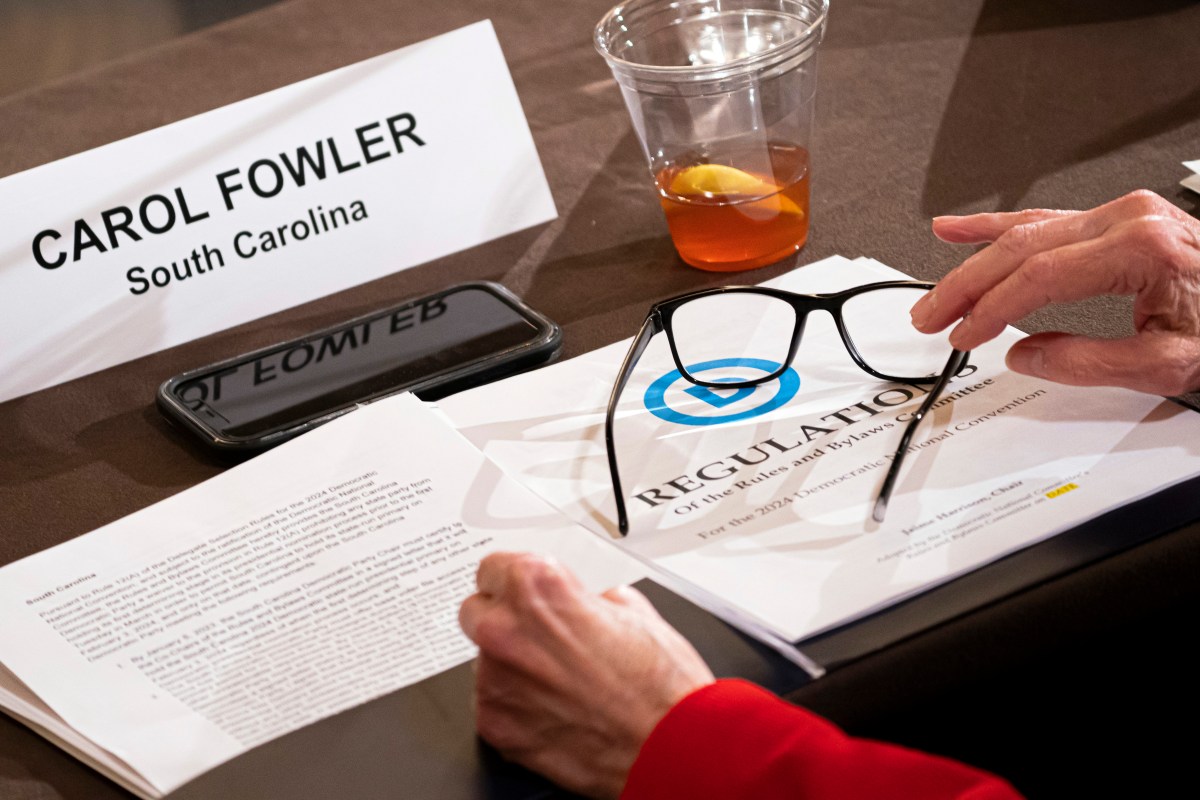
WASHINGTON — Nearly one year ago, the Democratic National Committee made a controversial decision to make South Carolina its first primary election stop in the nation. Both Republicans and Democrats have started their presidential election schedules in Iowa and New Hampshire for years.
The move to South Carolina was a simple reason: it was more diverse than Iowa and the DNC cares about diversity. However, tribal leaders from the only federally recognized nation in the state, Catawba Nation, haven’t heard from them or any other political party including the Republican National Committee. No congressional or presidential campaigns have engaged with Catawba in 2023 and this election year, according to leaders from the tribe.
“Chief and I are not on the same page, necessarily, when it comes to larger politics,” Roo George-Warren, council member for Catawba Nation, said with a laugh. “But our belief is that we will work with anyone for the benefit of our people.”
To put it into perspective: the 2020 Census says Iowa has 8,502 Native American and Alaska Natives and South Carolina holds 32,273. This data is focused on the alone and in any combination. Iowa also has one federally recognized tribe, the Sac and Fox Tribe of Mississippi, otherwise known as the Meskwaki Nation. READ MORE— Pauly Denetclaw, ICT
SUPPORT INDIGENOUS JOURNALISM. CONTRIBUTE TODAY
Waipahinte, the Dakota word for snowplow, was among eight winning names in the 2023-24 Name a Snowplow contest for Minnesota as voted on by the public.
Additionally, Minnesota Department of Transportation staff named three snowplows, two in Ojibwe and one in Dakota, for vehicles that plow near tribal lands. Giiwedin – The North Wind; Goonodaabaan – Snow Vehicle are both Ojibwe; and Icamna – Blizzard which is Dakota.
It is the fourth year the contest has been held and the Minnesota Department of Transportation now has 35 named snowplows, according to a press release.
There were more than 8,000 submissions and the list was ultimately narrowed down to 49 finalists put up for voting. Waipahinte, received the fourth most votes and trailed only “Taylor Drift,” “Clark W. Blizzwald,” and “Dolly Plowton.”
Lt. Gov. Peggy Flanagan, White Earth Band of Ojibwe, applauded the creative names submitted.
““From Beyonsleigh to Barbie’s Dream Plow, Minnesotans’ creativity was on full display for this contest that celebrates the important work of our snowplow drivers,” she said in the press release.
A full list of the 49 finalists can be found here.
Around the world: Indigenous leaders convene urgent Ottawa meeting addressing mental health crisis, new Aboriginal Health Practitioner hopes to inspire others, Indigenous women filmmakers unite to advocate for their rights in Brazil, and a religious leader is sentenced to 4.5 years for religious involvement in Vietnam.
CANADA: Suicides spark Ottawa meeting
First Nations leaders convened an urgent Ottawa meeting to address the escalating mental health crisis, emphasizing the need for government assistance, APTN News reported on January 24.
Nishnawbe Aski Nation reports a troubling surge in suicides and suicide attempts within the northern Ontario First Nations it represents.
This tragic trend includes the suicides of a 12-year-old from Sachigo Lake First Nation and a 20-year-old in Deer Lake First Nation earlier this month. Additionally, in Kitchenuhmaykoosib Inninuwug First Nation, nine individuals have lost their lives between December and January. READ MORE — Deusdedit Ruhangariyo, Special to ICT
For the Gila River Indian Community, the stretch of Interstate 10 that passes through its tribal lands headed toward Tucson has been considered unreliable, unsafe and often described as the “fatal funnel” due to the high number of accidents and fatalities in the area.
Up to 126,000 vehicles utilize that stretch of the I-10 every day, according to the tribe, and the 26-mile stretch of highway is the only section that does not have three lanes.
That portion of the highway has been a consistent strain on the GRIC families, students, elders, and employees, which led to an aggressive advocacy push for funding to widen the highway to match the roadways off their tribal land.
The push resulted in a $95 million grant from the U.S. Department of Transportation to support a project to widen the 26-mile stretch of I-10. READ MORE— AZ Mirror
Sign up here to get ICT’s newsletter
On our weekly political segment, we talk about President Joe Biden’s new tone on hot topic issues like the southern border. ICT Political Correspondent Pauly Denetclaw and regular contributor John Tahsuda, who is a principal with Navigator’s Global, will talk more about this issue and how it intertwines with the election.
Educators will soon have a new tool to teach a pivotal moment in Native American history. Choctaw filmmaker Colleen Thurston produced a 13-minute documentary short for Retro Report on the occupation of Alcatraz Island in California. ICT Senior Producer Shirley Sneve has more for us.
WATCH
EUREKA, Calif. — California Gov. Gavin Newsom is pledging to fast-track more than half a dozen projects by the end of his term to remove or bypass dams that have blocked salmon from returning to the state’s chilly mountain streams and acting as the keystone of a complex ecosystem that sustains both economies and spiritual beliefs for tribes.
Newsom — now in his second term and seen as a potential Democratic presidential candidate beyond 2024 — has worked hard to stake a claim as the nation’s most environmentally-conscious governor. But his record has been dogged by criticism from environmental groups who say his water policies benefit big agriculture at the expense of salmon and other fish species in danger of becoming extinct.
Millions of salmon once filled California’s rivers and streams each year, bringing with them key nutrients from the ocean that gave the state an abundance of natural resources that were so important to Indigenous peoples that they formed the foundation of creation stories central to tribes’ way of life.
But last year, there were so few salmon in the state’s rivers that the officials closed the commercial fishing season. READ MORE — Associated Press
- Restoring the Klamath River: In the Pacific Northwest, Yurok tribal citizens are engaged in a major habitat restoration project in the Klamath River Valley
- University celebrates alumna Sara Hill’s judicial appointment: The Cherokee Nation citizen is the eighth Native American in U.S. history appointed to a lifetime judge position
- ‘We did it’: Birch bark scrolls recovered from auction: Tribes unite to purchase historic Ojibwe scrolls from a New York auction house
- Meta, TikTok and other social media CEOs testify in heated Senate hearing on child exploitation
- Dakota leaders urge more education after Treasure Hunt medallion hidden at sacred site
- Tax season is under way. Here are some tips to navigate it.
We want your tips, but we also want your feedback. What should we be covering that we’re not? What are we getting wrong? Please let us know. dalton@ictnews.org.

ICT is a nonprofit news organization. Will you support our work? All of our content is free. There are no subscriptions or costs. And we have hired more Native journalists in the past year than any news organization ─ and with your help we will continue to grow and create career paths for our people. Support ICT for as little as $10. Sign up for ICT’s free newsletter