
Greetings, relatives.
A lot of news out there. Thanks for stopping by ICT’s digital platform.
Each day we do our best to gather the latest news for you.
Okay, here’s what you need to know today:
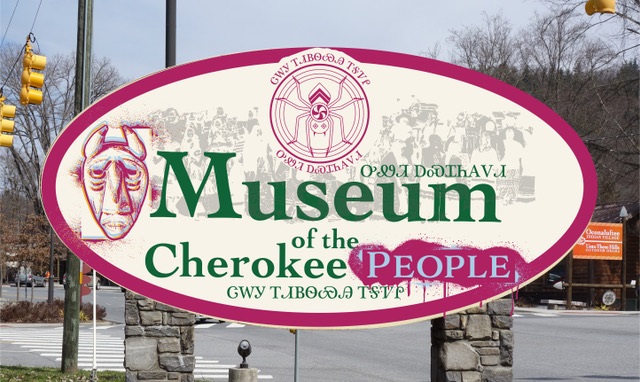
Cherokee museum unveils name change, new look
The Museum of the Cherokee People is getting a new look to go along with its new name.
The museum, formerly the Museum of the Cherokee Indian on the edge of the Great Smoky Mountains National Park in North Carolina, is now in the process of designing new exhibits, constructing a new collections facility and renovating the current facility.
Museum officials announced the new name and plans for construction and renovations on Monday, Oct. 9, along with a new logo and branding. The museum will remain open during the renovations.
The changes reflect efforts to become a more authentic resource and place of pride for the Eastern Band of Cherokee Indians and its sister nations, the Cherokee Nation of Oklahoma and the United Keetoowah Band of Cherokee Indians, also in Oklahoma. A revised website will have updated resources for the community and visitors. READ MORE. — Sandra Hale Schulman, Special to ICT
SUPPORT INDIGENOUS JOURNALISM. CONTRIBUTE TODAY.
About a year and a half ago when the nonprofit Native news service ICT was considering locations for a new regional bureau, Montana rose to the top.
Along with the state’s 12 tribes living on and off seven reservations, Montana is the only state with the percentage of Indigenous representation in the Legislature exceeding the state’s proportion of Native population, said Jourdan Bennett-Begaye, ICT editor.
ICT (formerly known as Indian Country Today) leaders chose Missoula for the new mountain bureau after Bennett-Begaye’s discussion with University of Montana journalism professor Jason Begay, who pitched the idea, she said. READ MORE. — Montana Free Press
Indigenous actress and film producer Jennifer Podemski knows all too well the story of Little Bird.
The title character in Podemski’s latest film project was torn from her Indigenous family to be adopted by a Jewish family during a notorious period in Canada’s history known as the Sixties Scoop.
Podemski, too, is split between two cultures, with an Israeli father and a mother who is Saulteaux/Ojibwe/Anishinaabe, Leni Lenape and Métis descent. So when former colleagues pitched the story of a Native-Jewish girl searching for her truth, Podemski knew right away it was a story that should be told. READ MORE. — Sandra Hale Schulman and Dan Ninham, Special to ICT
Protesters in New Mexico decorated an empty pedestal last week with signs demanding an end to the monument for a Spanish conquistador who orchestrated countless atrocities against Indigenous people.
The crowd – mostly made up of Pueblo people – was celebrating a Rio Arriba County decision to postpone the resurrection of a statue of Juan de Oñate removed in 2020 and demand that it never go up again.
That’s when a shot rang out.
A gunman wearing a “Make America Great Again” hat shot Jacob Johns, a Hopi Pueblo activist and muralist who lives in Spokane, Wash. Johns survived and is in stable condition, according to friends. The shooter, who Underscore News and ICT are choosing not to name to reduce the likelihood that stories about the incident result in his glorification, was apprehended by Pojoaque Pueblo Police later that day. READ MORE. — Nika Bartoo-Smith, ICT + Underscore News
Sign up here to get ICT’s newsletter
John Bravehawk can barely walk to the bathroom without support.
“My knees just buckle,” he said, rubbing his left knee and wincing.
It’s a far cry from the time when he was running the Mt. Hood Sundance, dancing—a kind of march in place—from sun up to sun down and fasting for four days straight, praying at night and sleeping on the ground.
John, 74, is Sicangu Lakota. He has long, salt-and-pepper hair, usually braided and hanging down his back, and leathery skin that looks like paper that’s been crinkled over and over, deeply tanned and soft to the touch. His eyes are dark and almond-shaped, dancing with laughter, lined at the edges from smiling all those years. Although he used to stand taller when he was younger, he radiates a strength that his body belies. READ MORE. — Underscore News
- Destroyed sacred site to be rebuilt: U.S. government agrees to help restore sacred Native American site destroyed for Oregon road project.
- Survivor’s initial excitement turned to fear at residential school: Norman Kistabish recalls abuse he suffered at the Saint-Marc-de-Figuery Indian Residential School.
- Proposed Alaska gold mine facing legal challenges: Two tribal governments have appealed to the state Supreme Court to overturn a lower court decision upholding state permits.
- Brazil expelling non-Indigenous people from Native territories: The nation’s government has begun removing as many as 10,000 non-Indigenous people living in two territories set aside for Indigenous people.
- Alaska seeks to create statewide reading standards for Alaska Native languages: Currently there is no standard to gauge reading competency in Alaska Native languages.
- Greenland women ask Denmark for compensation over involuntary birth control.
- “Reservation Dogs” Redefines the Coming-of-Age Story.
- Indigenous Peoples Day: Acknowledging our past and ensuring a just future.
We want your tips, but we also want your feedback. What should we be covering that we’re not? What are we getting wrong? Please let us know. dalton@ictnews.org.


