Greetings, relatives.
A lot of news out there. Thanks for stopping by ICT’s digital platform.
Each day we do our best to gather the latest news for you. Remember to scroll to the bottom to see what’s popping out to us on social media and what we’re reading.
Also, if you like our daily digest, sign up for The Weekly, our newsletter emailed to you on Thursdays. If you like what we do and want us to keep going, support and donate here.
Okay, here’s what you need to know today:
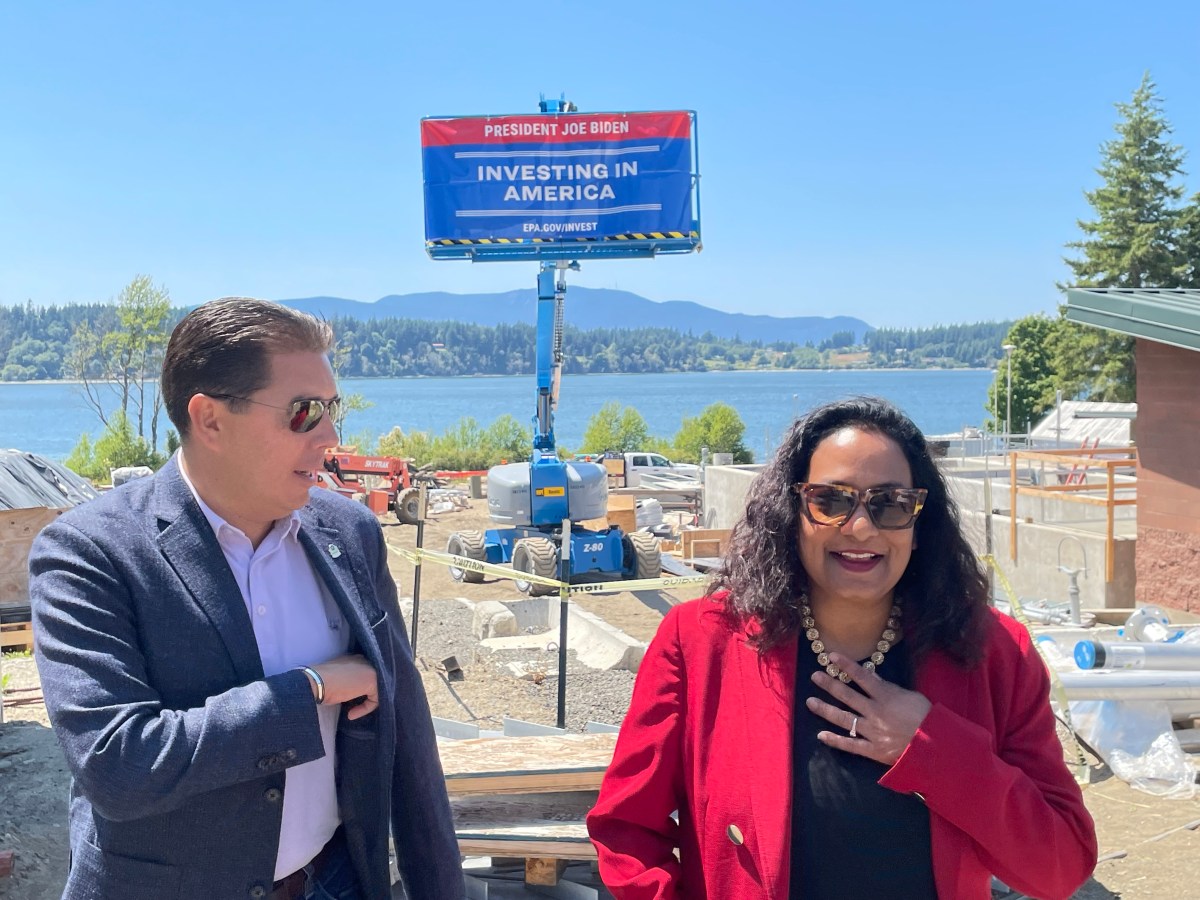
Henry Cagey remembers using an outhouse into the 1970s and drawing water from a well or from the Nooksack River that flows through the Lummi Nation Reservation in northwest Washington state.
“We’d put milk buckets in the back of the truck, bring the water up from the community well and haul it home. That was our drinking water,” Cagey, a Lummi Nation council member, told ICT.
“People who lived by the river took the water right out of the river and we drank it. We’d wait for the sediment to settle and it was OK to drink.”
Until children started getting sick. Young noses filled with thick green mucus and there were infections associated with impetigo. The cause: contamination from agricultural runoff, Cagey said.
Contamination and a growing population on the reservation spurred development of water and wastewater treatment plants in the 1970s to serve the reservation’s 21 square miles, and construction is now underway on a new $18 million wastewater treatment plant that will discharge cleaner treated wastewater into the sea. READ MORE — Richard Arlin Walker, Special to ICT
TREASURY — Chairman Juan Garza, Kickapoo Traditional Tribe of Texas, made a public comment at the Treasury Tribal Advisory Committee meeting on Thursday. Through Zoom, Garza addressed the committee members and guests that included the chairman of the National Indian Gaming Commission, Sequoyah Simermeyer.
For more than two years, the commission has been auditing the tribe’s housing program, which is part of its general welfare program that is paid for through net-revenue from their gaming enterprise, Kickapoo Lucky Eagle Casino, in southern Texas. The tribe is one of three federally recognized nations in the state.
The commission is tasked with monitoring the general welfare programs paid for through net-revenue. The act does not allow the commission to audit anything that doesn’t use net-revenue. The Tribal General Welfare Exclusion Act made it possible for certain general welfare programs to be tax-exempt.
“Our program has been specifically designed to meet the general welfare needs of our tribal community, for the residential housing, who need assistance,” Garza said. “The program also permits our members to sustain (their) practice of maintaining their ceremony homes in Mexico in accordance with our traditional religion and culture.”
The tribe is located on the border of what is now the United States and Mexico. Nearly all of their ceremonies and cultural events happen on their territories in Mexico. Congress has affirmed the nation’s right to freely travel back and forth for this reason.
The commission is alleging that the tribe’s housing program is not in compliance with what is defined as general welfare. Instead it’s saying the money allocated to tribal members for housing are per capita gaming payments, making this money subject to federal taxation. The tribe is firm that they are in compliance.
“To demonstrate to the NIGC that, that is the way they operate the program there have been documentation submissions that have gone into great detail,” said Michael Willis, an attorney representing the tribe. “The focus here has been 2019. Every single payment that was made in 2019, to every tribal member who was eligible to receive those payments, every eligibility determination made by the tribal government as to their qualifications to receive general welfare assistance through the program, (is) consistent with their tribal law. And yet, the NIGC keeps coming up with new ways to suggest that somehow these are per capita gaming payments.”
Sequoyah Simermeyer, chairman of the National Indian Gaming Commission, said it’s not appropriate for him to comment publicly on an ongoing matter. He responded generally about the role of the commission and what it’s tasked with.
“Our review isn’t related to the tax status of any tribe,” Simermeyer said. “As I said, in the bulletin it says, as I said in my comments, our charter in IGRA, is to look at whether or not a tribe is complying with the permissible uses for net gaming revenue.”
Simermeyer said he would be happy to continue looking into this issue and offered to talk with Garza about it. — Pauly Denetclaw, ICT
SUPPORT INDIGENOUS JOURNALISM. CONTRIBUTE TODAY.
Hip-hop turns 50 in 2023. ICT looks at some of the Indigenous artists across the nation who have been impacted by the music.
Christopher A. Mike-Bidtah, or known professionally as Def-I, has been into hip-hop since he was in middle school in the late 90s and early 2000s. He would try to rap, make beats, breakdance and pop.
“It inspired me to feel self-confidence and it gave me a huge platform to be able to speak and express myself in a positive way whether through dance, beat making, rhyme writing, creative writing, poetry,” Def-I, Diné, said. “Just creating the drums, combining percussion over poetry to create rap was huge inspiration for me too because it kind of made me feel empowered as a youth.”
Def-I’s performance styles vary from hip-hop, spoken work and contemporary Native American acoustic. He released his new album “Blue Hour” on Aug. 25. His release comes after winning Hip Hop Single of the Year at the 3rd Annual International Indigenous Hip Hop Award Show for his song “Mamas” Ft. Jessie Davis.
Some of his favorite Native artists in the hip hop community are B-Boy Remind from the Style Elements Crew, A$h the Hunter, DJ Element and more. Other rappers who inspired him are Percee P, Kool Keith and Masta Ace. READ MORE — Kalle Benallie, ICT
Sign up here to get ICT’s newsletter
The death of a fixture of American television with ties to a tribe in South Dakota sent a shockwave across Indian Country in August.
Bob Barker was the face of “The Price is Right” for decades and hosted the show more than 5,000 times. His last was in 2007. He died at the age of 99 at his home in Los Angeles on Aug. 26.
Before taking his talents to California and to the tube, Barker spent a part of his childhood on his homelands on the Rosebud Indian Reservation in southwestern South Dakota. The Rosebud Sioux Tribe confirmed to ICT in an email that he was enrolled.
Many took to social media to share condolences and memories of the icon.
One Native fan, Timothy Huntsinwinter, shared his experience of meeting Barker while in the game show audience years ago. He said Barker was taking questions and he mentioned to the host his Native heritage. READ MORE — Kolby KickingWoman, ICT
- Cherokee Nation citizen appointed Oklahoma Native liaison: Cherokee Nation Principal Chief Chuck Hoskin Jr. called the appointment of Wes Nofire ‘disappointing’ but ‘no surprise’
- NDN Collective prepares for D.C. rally: A South Dakota Native nonprofit is headed to Washington D.C. to protest the 47-year incarceration of Leonard Peltier.
- Photo essay: Montana Two-Spirit celebration: Taking a visual look at the annual celebration
- ‘This is medicine.’ Montana Two-Spirit Society host gathering: A near weeklong gathering has space for healing, celebrating and reconnecting with a focus on celebrating Two-Spirit people as well as allies and members of the LGBTQ+ communities
What we’re reading:
- Indigenous science to be focus at UMass Amherst center on climate change research
- Brazil’s Lula legalizes more Indigenous reservations in Amazon

We want your tips, but we also want your feedback. What should we be covering that we’re not? What are we getting wrong? Please let us know. dalton@ictnews.org.