Help ICT make strides in 2024. Our goal is to raise $150,000 by the end of the year with generous contributions from funding partners and collaborators like you. We’re thankful for your support, and we’re thriving because of it. DONATE TODAY!
Greetings, relatives.
A lot of news out there. Thanks for stopping by ICT’s digital platform.
Each day we do our best to gather the latest news for you. Remember to scroll to the bottom to see what’s popping out to us on social media and what we’re reading.
Also, if you like our daily digest, sign up for The Weekly, our newsletter emailed to you on Thursdays. If you like what we do and want us to keep going, support and donate here.
Okay, here’s what you need to know today:
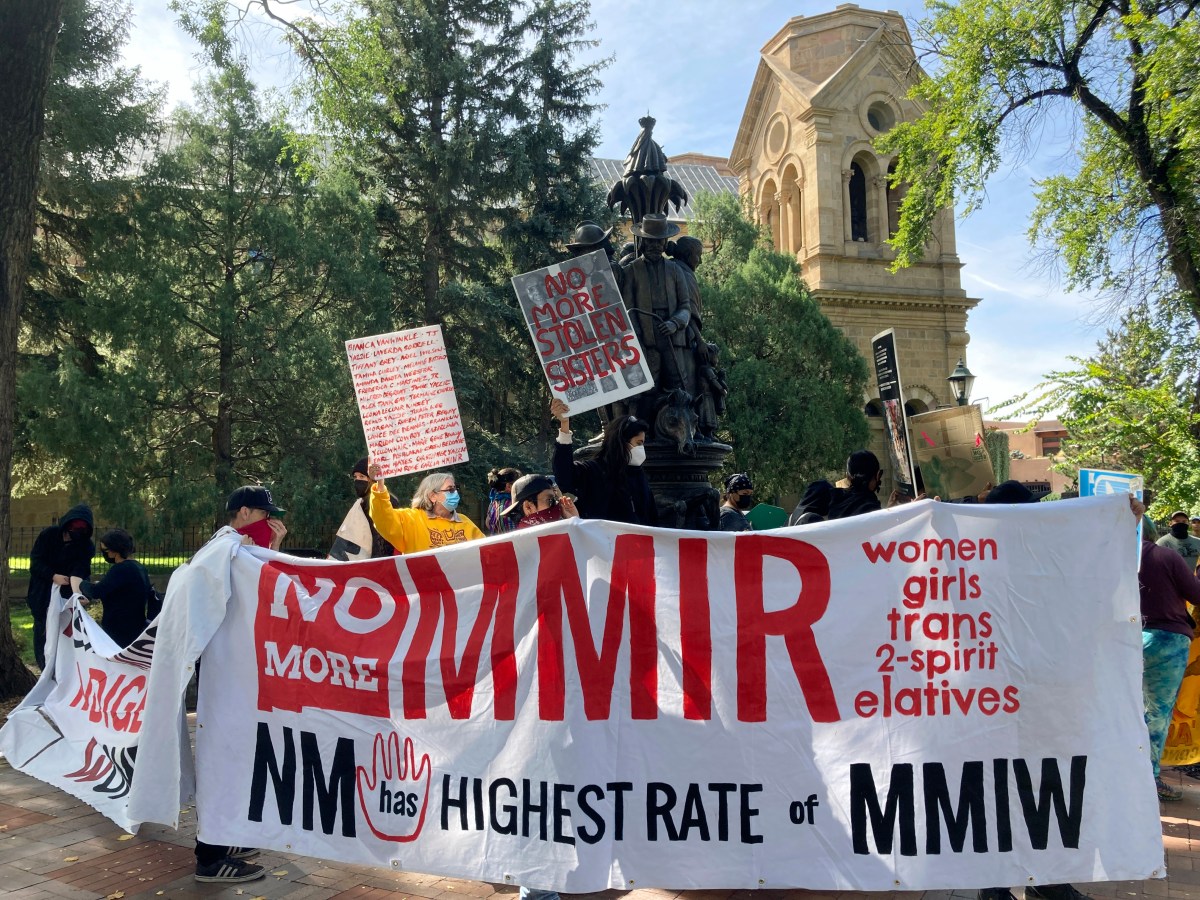
ALBUQUERQUE, N.M. — New Mexico is creating a new advisory council that will be charged with implementing a state plan for responding to cases of missing or slain Native Americans, with top state officials vowing Tuesday that the work will lead to more people being found and families gaining closure.
Democrat Gov. Michelle Lujan Grisham’s announcement follows criticism from advocates who feared the state was losing momentum after the governor dissolved the task force that came up with the plan more than a year ago.
Advocates on Tuesday renewed their criticism, saying work to implement the plan has stalled and that communication among law enforcement and victims’ families remains one of the biggest problems. That issue was acknowledged by the governor as she announced the next step in New Mexico to address what has been described as a crisis for Indigenous communities both in the United States and Canada.
“Bringing more law enforcement to the table will help address a major crux of this issue: a lack of coordination among federal, tribal, state and local entities,” Lujan Grisham said in a statement. “The work of this group will help bring missing Native people home, provide closure to families and communities, and prevent other families from experiencing these tragedies.” READ MORE — Associated Press
SUPPORT INDIGENOUS JOURNALISM. CONTRIBUTE TODAY
Greetings, relatives:
As we enter the final month of 2023, take a moment to catch up on the news that made headlines in November across Indian Country.
The National Congress of American Indians elected a new president.
A new report recommends urgent action needed on missing and murdered Indigenous people, human trafficking.
Interior Secretary Deb Haaland has been conducting her “Road to Healing” tour for more than a year, meeting with Indigenous survivors of U.S. boarding schools. Her tour came to an end with the final stop in Montana in November.
For the second time in U.S. history, a citizen of the Chinook Indian Nation will serve as a United States ambassador. FIND ALL OF THE BEST OF NOVEMBER HERE — ICT
Around the world: Indigenous languages face extinction in Australia, a city in New Zealand expands the council to include a Māori seat, Saskatchewan stops withholding aid from people with settlements, and a Uyghur filmmaker tells a judge he was tortured into confessing.
AUSTRALIA: Advocates want Aboriginal languages protected
The Mirning language, spoken by the Aboriginal people along the Nullarbor coast in Australia, is in danger of disappearing completely, with no individuals currently learning it as their Native language, National Indigenous Television reported on Nov. 21.
Australia, which once boasted more than 300 Indigenous languages, now contends with one of the planet’s most severe rates of language decline, resulting in fewer than 30 Indigenous languages remaining as primary spoken tongues today, National Indigenous Times reported.
In an attempt to counteract the trend, Mirning representatives turned to the Goldfields Language Centre in Kalgoorlie-Boulder in southwestern Australia. READ MORE — Deusdedit Ruhangariyo, Special to ICT
ST. PAUL, Minn. — For the annual fall renewal of her shaman spirit, Mee Vang Yang will soon ritually redecorate the tall altar in her living room where she keeps her father’s ring-shaped shaman bells.
She carried them across the Mekong River as the family fled the Communist takeover of her native Laos four decades ago. Today, they facilitate the connection to the spiritual world she needs to help fellow refugees and their American-raised children who seek restoration of lost spirits.
“Like going to church, you’re giving beyond yourself to a greater power,” said the mother of six through a translator in Hmong.
It’s the language spoken for the most important spiritual celebration in the Hmong calendar, the “Noj Peb Caug” — translated as “new year,” but literally meaning “eat 30,” since the ceremonies traditionally were tied to the fall’s post-harvest abundance shared with the clan and offered to spirits. READ MORE — Associated Press
Sign up here to get ICT’s newsletter
A new institute will focus on water rights and policy–as well as looking to future generations. The Native American Rights Fund has created the Tribal Water Institute. A $1.4 million grant from the Walton Family Foundation provides seed money. NARF Staff Attorney David Gover spoke with ICT’s Shirley Sneve about the project.
“Sins of the Shovel: Looting, Murder, and the Evolution of American Archaeology” is a new book written by archaeologist Rachel Morgan. From reckless looting to professional science, the book explores the history of early American archaeology. ICT’s Paris Wise has this interview.
The White House Tribal Leaders Summit will be Dec. 6-7 in Washington, D.C.. This is a direct dialogue between elected tribal leaders with members of the cabinet and other government agencies. Regular contributor John Tahsuda tells us what’s ahead.
WATCH
Earlier this month, a $200,000 grant was awarded to national nonprofit Reach Out and Read by the Indian Health Service to distribute children’s books at Indian Health Clinics around the nation.
The award will allow the nonprofit to purchase more than 31,000 children’s books and nearly double what has been offered in the past, according to a press release.
Dr. Jane Oski of Sacred Peaks Health Center in Flagstaff, Arizona said families that are newcomers to the health center are excited when they find out they are Reach Out and Read providers.
“Since we provide books in dominant tribal languages, such as Navajo and Hopi, families pass the word to other tribal members in the greater Northern Arizona region,” Oski said in the press release. “Not only are families visiting the clinic to get that free book, they are now also ensuring that their child is getting up-to-date medical care like immunizations.”
Reach Out and Read “works with publishers who specialize in Indigenous writers and illustrators” and serves more than 200 tribal sites, including 45 IHS sites.
“It’s always exciting to see a child’s face light up when they receive a book at their appointment and immediately engage to read with their families,” Dr. Tina Pattara-Lau, Maternal Child Health Consultant, IHS said in the press release. “Thanks to Reach Out and Read, we have books available for families at IHS sites across the country, including Arizona, Oklahoma, New Mexico, and South Dakota.”
- ‘Bad Press’ chronicles Muscogee journalism victory: The documentary reveals the struggles of Indigenous journalists to freely cover tribal governments. The movie will screen Nov. 26 at Portland Art Museum’s Tomorrow Theater, followed by a panel discussion moderated by Underscore News
- Climate report shows drought impacts in Southwest: The Fifth National Climate Assessment highlights drought as a major hazard in the Southwest and says its impacts are most likely to harm tribal communities
- Native American heritage celebrated during Portland NBA game: Hundreds of Indigenous community members came together in celebration of Native American Heritage Month during the Portland Trail Blazers versus Oklahoma City Thunder game
- Sports Illustrated is the latest media company damaged by an AI experiment gone wrong
- This Indigenous Restaurateur Knows All Too Well That Women Need More Credit For Their Work
- US moves to protect wolverines as climate change melts their mountain refuges, threatens extinction
We want your tips, but we also want your feedback. What should we be covering that we’re not? What are we getting wrong? Please let us know. dalton@ictnews.org.

ICT is a nonprofit news organization. Will you support our work? All of our content is free. There are no subscriptions or costs. And we have hired more Native journalists in the past year than any news organization ─ and with your help we will continue to grow and create career paths for our people. Support ICT for as little as $10. Sign up for ICT’s free newsletter.