

Greetings, relatives.
A lot of news out there. Thanks for stopping by ICT’s digital platform.
Each day we do our best to gather the latest news for you. Remember to scroll to the bottom to see what’s popping out to us on social media and what we’re reading.
Also, if you like our daily digest, sign up for The Weekly, our newsletter emailed to you on Thursdays. If you like what we do and want us to keep going, support and donate here.
Okay, here’s what you need to know today:
The story of Chief Standing Bear, which has reached new levels of prominence in Nebraska of late, now will be spread further through the U.S. mail.
A “Forever” commemorative stamp bearing the likeness of the Ponca leader is to be issued and become available for use nationwide May 12. The U.S. Postal Service says it is printing 18 million of the postage stamps.

A dedication ceremony is to be held in Lincoln, Nebraska that day with Anton Hajjar, vice chair of the U.S. Postal Service Board of Governors; Candace Schmidt, chairwoman of the Ponca Tribe of Nebraska; and Judi gaiashkibos, executive director of the Nebraska Commission on Indian Affairs.
The Chief Standing Bear stamp features a portrait by illustrator Thomas Blackshear II, who created the image based on a black-and-white photograph taken in 1877. At that time, Standing Bear was in Washington, D.C., as part of a delegation of Ponca chiefs appealing to government officials for the right to return to their homeland. READ MORE — Nebraska Examiner
SUPPORT INDIGENOUS JOURNALISM. CONTRIBUTE TODAY
The Navajo Nation is set to receive federal emergency aid to help repair damage caused by severe flooding during a series of storms earlier this year.
President Joe Biden on Tuesday granted a disaster declaration for the largest Native American reservation in the U.S., which extends across Arizona, Utah and New Mexico. Biden said storms on Jan. 14-17 had affected many Navajo communities.
The funds will help with emergency repairs and may also be used for other mitigation efforts.
The Federal Emergency Management Agency will coordinate the recovery operations in the affected areas, according to a statement from the White House. — Associated Press
MINNEAPOLIS — The University of Minnesota should hire more Native American faculty, offer students additional financial support and give back land to atone for its historic mistreatment of the state’s tribes, a report conducted through a collaboration with the school concluded Tuesday.
The report said that the university’s founding board of regents “committed genocide and ethnic cleansing of Indigenous peoples for financial gain, using the institution as a shell corporation through which to launder lands and resources.”
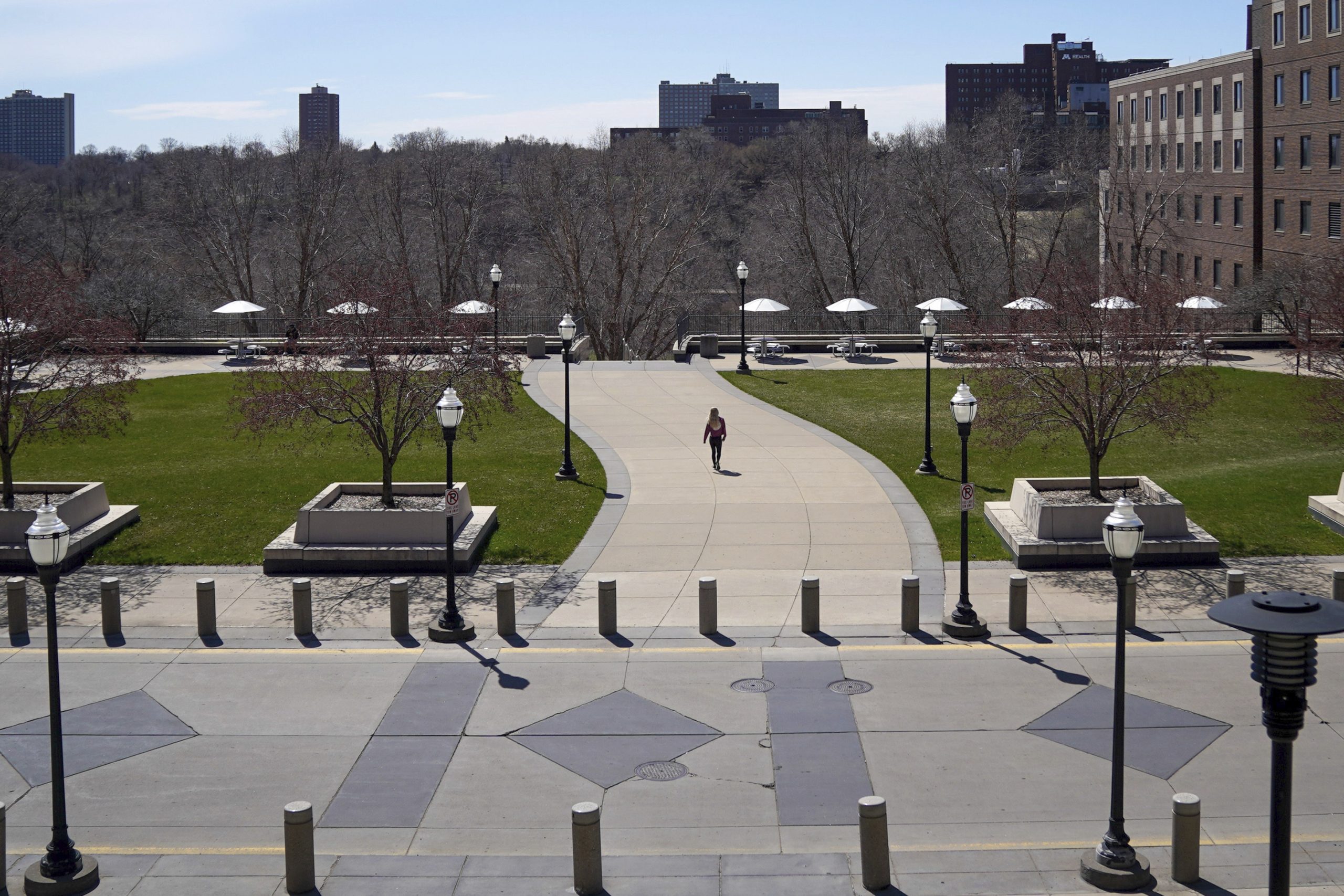
Totaling more than 500 pages, the report marks the first time a major American university has critically examined its history with Native people, said Shannon Geshick, executive director of the Minnesota Indian Affairs Council and a citizen of the Bois Forte Band of Chippewa.
The report is the result of a collaborative effort between the council and the university called the TRUTH Project — short for Towards Recognition and University-Tribal Healing — which has received funding from the Mellon Foundation, Minnesota Public Radio reported. READ MORE — Associated Press
Around the world: Canadian leaders praise the Vatican’s rejection of doctrine, Noongar glass artists will help celebrate World Heritage Day in Australia, and a Māori business leaders draws special recognition in New Zealand.
CANADA: ‘Doctrine of Discovery’ decision draws cheers
Indigenous experts and leaders across Canada cheered the Catholic Church’s decision to renounce the centuries-old Doctrine of Discovery, which formed the basis for colonizers to take lands from Indigenous peoples, CBC News reported on March 31.
The doctrine, which was supported by papal bulls from the 1400s, concluded that Christian colonizers could usurp lands from non-Christian “heathens.” It was later incorporated into U.S. property laws through a 200-year-old Supreme Court decision in the Johnson v. M’Intosh case in 1823.
First Nation and other Indigenous leaders in Canada said the Vatican’s recent decision to renounce the doctrine represents a noteworthy stride toward reconciliation, CBC News reported.
“This is a historic day,” said Matthew Wildcat, Ermineskin Cree Nation, an assistant professor in political science and Native studies at the University of Alberta. READ MORE — Deusdedit Ruhangariyo, Special to ICT
Sign up here to get ICT’s newsletter
Michael Oltrogge leads Nebraska Indian Community College as its president. He has been recognized as Honoree of the Year, which is an award given by the American Indian College Fund.
Southeast Alaska is a special place in the world for Marina Anderson. Through her work at Sustainable Southeast Partnership, she’s forging new partnerships to strengthen the region’s economy and cultural values. ICT’s Shirley Sneve interviewed her at the Reservation Economic Summit in Las Vegas.
The Colorado River basin is in the middle of what experts call a megadrought. It is the region’s worst in about 1,200 years. That has prompted several states, in the West, to negotiate how to allocate water. Last week, the federal government said it reached a deal with state, local and tribal governments in Arizona. ICT regular contributor John Tahsuda has been following these developments.
The Biden administration will send $585 million to water projects in 11 Western states, Interior Department officials said Wednesday.
The funding, provided in the 2021 bipartisan infrastructure law, will go toward 83 projects in Arizona, Colorado, Idaho, Montana, New Mexico, Nevada, Oregon, South Dakota, California, North Dakota and Washington. The law provided $8.3 billion for water infrastructure projects over five years.
South Dakota’s funding includes $22.17 million for maintenance and upgrades to the Mni Wiconi pipeline that brings water from the Missouri River to cities, rural users and reservations in the central and western parts of the state. The money will fund backup generators, watermains, a storage tower near Kadoka, replacement of an eroded crossing under the White River, and replacement of an aging booster station.
Additional South Dakota funding of $2.16 million will go to the town of Kenel, on the Standing Rock Reservation, where 3,200 feet of asbestos-cement water pipes will be replaced with modern polyethylene pipe. READ MORE— South Dakota Searchlight
FOLLOW ICT ON SOCIAL MEDIA: FACEBOOK, TWITTER, INSTAGRAM, TIKTOK
What’s trending on social media:
- U.S. treasurer visits, discusses Lummi business development: U.S. Treasurer Marilynn Malerba met with Lummi Nation leaders, entrepreneurs and tribal members March 28 to discuss tribal needs and future business development
- Flexing our sovereignty: An Introduction to Underscore’s Food Sovereignty Project
- Spiraling housing prices spark worry about Hawai’i’s future: In 2022, US census data showed more Native Hawaiians live outside Hawai’i than within
- Democrats’ choice wins key Wisconsin Supreme Court race
- Community colleges are reeling. ‘The reckoning is here.’
- Chickasaw Nation Lighthorse Officer named Indian Country Law Enforcement Officer of the Year
We want your tips, but we also want your feedback. What should we be covering that we’re not? What are we getting wrong? Please let us know. dalton@ictnews.org.

Our stories are worth telling. Our stories are worth sharing. Our stories are worth your support. Contribute $5 or $10 today to help ICT carry out its critical mission. Sign up for ICT’s free newsletter.

