
Mark Wagner
Special to ICT
Pepper Morse remembers his friend Chase “Rookie” Cuny as a gifted Native golfer and softball player who was guaranteed to bring a laugh. One of a kind.
“Always ready,” Morse, Diné, told ICT.
Now, after his accidental death in 2012 at 27, his memory lives on at the Rookie’s Tough 2-Man Memorial Golf Tournament, a charity fundraiser for the Swinomish Boys and Girls Club and tribal programs at the Swinomish Indian Tribal Community on Fidalgo Island near Anacortes, Washington.
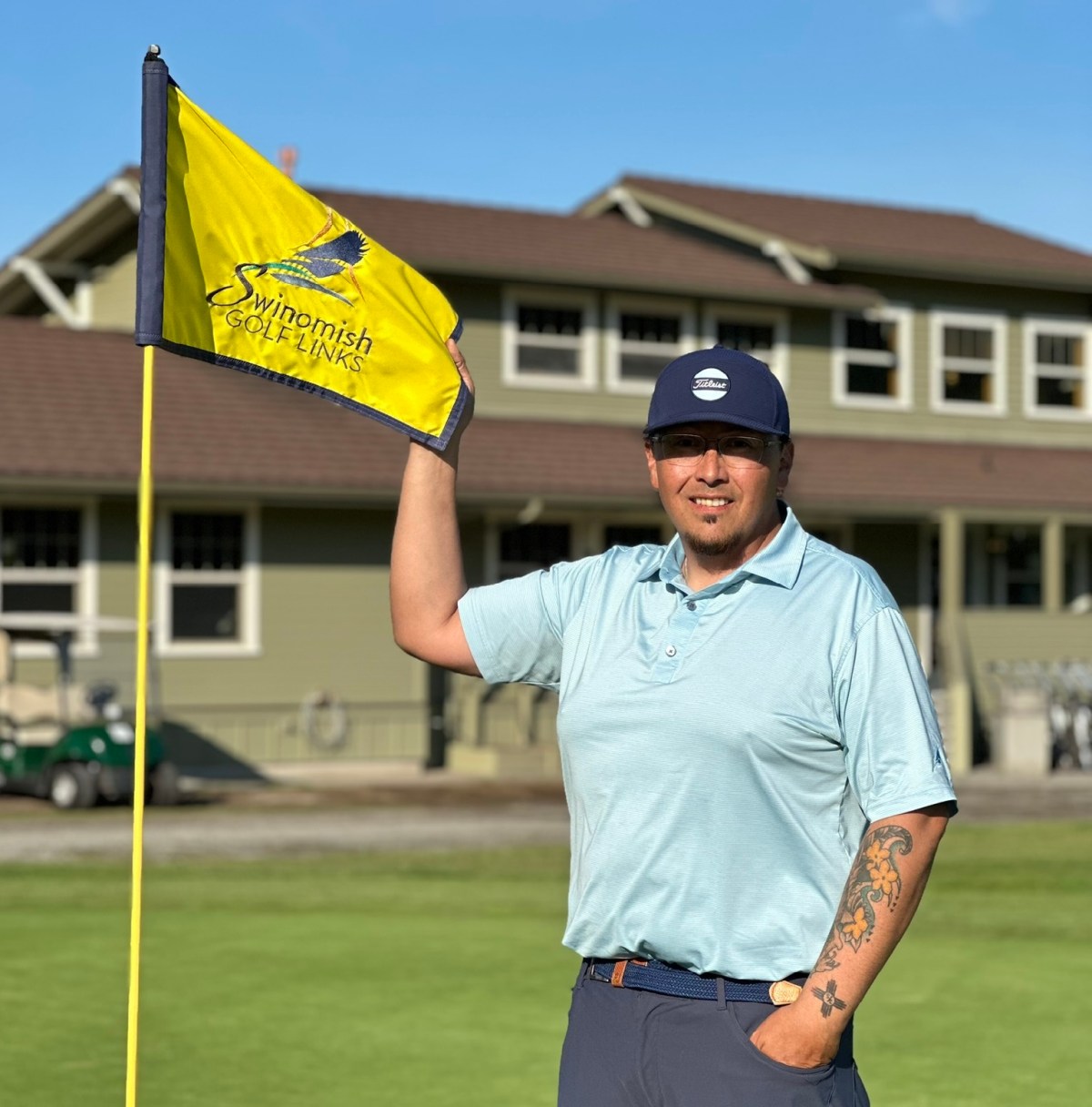
More than 100 golfers are expected to turn out this year at the tribally owned Swinomish Golf Links on Aug. 21-22 for the 5th annual tournament founded by Morse and Melissa Felix, who is Lummi with strong ties to Colville Tribes, to honor their friend.
The tournament is a popular way for many Native golfers and friends to honor those who have gone before.
“It’s grown quickly,” Morse said, “and is now a way to gather and compete for all of our loved ones who have continued their journey.”
Jimi Bobb, who runs the Native Golfers Association, attends each year with his uncle, Steve Edwards, who introduced him to golf.
“A great cause for a good friend,” Bobb said in a recent interview. “My Uncle Steve got me into golf when I quit drinking, so we go each year. It’s awesome.”
Honoring a friend
In addition to being an athlete, Cuny, Oglala Lakota, was also a bit of a daredevil, willing to take a leap — as others had — from the Rainbow Bridge into the Swinomish Channel, the waterway that runs between La Conner, Washington, and the Swinomish reservation.
In August 2012, after a day of golfing and dinner with a friend who loved the thrill of the freefall into the channel, Cuny made the leap, but did not resurface. Divers found his body two days later.
“When we got to 10 years since Chase did not come back up,” Morse said, “it seemed like a good time to mark his passing.”

As he prepared to put on the 2-Man Memorial for his friend this year, Morse recalled traveling with Cuny from Lummi to Aberdeen to Mesquite for softball tournaments and golf. Originally from Portland, Oregon, Cuny would visit family friends in Swinomish.
Morse suspects he got his nickname, “Rookie,”’ at Native softball tournaments. He was a regular recruit for the Tulalip Renegades Softball Team.
“We would golf at Avalon Links in Burlington,” Morse recalls, “that was where the tribe had a membership in the years before purchasing Swinomish Golf Links.”
The 2-Man Memorial Tournament was first held in 2022 at Swinomish Golf Links, formerly the Similk Bay Golf Club, which was bought by the tribe in 2014.
Bobb, who runs the Native Golfers Association, or NGA, also sponsors the NGA Championship tournament at the golf club in August. The NGA Championship is in its eighth year, also hosted by Swinomish, and brings in Native golfers from around the country.
“When the tribe purchased Swinomish 13 years ago,” Bobb said, “I worked there for 10 of those years.”
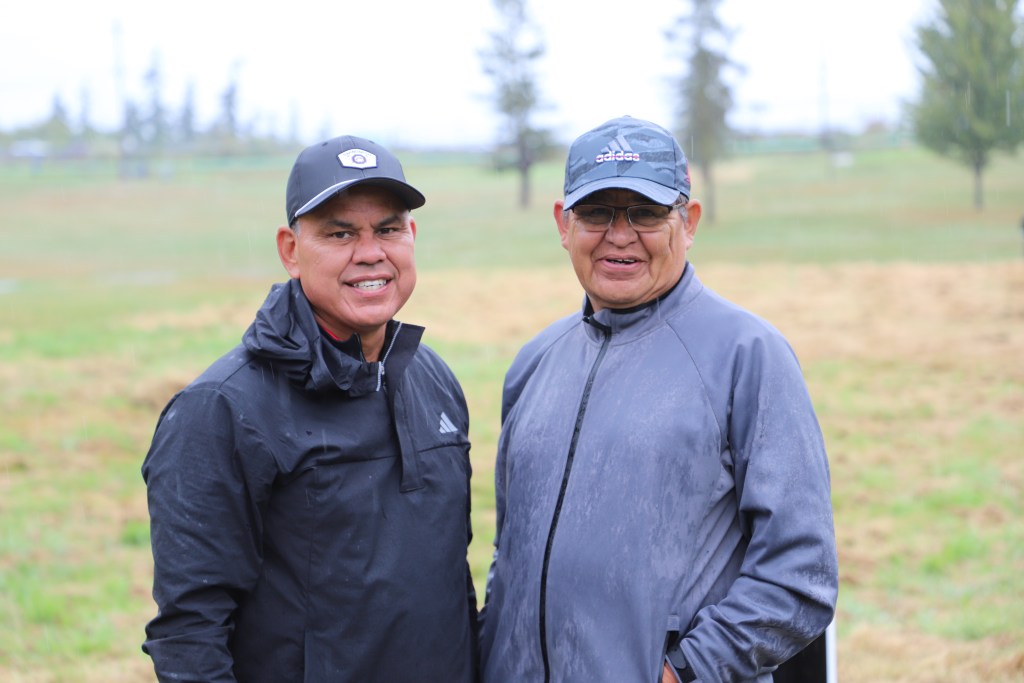
He celebrates the tribe’s support of the many Native tournaments and hopes the golf course will continue to get young people and women out onto the course, adding, “the tribe has helped out with improvements to the course and were able to get the gear the course needed for upkeep.”
Both Morse and Bobb worked alongside Superintendent Matt Atterberry, who has transformed the golf club, including newly designed holes and greens. Morse also notes the minimal use of watering systems.
“The Swinomish Experience has gotten much better since the tribe purchased the course,” Morse said.
Swinomish Indian Tribal Community runs seven enterprises, including the Swinomish Shellfish Company.
Achieving Hózhó
For Morse and Felix, the tournament is also the foundation of a business venture. They registered Hózhó Experiences as a limited liability corporation in 2025, named for the Navajo concept of harmony and balance.
The company will run golf tournaments and curate tours of the San Juan Islands and the Cascade Highway in Washington. This year’s 2-Man Memorial is the first of three tournaments the business will run, all at Native-owned golf courses.
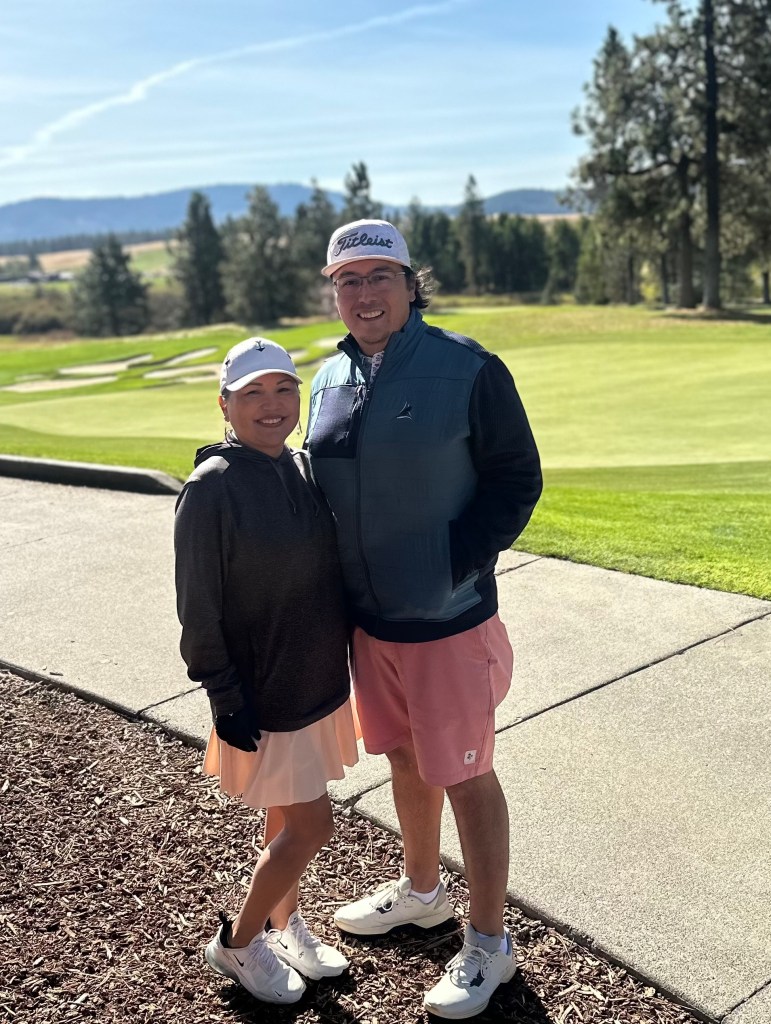
“We will make experiences based on a client’s needs,” Morse said. “The trip on the North Cascades Highway is amazing, and It’s something my dad instilled in me planning our trip to Winthrop one year. We can grow old, but memories last forever.”
Felix comes to the enterprise with 10 years experience in business, including more than 10 years creating and running a wholesale seafood business that served the interests of local tribal fishermen, including members of her own family.
“I was just so amazed at his passion,” Felix said of her new business partner. “I am more business-minded. I like logistics. He just took off, got the website up and going, worked diligently on pulling some things together. I was at first taken aback and amazed at his 100 percent passion for Hózhó.”
A history with golf
Golf appears to be the common thread for Felix and Morse.
Felix laughs recounting her days playing golf at Lake Roosevelt in Coulee Dam, Washington, a high school that did not have a girl’s team. “I made the varsity,” she said.
She grew up as part of Lummi Nation and the Colville Tribe from eastern Washington. Her father, Martin John, was a tournament player who was once mentioned in Golf Digest.
“All of his adult life he played,” Felix told ICT. “We traveled with him. Mostly I remember the feasts, when they fed the golfers. And he liked to tell numerous golf stories, but the one he told again and again was how, when he first started playing, he got mentioned in Golf Digest, as the most-improved golfer in the year.”
At the time there were not as many Native tournaments as there are today, but Felix recalls traveling to the Treaty Days Tournament at Apple Tree Resort, one of the Yakama Nation’s annual events. Her father played every year.
Morse and Felix met while both worked at Swinomish Golf Links. As a way to get to know each other, Felix set up a day playing a round at the nearby Loomis Trail. At hole #12, a long-par three, Felix hit a perfect shot to the green, but her two male partners missed it.
“That’s when I knew she’s the one,” Morse laughed.
Partnering now in both life and business, in remembrance and hope, the two have co-founded Hózhó Experiences.
Looking ahead
The 2-Man Memorial is tapping a growing interest in golf among Native communities.
A golf course requires the most land of any sport, land that is the combined efforts of Mother Nature and the artistry of human hands. The only uniform aspect of the sport is the size of the cup, a 4.5-inch opening in the earth that is the site of the joys and sorrows — frustrations and aspirations — of the some-odd 46 million golfers in the country.
Native golf took a turn in the 1970s and 1980s when the revenues from gaming allowed tribes to develop golf facilities, and many tribes have hired the game’s best architects.
The Mescalero Apache Tribe developed the Inn of the Mountain Gods in 1975 with a championship golf course. Today, the celebration of land and design, recreation and economy on Native land continues to grow, as more than 70 tribes, bands and nations have gotten into the game, stretching across the country from Hawai’i and California to the East Coast.
Hózhó Experiences works closely with several Native-owned courses in Washington to promote its efforts. Another all-Native stroke play event is set for Oct. 3-4 — the Qawqs Classic at Salish Cliffs, which ranks among the Top-15 courses in the state of Washington.
Morse cites golf as an aid in his recovery.
“I have an addictive personality,” he said. “I got into some dark times. When I was coming out of that, in 2021, golf was that safe place for me, a place where I could have an outlet. I started working at Swinomish and began again from there.”
He strongly believes in the benefits of golf, noting the physicality of the game, of being outside and walking. He also enjoyed the social aspects, the camaraderie.
“Sometimes playing by ourselves is cathartic as well,” he said. “But the biggest benefit is being out in nature as an easy way to be in touch.”
His Native heritage is most alive for him in the connection to the earth. Starting Hózhó Experiences has been a part of that.
“It’s a humbling experience,” he said. “One of faith. A lot of things these days I have been not quite sure what is on the other side of the door.”

