
Pepper Morse
Diné
Autumn has officially arrived, with forested horizons now revealing their traditional yellow, orange, and red hues as deciduous giants prepare for the colder months to follow. The crisp visuals of laughter and sportsmanship float gracefully away as the dew reveals triumphs and losses alike on carefully mown surfaces.
Within the Pacific Northwest there are some timeless visuals that will never lose their luster. Bold cedars and pines that hold their green year-round, waves cresting onto coastline shores, or tranquil gurgling rivers and streams smoothing the boulders of their beds. As well as championship-style golf in hidden gems of unlikely destinations.
Another successful golf season is coming to a close with one last event in New Mexico, the Native American Open on Oct. 17-18 at the Santa Ana Pueblo in New Mexico. There are certain tournaments and facilities within the Northwest Indian Golf Tournament circuit that are synonymous with quality conditions and homestyle hospitality — the largest name being that of the 37th Annual Cay-Uma-Wa Invitational held annually toward the end of September at the Wildhorse Golf Course nestled in the foothills of the Blue Mountains of Pendleton, Oregon.
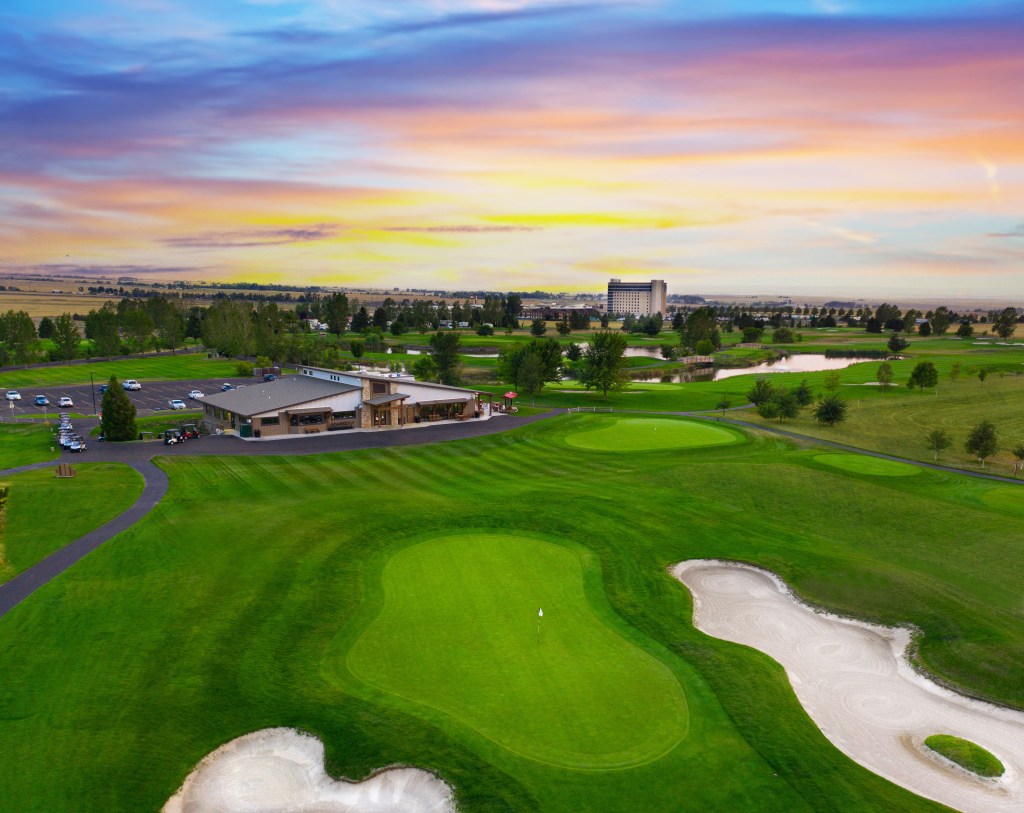
A record turnout this year brought in 160-plus players from all over Turtle Island. The event has grown over the years, and it now brings in a sold-out field annually, with players still on the waitlist. It is a great excuse to not only compete with greens smooth and fast like putting on a basketball court, or fairways and rough of lush impeccable grass, but a time to connect with family and friends.
Owned by the Confederated Tribe of Umatilla Indian Reservation, Wildhorse Golf Course is also the hosting site of several other notable events, including one of the days during the Northwest Indian Memorial weekend and the huge one-day Eddie Palmanteer Memorial Scramble. It also is a stop along “The Road to the LPGA,” with an Epson Tour event.
There are also a handful of new individual stroke play events to the circuit within Washington State that utilize facilities that are Pacific Northwest gems and maybe unknown to players near and far. The most recently used was the Salish Cliff Golf Club and home to the Qaw̓qs Classic at Salish Cliffs.
Qaw̓qs (pronounced COW-ks), which means raven in the local tribal language of Lushootseed, was intended to bring a bit of light to a course deserving of a signature tribal stroke play event. Salish Cliffs ranks well inside the Top 20 of Washington State this season at #13, and Salish Cliffs has made it inside the Top 15 of Golf Digest since 2021, and even the Top 10 from 2013-2020. Salish Cliffs is owned and operated by the Squaxin Island Tribe and Little Creek Casino Resort, and currently is on track for its best season so far. Logging over 500 more rounds in 2026, the PGA Director of Golf/Head Professional, Tyler Brown, is the face of the course and shared his excitement with how well the amount of play has been for the facility this year. With premium carts and all of the complimentary considerations from divot tools and ball markers to warm-up balls and buckets of ice, the course runs off of 10-minute intervals to ensure a flowing pace of play.

But if those Golf Digest awards, hospitable golfing considerations, and a Best of the South Sound award-winning resort less than 1/8 of a mile from the golf course gates aren’t enough to convince you to experience the Gene Bates design, then maybe the fact that it was recognized as the world’s first “salmon-safe” certified golf course will coax you into a round. Or several more after your first 18 holes.
Salmon fishing, and fishing/crabbing in general is a predominant exercise of the treaty rights within the tribes of the Salish Sea — a right that was hard fought for over the last several decades. I spoke with a Squaxin Island (SIT) tribal elder, fisherman, and avid tournament golfer – David “Davey” Whitener Jr. – during the meet-and-greet reception after the Saturday round this year. He was unable to compete in the 1st annual event, though he’s excited to help grow the event in years to come. Davey was coming off the water that day from many hours of beach seining where he was able to catch over 60 fish and make a living for his family.
He expressed his concerns of the timing for this year’s event overlapping with the crucial time that the Salish Sea fisherman have to harvest their catch. The wage he was able to make for the day outweighed the desire to play, and rightfully so. The fact that the tribe’s course was intentional with what matters to their people during the design and grand opening in 2011hold true to this day. Similarly, Qaw̓qs Classic Men’s Open Flight Gross Champion and SIT member Brett Orozco later spoke on the procedures taken when harvesting clams during some of their digs. Something that stuck out was how they give back to those whose portion of beach they were dug from.
Being on or by the water is a way of life for many families in the region. Water brings life and meals, and water is life for all – even for Qaw̓qs Classic Championship Flight Champion and Brett’s dad, Tandy Charley. He lives off the bounty of the river and its water. Tandy was a 14th Round MLB Draft Pick by the Baltimore Orioles in 1981; he has also competed in PGA Champions Tour Monday qualifiers previously. But he makes his living as a fishing guide along the Quinault and Queets Rivers. Allowing the fish to populate the rivers puts food on his family’s dinner table. So the fact that Salish Cliffs is among the salmon-safe golf courses, I can only assume, means more to the players whose livelihood depends on healthy fish and waterways.
Little Creek Casino Resort is situated in the Kamilche Valley and at the base of the Little Skookum Inlet. The Squaxin Island Tribe utilizes that water not only for harvesting salmon and crab, but shellfish, too. In fact, the 45th Annual Oyster Fest was underway during both days of this year’s Qaw̓qs Classic and was using the Little Creek Casino Resort as their hosted lodging, gearing up for the International Conference on Shellfish Restoration (ICSR 2026) that went on from Oct. 4-7. With nearly 200 rooms, the double tower hotel is just 20 minutes outside of the Washington State capital of Olympia. There’s also a pet-friendly RV Park with full hook-ups. There is an award-winning spa, Seven Inlets Spa, and a multitude of award-winning choices for dining, including the Island Grille Restaurant. The Little Creek Casino Resort is well-known as the reigning Best of the South Sound facility in multiple divisions. The tribe is acknowledged everywhere you look, from the pillars in the sports bar to the carpets and fixtures on the walls. The representation and art curated throughout the facility honored long traditions of carved masks to creative expressions of painting framed. Even the golf course lets you know the moment you drive up the road past the initial sign that you are at one of the premiere tribal courses in the country.
Holding onto traditions that have been passed down for generations is the way that many are still here, and thriving. In a world that has many believing that your worth is measured by your address and success by the dollar sign followed by the number in your bank account, there are thousands of individuals who would beg to differ. There are entire regions that practice traditions and languages passed down since time immemorial. One of those traditions, though not nearly as engrained, is golf.
‘Golf is the glue’
“Golf is the glue,” Dr. Mark Wagner, a golf historian and author of the book, “Native Links: A Surprising History of Our Native People in Golf,” in a recent conversation.
It’s a glue that has been binding tribes and their resorts toward purchasing or creating venues deserving of a signature tribal stroke play event. Salish Cliffs is not the only top-ranking course in the Pacific Northwest that has a tribal stroke play weekend to host its players.
Whether you are from down the road in Canada, an out-of-state elite ball striker, or even a local higher handicapper, the Salmon People Invitational has been a June staple along the Northwest tribal golf trail. That trail leads directly to the Loomis Trail Golf Club which for years was a private country club and sister course with Semiahmoo Golf Club, but was purchased by the Lummi Nation within the last 10 years.
Jay Julius, business owner, full-time commercial fisherman and former Lummi chairman, recounts fondly his time spent in California and getting into tournament golf. He vividly remembers hitting a fantastic shot on a closest-to-the-pin hole and winning a take-home KP envelope; enough for his entry fee. From there on he was hooked.
He later started the Salmon People Invitational, during the same weekend of the Stommish Water Festival, after Lummi had purchased the course. It has brought together many players, from teenagers to super senior elders, to enjoy healthy competition and share meals of the freshly barbequed seafood behind the 18th green and clubhouse.
He told me this year during the Father’s Day weekend event, “It doesn’t get much better than this,” referring to getting to share a meal of fresh-caught salmon, prawns, and crab with side dishes on the golf course.
Smelling the embers and watching the smoke and indirect flame char and blanket the fish soothed the spirit. He and his son, Sequoyah, carefully positioned the kebab-like ironwood “fish sticks” and have the process perfected. He was not lying; it does not get much better.
That particular way of cooking has been a tradition passed down from generation to generation, and besides the freshness of the catch, the fish sticks are a key part, Julius explained. The set of sticks that you are gifted need to be treated like gold, because they will only get better with time and each set of fish cooked with them.
The common theme, though, is that golf and water both bring life to the place it’s found. From birthing a new golf event, harvesting then cooking a fresh catch, or living each day and each swing with intention, it’s a labor of love. One when you cook for your guests and the process seems to just continue to get better, you come to realize that many things truly do get better with age and time.
‘Take a swing’
Since its inception in the 1400s along Scottish coast winds and pot hole bunkers, golf has been a bond. It has settled debates and disputes, boosted confidence and frustrated some of the best in the world. It has given enough elation to the newcomers toward “getting the bug.” It has been the addiction that’s aided in the sobriety of poisons, and it has given others a means to provide for their families.
Golf is life, and not in the sense of nothing else matters, but in the overlapping ability to look in the mirror without getting blinded by its reflection. Golf shows you your own integrity just as much as the character of others. Golf within the Native community is something that feels new, but rest assured it has been here much longer than most know.
The golfing community has grown alongside the game’s technology and innovations. Moving forward, tribal golf tournaments are going to continue to grow in field sizes but more importantly, on the impact that they will have on their players, families, communities, and the nations near and far.
This is your formal invitation to come and feel the intention behind Hozho Experience’s event first hand and bring that uplifting light back home to give to others.
Whether it’s a team event or individual tournament, we hope your travels are safe and you return to your home the way you left it. May the paths you choose align with the purpose you have been given. As always, may you take a swing and trust the flight.
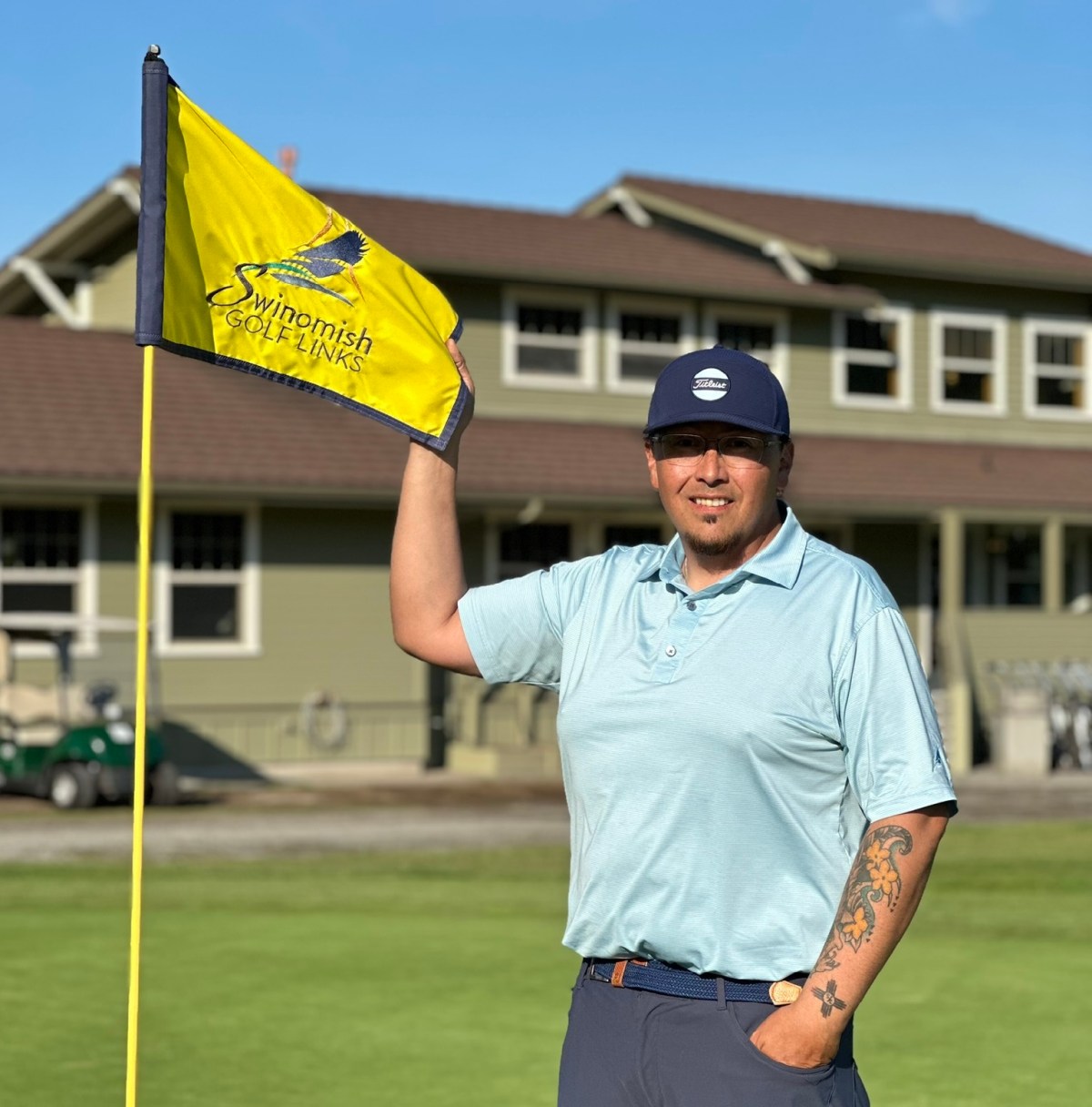
Pepper Morse, Diné, a golf professional in the Pacific Northwest Section, founded a memorial golf tournament at the tribally owned Swinomish Golf Links honoring his late friend, Chase “Rookie” Cuny. Morse and his partner, Melissa Felix, founded the tournament and a business, Hózhó Experiences, named for the Navajo concept of harmony and balance, to run golf tournaments and curate tours of the San Juan Islands and Cascade Highway in Washington State.

