Help ICT make strides in 2024. Our goal is to raise $150,000 by the end of the year with generous contributions from funding partners and collaborators like you. We’re thankful for your support, and we’re thriving because of it. DONATE TODAY!
Greetings, relatives.
A lot of news out there. Thanks for stopping by ICT’s digital platform.
Each day we do our best to gather the latest news for you.
Okay, here’s what you need to know today:
MTV gives a platform to Oglala Lakota teens
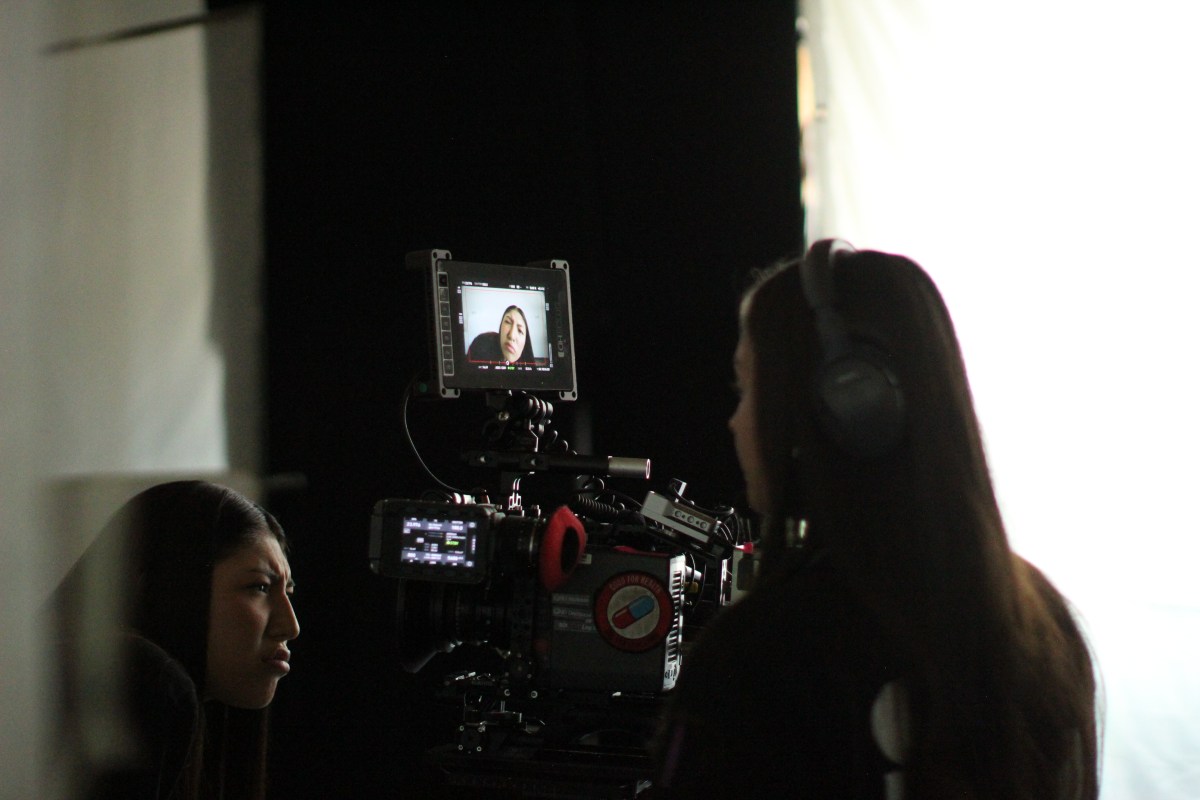
Throughout November, you may have caught a glimpse of a 1:20 short on MTV. The short, “We Got Next,” was directed by seven Oglala Lakota teenagers from the Pine Ridge Reservation.
This year, MTV is showcasing an artful short film made by several Oglala Lakota teenagers in honor of Native American Heritage Month through a partnership with Outlast Arts and Education. Outlast is a program on Pine Ridge that provides opportunities for youth to engage with filmmaking, acting and other aspects of the film industry.
“This partnership with Outlast is a part of our MTV Heritage Month celebration where we turn over our platform to people like this to give them the funds and freedom,” said Rosa White, creative director/brand creative for MTV Entertainment Studios. “This grew from a pitch from Lauren Begay. She told us about her experience. It took a year and a half from the first pitch to seeing things on screen.” READ MORE. — Amelia Schafer, ICT + Rapid City Journal
SUPPORT INDIGENOUS JOURNALISM. CONTRIBUTE TODAY.
After Oklahoma Gov. Kevin Stitt celebrated his proclaimed Native American Family Day at his Oklahoma City mansion Tuesday, the Cherokee Nation chief called the event “an afterthought” and a missed opportunity to mend tribal relations.
“Gov. Stitt’s gathering strikes me as the kind of empty afterthought that he has used when he’s tried to make overtures to tribes,” Cherokee Nation Principal Chief Chuck Hoskin Jr. said in an interview Thursday. “I think that it wasn’t a meaningful event.
“I think the fact that he excluded the major tribes of this state, by population, shows that it was an afterthought. Perhaps he was trying to send a message to us with a disinvite.”
Although approximately 60 community members with Cherokee, Choctaw and Chickasaw backgrounds attended, none of the leaders of those tribes was told about the event. READ MORE. — Felix Clary, ICT + Tulsa World
A moment of reflection. Next week I am moving out of the newsroom for a few months and finishing up my next book. Today I wrap up on set as a back-up anchor, back-up show producer, economics correspondent, and I have been carrying out a general role doing whatever is required.
This enterprise – really, three ventures, ICT, the ICT Newscast, and the company, IndiJ Public Media – have come so far in our short history.
Indian Country Today had gone out of business and we all knew how important the “newspaper” was. We could not let it die.
We started small. I keep thinking of the days when there were three of us typing as fast as Kermit the Frog in order to keep up with the news. Now there are more reporters, producers and yet not nearly enough to keep up with the volume of what’s required. The challenge is still the promise coined by Elias Boudinot in 1824, “a vehicle of Indian intelligence.” Everyday we get to think about what’s going on in our communities, writing and producing stories about those occurrences, and hopefully adding context along the way. READ MORE. — Mark Trahant, ICT
Doug Crow Ghost, Hunkpapa Lakota, opens a large binder labeled “Volume II: Dakota Access Pipeline Lake Oahe Crossing Project Draft Environmental Impact Statement.” The binder is supposed to contain instructions for the tribe should there be a leak in the Dakota Access Pipeline. Instead, the entire page is redacted, replaced with a massive black square.
“So, this is what we do if there’s a leak,” said Crow Ghost, water administrator for the Standing Rock Sioux Tribe, holding the binder open to two entirely redacted pages.
A public forum held November 1 and November 2 in Bismarck was meant to be an opportunity for concerned citizens and tribal officials to provide feedback on the draft Environmental Impact Statement (EIS). The EIS outlines five options for the future of the pipeline. Options include denying the easement that allows for the Cannon Ball, N.D.; crossing, abandoning or removing the segment; granting the easement with no changes or additional safety measures; or rerouting the pipeline north of Bismarck. READ MORE. — Amelia Schafer, ICT + Rapid City Journal
Sign up here to get ICT’s newsletter
On the Monday edition of the ICT Newscast, we preview of the White House Tribal Nations Summit. Jean-Luc Pierite, the board president of the North American Indian Center of Boston has an update. We hear from the president of the National Congress of American Indians. And a look back at ICT’s interview with Vice President Kamala Harris.
Watch:
An awakened audience, an endangered salmon metaphor, a grieving mother and a usable list for families in crisis encompass a recent stage reading of “Can’t Drink Salt Water,” which takes on the Missing and Murdered Indigenous Women epidemic.
Playwright Kendra Mylnechuk Potter, Lummi, hand-picked to write the original play for “underserved populations,” created a multi-layered narrative to serve real-life Indigenous family and friends at the Montana Repertory Theater.
But she effectively educates everyone along the way.
The Montana Repertory, an educational, professional theater commissioned Potter, making her the first Montana-based Indigenous playwright for its First Reads series. READ MORE. — Renata Birkenbuel, ICT
- New Mexico isn’t doing enough to end MMIP crisis, lawmakers say: Advocates, lawmakers say advisory council created by the state’s governor isn’t a good replacement for a task force disbanded earlier this year.
- Yakama volunteers search for relatives’ remains at state park: Yakama Nation members started searching at Fort Simcoe around the time U.S. Secretary of the Interior Deb Haaland launched boarding school initiative.
- Work resumes on $10B renewable energy transmission project despite tribal objections: ‘It’s more than a slap in the face. It’s a punch to the gut.’
- Tribes may be solution to Native women pay gap: Much remains unknown about one of the widest pay gaps among women, but the little data available could uncover how to close it.
- Indigenous-serving college fighting for survival: Bacone College in Muskogee, Oklahoma is seeking help to prevent its auction on Dec. 14.
- I’m Native American and Rely On Yoga as Sacred Ceremony.
- Lacrosse league teams up with Marvel.
- Bill proposes state recognition for three Native American tribes.
We want your tips, but we also want your feedback. What should we be covering that we’re not? What are we getting wrong? Please let us know. dalton@ictnews.org.