Greetings, relatives.
A lot of news out there. Thanks for stopping by ICT’s digital platform.
Each day we do our best to gather the latest news for you.
Okay, here’s what you need to know today:
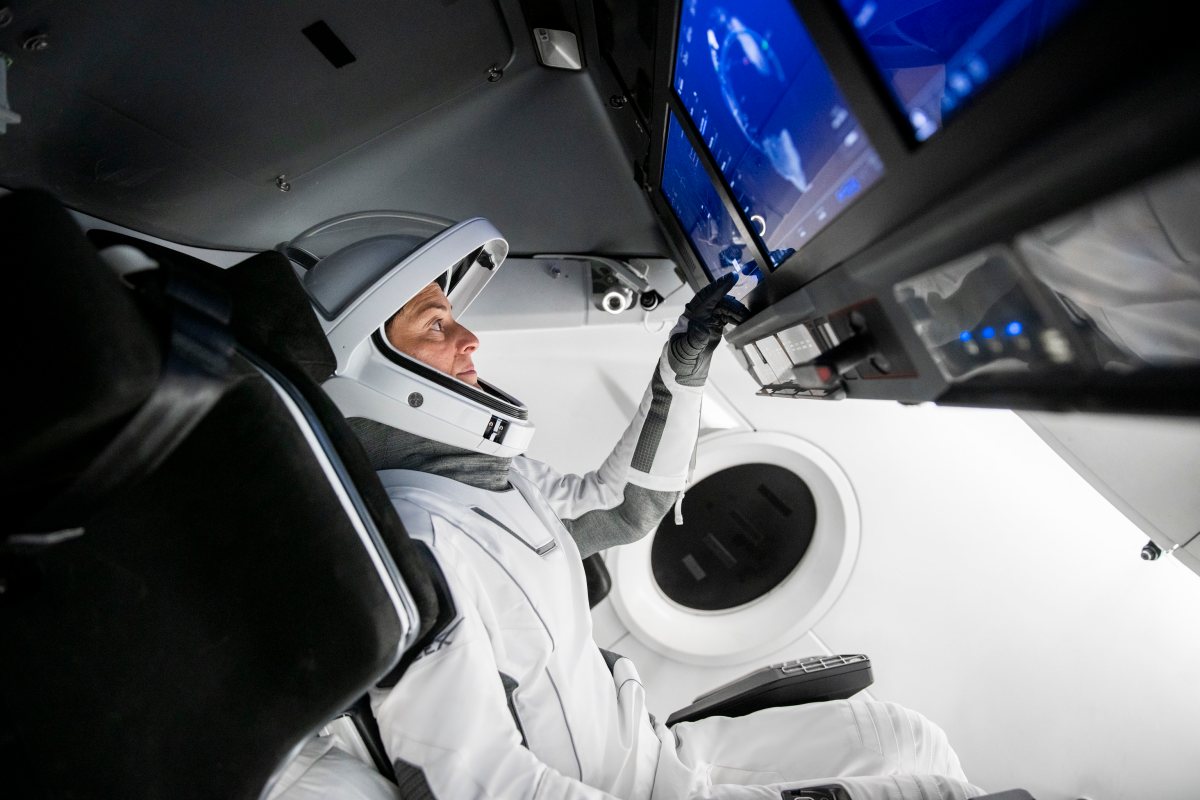
The first Native American woman in space ventured out on a spacewalk Friday to prep the International Space Station for more solar panels.
NASA astronaut Nicole Mann emerged alongside Japan’s Koichi Wakata, lugging an equipment bag. Their job was to install support struts and brackets for new solar panels launching this summer, part of a continuing effort by NASA to expand the space station’s power grid.
Mann, a Marine colonel and test pilot, rocketed into orbit last fall with SpaceX, becoming the first Native American woman in space. She is a member of the Wailacki of the Round Valley Indian Tribes in Northern California.
(Previous: Nicole Mann: Continuing the legacy of carrying hopes, dreams)
Wakata, Japan’s spaceflight leader with five missions, also flew up on SpaceX. He helped build the station during the shuttle era.
Friday was the first spacewalk for both. The pair will depart the space station in another month or so. — Associated Press
SUPPORT INDIGENOUS JOURNALISM. CONTRIBUTE TODAY.
Former students of a boarding school system operated by the federal government shared their experiences, trauma and resilience in remarks to officials from the U.S. Department of the Interior on Friday in Arizona.
The former students, citizens of tribes from across Arizona, directed their comments to Interior Secretary Deb Haaland, Laguna Pueblo, in Komatke, a community south of Phoenix on the Gila River Indian Community.
What they experienced – from good times with friends to the harsh reality of abuse – is what Haaland wanted to hear.
“I will listen. I will grieve with you. I will weep alongside you and I will feel the pain that you feel,” Haaland said in her opening remarks in her latest Road to Healing tour stop. READ MORE. — Noel Lyn Smith, ICT
The sun shined brightly through the large glass-paned windows at the Gila Crossing Community School, where federal Indian boarding school survivors and their descendants sat to listen and speak about their experiences.
Assistant Secretary for Indian Affairs Bryan Newland mentioned how it was the first time it’s been present during the Interior Department’s Road to Healing tour and how important it is symbolically for Indigenous people.
Stories were shared that sounded similar to those in the other tour stops. Interior Secretary Deb Haaland, Laguna Pueblo, was here to listen.
Pamela Lucero, Gila River, said Haaland’s visit is an honor.
“It’s almost like her being in office opened up something new for all Indigenous people,” she said. READ MORE. — Kalle Benallie, ICT
Imagine putting on a virtual reality headset and entering a world where you can explore communities, like Missoula, except your character, and everyone you interact with, speaks Salish, Cheyenne or Blackfoot.
Imagine having a device like Amazon’s Alexa that understands and speaks exclusively in Indigenous languages.
Or imagine a digital language playground in Facebook’s Metaverse, where programmers create interactive games to enhance Indigenous language learning.
Michael Running Wolf, a Northern Cheyenne man who is earning his Ph.D. in computer science, wants to make these dreams a reality.
Running Wolf grew up in Birney, Montana, a town with a population of 150 just south of the Northern Cheyenne Reservation. He spent most of his childhood living without electricity. READ MORE.— Missoulian
Sign up here to get ICT’s newsletter
Education programs run by tribes in New Mexico rely in part on money from the state, but accessing those dollars makes it difficult to complete all of the work they envision.
Tribal leaders and advocates have long lobbied for a change. This year they want to make it happen.
Each year, tribes can apply for grants, and if their applications are approved, they must spend the money first and then submit documentation to the state for reimbursement.
On paper, it sounds straightforward. But in reality, sometimes tribes can’t spend down all the money by an artificial deadline. In fiscal year 2020-2021, 22 tribes received grants under the Indian Education Act but only two requested reimbursement for the full amount they were awarded. READ MORE. — New Mexico In Depth
FOLLOW ICT ON SOCIAL MEDIA: FACEBOOK, TWITTER, INSTAGRAM, TIKTOK.
What’s trending on social media: (What’s being posted/talked about)
- Mohawk burlesque dancer named one of the most influential: Lou Lou la Duchesse de Riere was voted the second most influential burlesque figure in 21st Century Burlesque Magazine.
- Indigenous films featured at 2023 Sundance Film Festival:‘One of the strongest years in recent memory’ for Native films.
- Rapping for missing kids, experimental dance and virtual reality: A biweekly column from ICT with the latest news from the arts and entertainment world.
- Iñupiaq mom overcomes barriers to abortion and finds new freedom: Alaska’s vastness and limited number of providers can be obstacles to access.
- Pebble Mine takes ‘one-two punch’ as EPA weighs permit: Acquisition of easements cuts off areas needed for ore-transport road.
- Becoming a Native American Studies Major: What to Know.
- Grit, faith, purpose: Surgeon wants to be first Native American to summit Everest.
- NAJA 2023 National Native Media Conference set for Aug. 10-12 in Winnipeg.
We want your tips, but we also want your feedback. What should we be covering that we’re not? What are we getting wrong? Please let us know. dalton@ictnews.org.