
Greetings, relatives.
A lot of news out there. Thanks for stopping by Indian Country Today’s digital platform.
Each day we do our best to gather the latest news for you.
Okay, here’s what you need to know today:
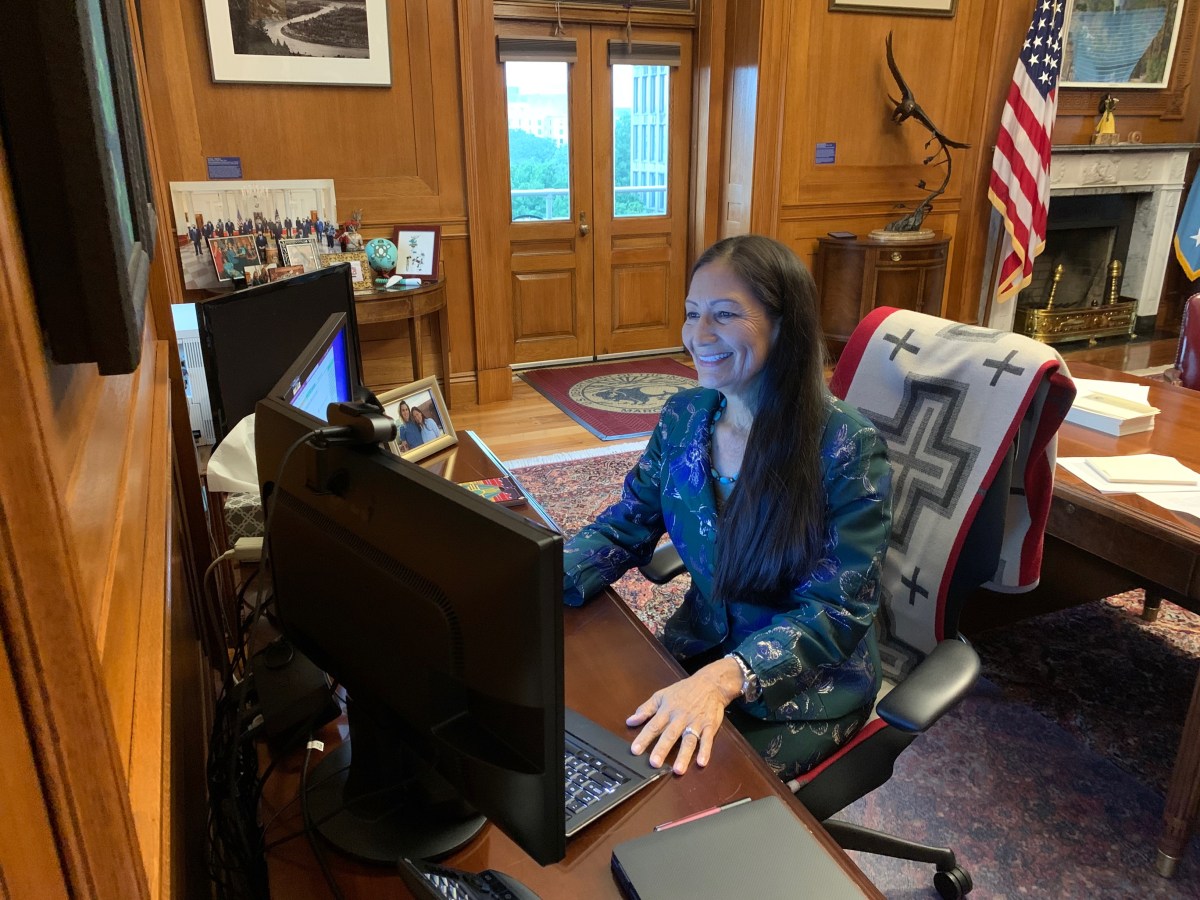
Before becoming a cabinet secretary, before being elected to Congress, Deb Haaland’s life looked a lot different than it does now.
In the mid-1990s, she became a first-time mother and wanted to ensure her child had access to early childhood education, so she volunteered at her child’s preschool in order to pay for it.
She relied on food stamps at times, and operated her own small business, Pueblo Salsa, the only job that could offer her the flexibility she needed as a single parent. But she lived paycheck to paycheck, and struggled to pay for college.
Then came law school, a new career, and politics, setting her on a path that saw her elected as one of the first Indigenous women in the U.S. Congress.
“Congress has never heard a voice like mine,” she said in a 2018 political ad.
On March 15, 2021, she made history by becoming the first Native person to serve in the president’s cabinet, taking charge as Secretary of the Interior, overseeing nation-to-nation relationships with hundreds of federally recognized tribes and managing and protecting thousands of acres of land. READ MORE. — Pauly Denetclaw, Special to Indian Country Today
—
SUPPORT INDIGENOUS JOURNALISM. CONTRIBUTE TODAY.
—
LISTEN to ICT’s newscast on the go
The reauthorized Violence Against Women Act includes language to make sure Maine’s Native American tribes are protected under it.
Democratic Rep. Chellie Pingree, who pushed for the inclusion of the language, said Monday the change brings Maine’s tribes under the jurisdictional provisions of the Violence Against Women Act, as it does for other nationally recognized tribes.
(Related: VAWA reauthorization headed to president’s desk)
Pingree said the previous lack of inclusion of the tribes caused them to “lose out on protections that have been extended to every other federally recognized tribe in the country.”
Penobscot Nation Chief Kirk Francis said Native women living in Wabanaki territories in Maine previously lacked access to protections and resources afforded their peers elsewhere.
The tribes “will now be able to use all the resources available to protect Native women, children and public safety officers located on our lands,” he said. — Associated Press
A new report commissioned by the First Peoples Fund was released Tuesday, providing a guide for funders to more effectively support and partner with Native creators.
The report, Brightening the Spotlight, was conducted alongside NORC at the University of Chicago and the findings came from extensive interviews with 46 Native creators who participate across many forms of the performing arts.
First Peoples Fund President Lori Pourier, Oglala Lakota, hopes the report encourages funders to partner with more Native creators and generate more equity in the arts.
“Despite limited resources and funding, Native creators sustain the cultural lifeways and vitality of so many communities,” she said in a press release. “Our hope is that with Brightening The Spotlight, we can encourage art and culture funders to change their practices in order to provide Native creators with the support they need to carry on the cultural traditions of our ancestors for generations to come.”
The report can be found online here.
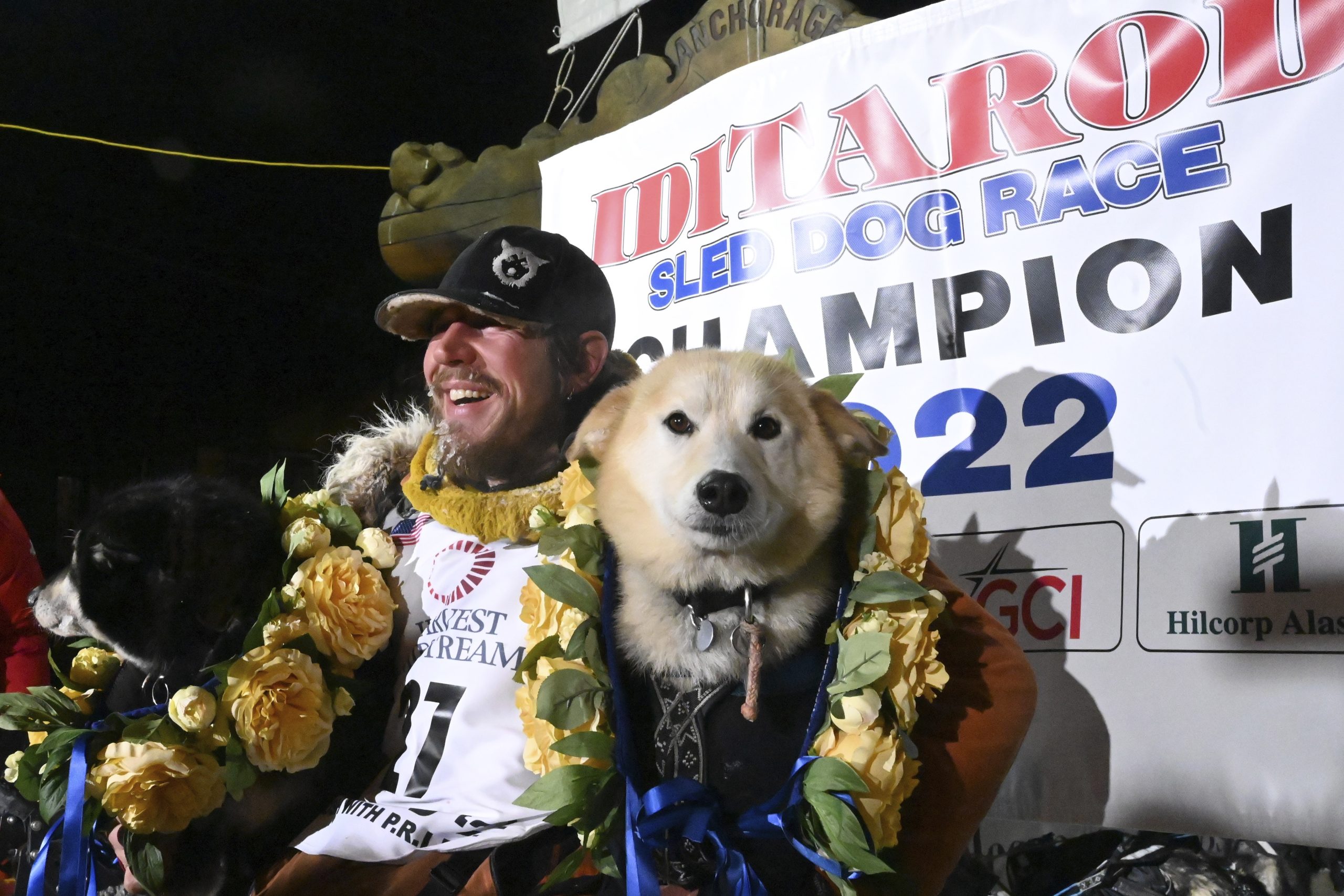
Brent Sass spent much of the 2022 Iditarod Trail Sled Dog race in a position that might have intimidated less-experienced mushers.
Sass led much of the race, not knowing how far five-time champion Dallas Seavey was behind him. How fast was Seavey traveling? Would an additional rest allow Seavey to close in on him? Sass knew Seavey would sign each checkpoint log, would see when Sass checked in and out, and could adjust his own strategy accordingly.
Sass remained unfazed. His plan: Don’t worry about the competition.
“Just keep it conservative, don’t do any big pushes, and keep marching down the trail and try to maintain our speed,” he told Iditarod Insider on March 10 at the checkpoint in Cripple at mile 425.
Sass said he would “just focus on my team for a few hundred miles before I start thinking about the competition.” READ MORE. — Richard Arlin Walker, Special to Indian Country Today
—
Sign up here to get ICT’s newsletter
—
On Tuesday’s ICT newscast, U.S. Rep. Sharice Davids addresses key legislation in Washington. Plus, we are talking about the McGirt decision, cybersecurity and language revitalization in Montana.
Watch here:
In 2015, the state of Washington began investigating two enrolled citizens of the Tulalip Tribes for alleged illegal shellfish trafficking. More than six years later, the charges have been dismissed but the men’s fish-buying business is shuttered, and they say broader concerns of state interference in tribal sovereignty remain unaddressed.
The Washington Department of Fish and Wildlife (WDFW) investigation into Hazen Shopbell and Anthony Paul, who owned one of Puget Sound’s largest fish-buying operations, came amid complaints from non-Indigenous fish buyers about loss of business due to an alleged monopoly involving tribal fishers. While the resulting criminal charges didn’t produce any convictions, Shopbell and Paul say the ordeal led to the collapse of their business and ended a period of fairer prices for the crab and fish caught by Indigenous people. READ MORE. — Chris Aadland, Underscore.news and Indian Country Today
—
FOLLOW ICT ON SOCIAL MEDIA: FACEBOOK, TWITTER, INSTAGRAM, TIKTOK.
—
From social media:
- Chickahominy Tribe reacquires ancestral lands: ‘That’s where we were when the settlers came’
- Feds convene Klamath water stakeholders as money is set to flow: Interior, Commerce and Agriculture staff explained how stakeholders could make use of billions made available by the recently passed Bipartisan Infrastructure Law.
- Comedy jam elevates profile of Native comedians:The Native Comedy Jam sold out the Federal Way performing arts center, raising awareness for Indigenous humor and artists.
- Indigenous talent celebrate state hockey title: A small town in northern Minnesota known for its hockey is back on top after dominant season
- Dakota Language Keeper Akiša PetersIs Committed to His Community
- Disqualification of Lingít Wearable Arts entry sparks talk of racism and exclusion in Juneau art scene
We want your tips, but we also want your feedback. What should we be covering that we’re not? What are we getting wrong? Please let us know. icteditors@indiancountrytoday.com.

