
Kalle Benallie
ICT
Tribes across the United States are working to inform and relieve their communities who are experiencing heat advisories and extreme weather this summer.
The Southwest has been experiencing a heat wave, the Midwest and East have also been under some kind of heat advisory.
“Unless an ice age were to appear all of sudden out of nothing, it is basically virtually certain we will break the record for the warmest July on record and the warmest month on record,” Copernicus Climate Change Service Director Carlo Buontempo told The Associated Press.
Copernicus provides information about the climate in Europe and the rest of the world, as part of the European Union’s Earth Observation Programme. The organization calculated that through the first 23 days of July, Earth’s temperature averaged 62.5 degrees Fahrenheit. That’s nearly one-third of a degree Celsius (almost 0.6 degrees Fahrenheit) hotter than the previous record for the hottest month, July 2019.
Normally records are broken by hundredths of a degree Celsius, maybe a tenth at most, said Russell Vose, climate analysis group director for the U.S. National Oceanic and Atmospheric Administration.
The Navajo Nation Commission on Emergency Management declared an extreme heat state of emergency on July 25 that will stay in effect until Aug. 31, depending on possible changes.
The commission made the decision based on the National Weather Service forecast indicating that the Four Corners Area — Utah, Arizona, New Mexico and Colorado — will experience unprecedented heat extremes, with temperatures significantly higher than typical summer averages, according to the Navajo Nation Council Communications.
Ashley Hemmers, a tribal administrator for the Fort Mojave Indian Tribe, appeared on NPR and talked about getting heat stroke on her way to a meeting about climate change.
She said the temperature was 125 degrees Fahrenheit, exceeding the previous highest temperature of 120 degrees Fahrenheit on her reservation, which is located within Arizona, California and Nevada.
“There’s a saying for Mojave people that ‘You know that you’re a Mojave if you can eat a hot bowl of stew in the middle of the summer,’” Hemmer said. “Heat is not something that’s unusual. What is unusual is just how hot it’s getting.”
She added the tribal leadership is providing cooling stations, emergency checks for vulnerable populations like elders and reminding people to wear shoes outside to prevent burns.
“If an elder has air conditioning that goes down, we make sure that they and their family know how to get help immediately,” Hemmer said.
Oklahoma
Burning Cedar Sovereign Wellness, a Native-woman led nonprofit focused on healing through traditional foodways and Indigenous wellness practices in the Tulsa Native community, collaborated with IllumiNative in June to provide relief for a severe thunderstorm that affected over 200,000 people in northeastern Oklahoma.
Wind damage of 80 to 100 mph affected homes and power. Three tornadoes were reported to have formed.
Oklahoma Gov. Kevin Stitt, Cherokee, called Greg Treat, Oklahoma Senate Pro Tempore, to sign an executive order for a state of emergency in Creek, Delaware, Harper, Mayes, Pawnee, Payne, Rogers, Tulsa, Wagoner and Choctaw counties on June 20.
Cherokee Nation citizen Nico Albert Williams, founder and executive director of the organization, said people were without power for up to seven days. They were going to initially help assist on the ground with providing ice for food and cold drinks, but when everything came together the power returned they decided to match IllumiNative’s mutual aid fund and were able to provide $8,000 for those affected.
“What people really need right now is an unexpected cash gift would be the best way to help people out,” she said.
The application for the financial assistance was open for just over a month until July 31.
Sign up for ICT’s free newsletter.
Central and Eastern Oklahoma have been warned of high temperatures since late June. The Oklahoma Department of Transportation has said they are seeing roads buckling and it’s just the beginning.
Williams said they not only have to use more energy to cool their homes but also the energy companies are raising their rates.
“It’s definitely a lot hotter than usual and we’re seeing our utility bill has skyrocketed and so that’s another major obstacle that we’re all facing here in Tulsa,” she said.
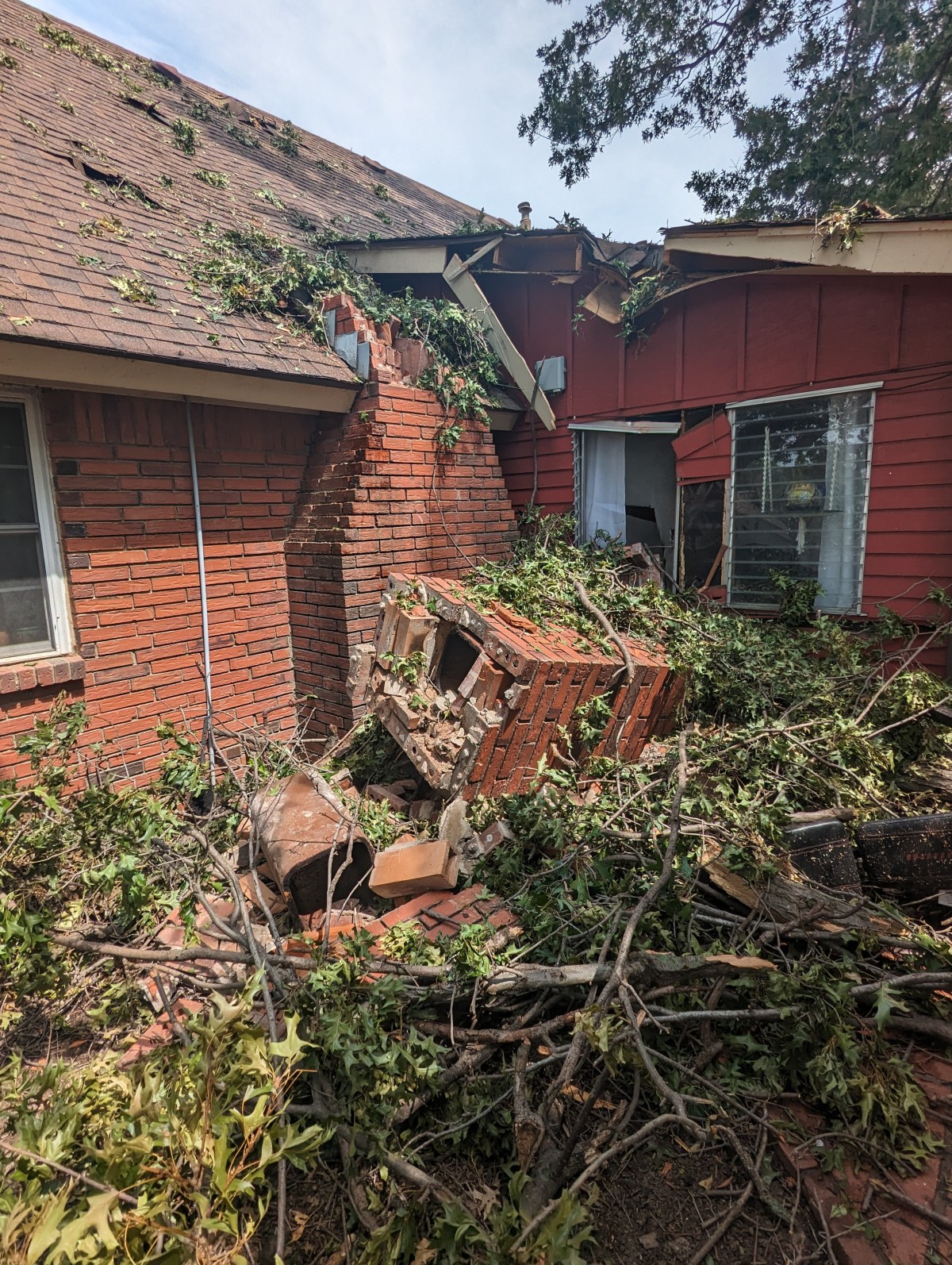
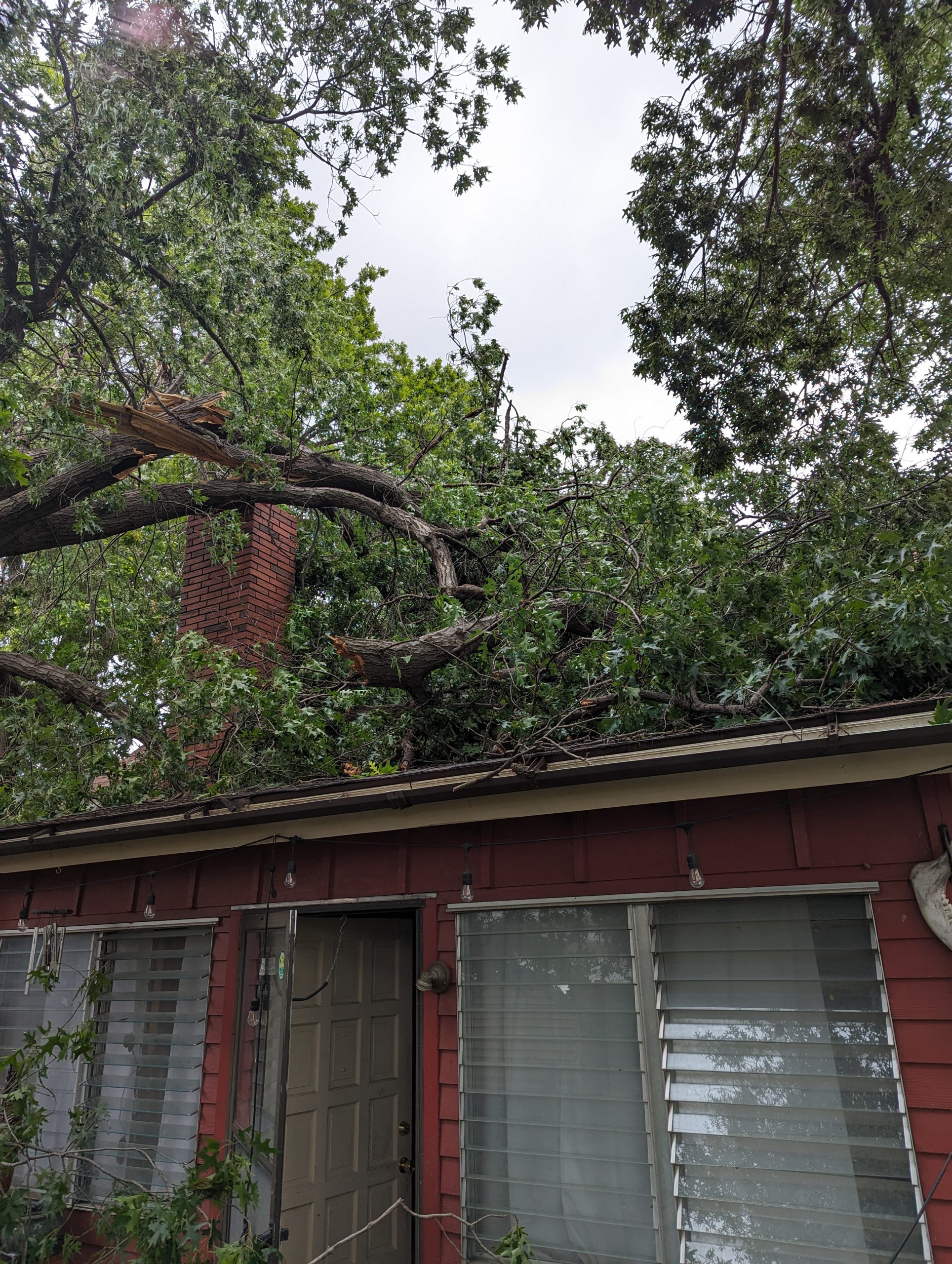
A large tree also fell on her roof during the Tulsa storm that caused holes and water damage in the ceiling, where it had to be removed. She said it took over a month for the insurance company to assess her home due to labor shortage and an unprecedented amount of claims.
They have put plastic sheets and blankets to cover the ceiling and keep the air conditioning inside the house.
The Oxford Eagle wrote how Mississippi tribes like the Chickasaw built “summer houses” and the elevated Tunica-Biloxi canopies were designed to maximize airflow for a cooler environment.
The Tribal Climate Resilience Program may be able to assist funding to tribes and tribal organizations who are facing severe climate-related crises in their homelands. It has $120 million in funding available making it the largest annual funding in history of the program, according to the Department of Interior.
Breakdown of the funding comes from Bipartisan Infrastructure Law, the Inflation Reduction Act and from the fiscal year 2023 annual appropriation.
“Devastating storms, increased drought and rapid sea-level rise disproportionately impact Indigenous communities,” Interior Secretary Deb Haaland said in a statement. “Helping these communities remain on their homelands in the midst of these challenges is one of the most important climate-related investments we could make in Indian Country.”

Our stories are worth telling. Our stories are worth sharing. Our stories are worth your support. Contribute $5 or $10 contribution today to help ICT carry out its critical mission.

