
Help ICT make strides in 2024. Our goal is to raise $150,000 by the end of the year with generous contributions from funding partners and collaborators like you. We’re thankful for your support, and we’re thriving because of it. DONATE TODAY!
Amelia Schafer
ICT + Rapid City Journal
Ashley “Joe” Iteska hiked through the cold, dry prairie, his boots crunching crisp grass and twigs. He looked out over the looming limestone buttes for any sign of the boy, stopping occasionally to listen. He tried to imagine what the 3-year-old had endured the night before. The cold fall winds on the grassland could be unforgiving and there were mountain lions and coyotes lurking in the backcountry. Iteska tried not to think the worst.
His nephew, Karson Pourier, had wandered off the afternoon before while playing outside his home on the Pine Ridge Reservation. Nearly 14 hours had passed since anyone had seen the autistic boy, and more than 200 people had joined the search the night before. Some of them used drones and dogs. The searchers walked along the beds of White Clay Creek north of Red Cloud Indian School in an area largely inaccessible by vehicle or even ATV. A horse could make it but going on foot was easiest.
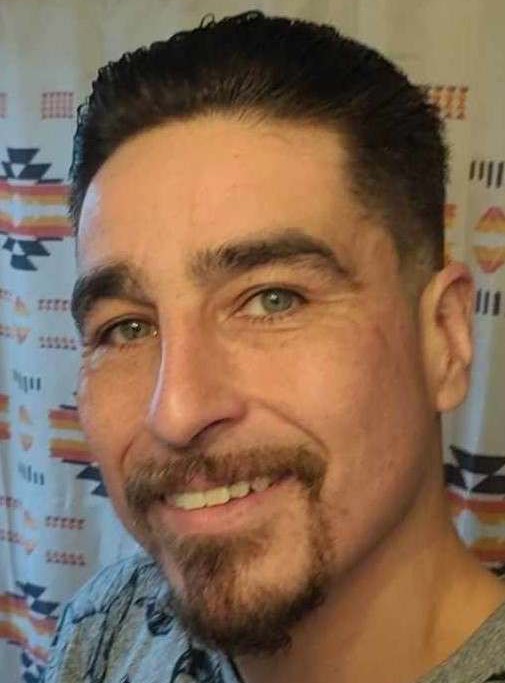
They called out for Karson all night long as temperatures dipped below freezing. Karson had walked away wearing no winter clothing. Iteska searched late into the night, but eventually decided to pack it in and head home. As he lay in bed, he thought about Karson and wondered what it might be like if one of his own children disappeared.
The next morning, Nov. 18, he sat on his porch smoking a cigarette, waiting for the sun to rise. He began thinking about Karson. He didn’t know his nephew very well, but with an autistic son himself, Iteska thought Karson must have been overwhelmed by all the noise and lights from the search.
“He was probably scared of all that,” he said.
Several months before, Iteska had started on a spiritual journey. The 41-year-old had worked to reconnect to his Lakota traditions and heal from intergenerational trauma. He had recently returned home from Rapid City to his Calico community. He and his partner had hoped to buy a house, start a life together. He wanted to build a greenhouse and start a food sovereignty business. Pine Ridge is a place known as much today for its history and renowned leaders – Red Cloud and Black Elk – as for its crushing poverty and despair. Iteska hoped to help change that by improving the health of his people.
As he sat on his porch that morning, his medicine man pulled into his driveway. Iteska walked up to the man and handed him tobacco, a traditional offering. He asked him for guidance on where to search. He knew it would be difficult to find the boy on his own, and he believed in the power of prayer.
The holy man told him to walk north, deep into the back hills. Iteska knew the area well. It was his late grandfather’s land, and he’d helped his grandfather round up cattle there as a boy. The walk is a moderate hike up steep, winding buttes that continue uninterrupted for miles. It was a visually stunning part of the sprawling 3.1 million-acre Pine Ridge Reservation. Iteska had brought his own kids up there, but it was no place for toddlers to wander alone.
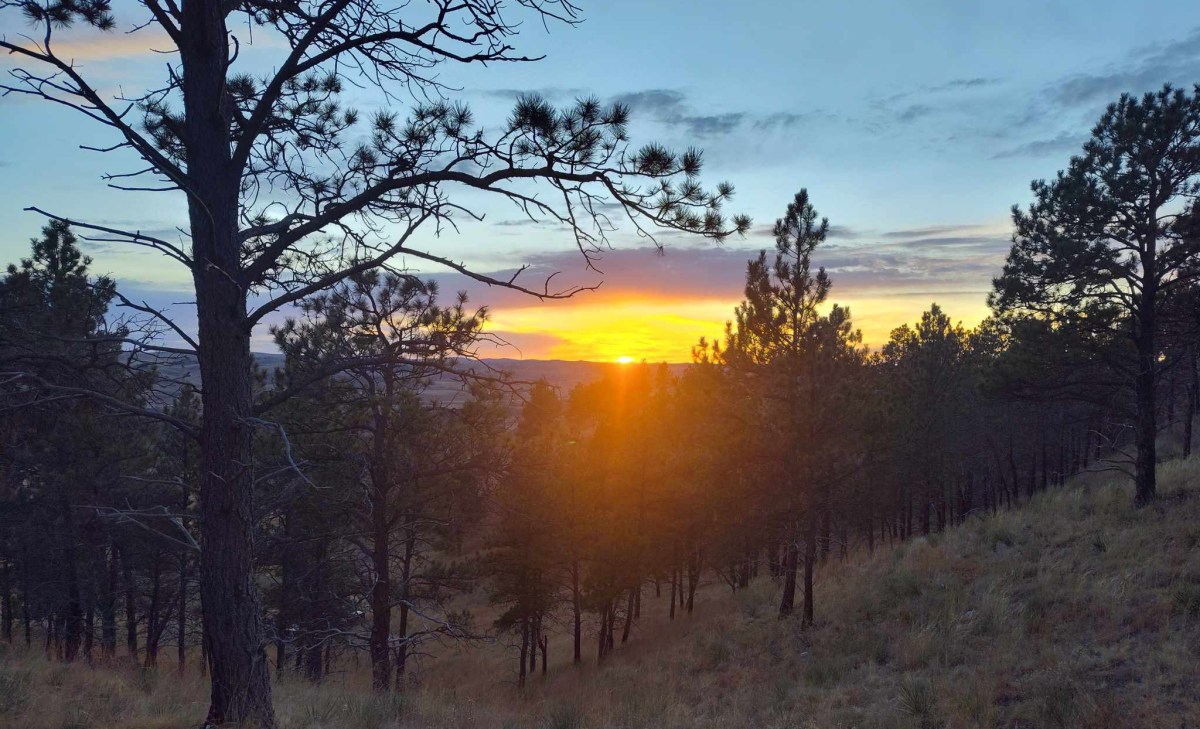
The walk was silent, through brush and evergreen trees. Iteska let his body and mind guide him. He heard a twig snap and followed the sound, but it was only a deer. Heading back up the ravine and onto the bluff, he thought he might follow the old fire trail, but for some reason, he didn’t. Something told him to go left.
Somewhere in the distance, he heard cooing, almost like a mourning dove. He stopped for a minute and listened. He heard it again, a soft cooing. He knew mourning doves are territorial and make noises to keep other doves away. He yelled Karson’s name.
“Then I heard him cry and I ran to him,” Iteska said.
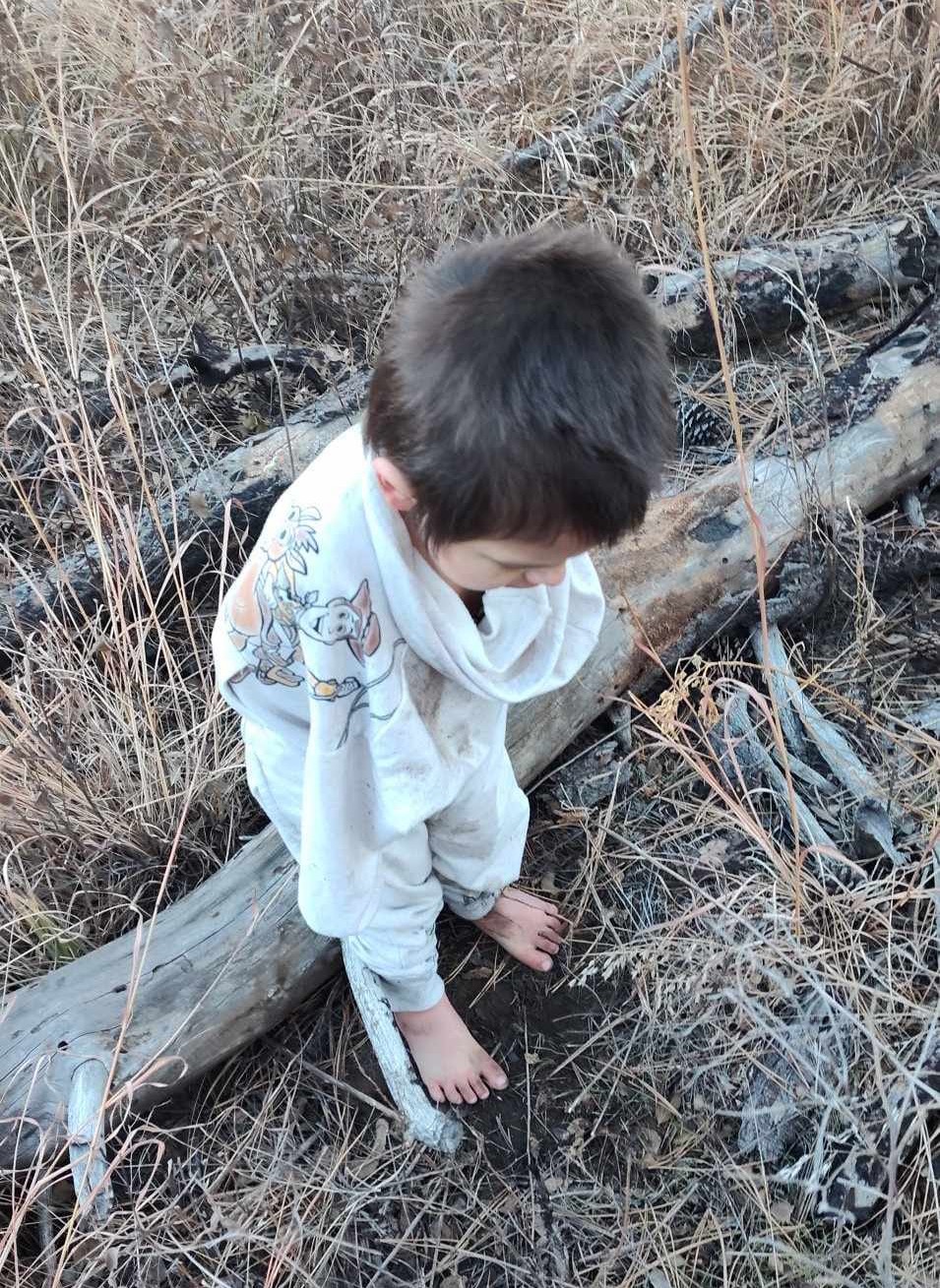
There sitting on a dead tree was little Karson, a mile away from home, no shoes or socks, his bare feet muddy. His Disney hoodie was turned backward and his arms were tucked inside. Somehow, after 14 hours in the bitter cold and without food or water, the little boy had survived.
“My belief is that he was protected, I think by my grandpa’s spirit. I know he was protected because I mean there were animal tracks all along that area and it got cold,” Iteska said.
In a mixture of disbelief and elation, Iteska took a picture of Karson and sent it to Kara Big Crow, his partner, who also was searching for Karson. “Found him,” he said. His phone said 7:54 a.m.
He wrapped the little boy in his jacket, grabbed him and began running. His adrenaline was pumping as he carried him up a steep ridge. Iteska had had heart surgery 17 years before and with how fast he’d been moving and how hard his heart was beating he feared he’d collapse before he could make it back. He told Big Crow to get emergency services, to head north and look for his blue truck.
“You’ll be alright, you’ll be alright. We can get you home, uncle’s got you,” he told the little boy.
Running up the steep ravines, he nearly passed out but fought to continue on. Worried he might have a heart attack and not make it back, Iteska sent Big Crow a video. “I found him … I carried him from down there, just got over that ridge and everything,” he said to Big Crow in the video, struggling to catch his breath. In the background, Karson is crying.
Iteska picked the boy back up and began walking back down the buttes toward his truck. He was almost there when he spotted emergency services. Worried they’d miss him, he stood on top of a hill and whistled as loud as he could. They turned and saw him and the boy.
They were safe.
Karson was taken to Rapid City for medical treatment. Besides dehydration, he was perfectly fine. The next day when asked where he’d found the toddler, Iteska said he couldn’t remember. He told them he didn’t know where he was going, that he was guided. He began to panic, where had he gone?
“There was a reason I was outside when they (the medicine man) pulled up. I could say it was luck but I just don’t know,” Iteska said.
Eventually, he remembered, using the video he’d sent to Big Crow. Thinking back on everything, it was all surreal, he said.
“That first day I don’t know, I had a lot of mixed feelings because the adrenaline didn’t really go away. There was a part of me that was really grateful and a part of me that was really happy and then all these other things in my head that are hard to explain,” he said.

This story is co-published by the Rapid City Journal and ICT, a news partnership that covers Indigenous communities in the South Dakota area.
Our stories are worth telling. Our stories are worth sharing. Our stories are worth your support. Contribute $5 or $10 today to help ICT carry out its critical mission. Sign up for ICT’s free newsletter.

