
Daniel Herrera Carbajal
ICT
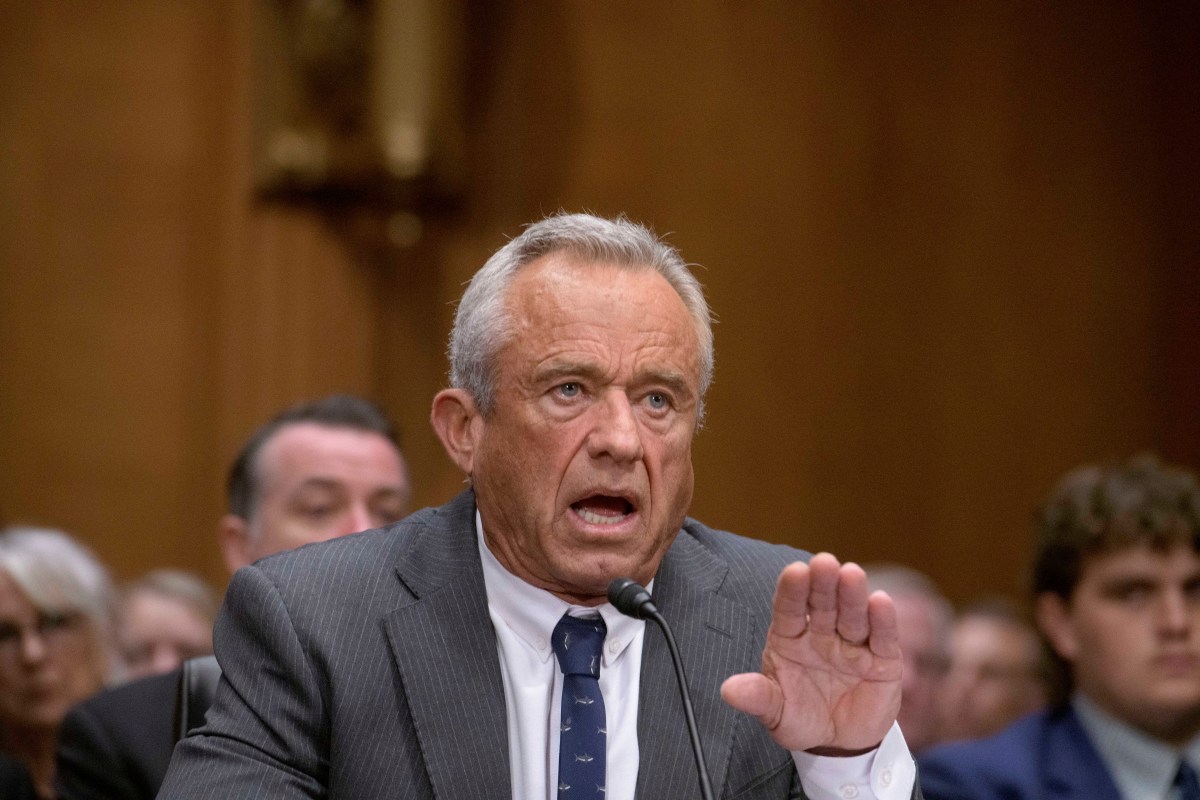
Appearing before the U.S. Senate Finance Committee on Wednesday, Robert F. Kennedy Jr. vowed to bring a Native American into his central office if confirmed as the Secretary of Health and Human Services.
“I’m going to bring a Native in for the first time in history into my central office,” he said. “He or she will have a direct impact on all the major offices.”
This week, members of two Senate committees – finance on Wednesday and health on Thursday – questioned Kennedy, an environmental lawyer turned public health critic, about his controversial views on vaccines, as well as about his shifting views on issues like abortion. Native American health concerns, however, were only briefly mentioned during the hearings.
Kennedy’s nomination to be the nation’s top health official is uncertain after a key Republican joined Democrats to raise persistent concerns over the nominee’s deep skepticism of routine childhood vaccinations that prevent deadly diseases.
Sen. Bill Cassidy, a Louisiana Republican, ended a three-hour confirmation hearing Thursday by telling Kennedy that he was “struggling” with his nomination and might call him over the weekend, though he did not say how he would vote.
Cassidy, a liver doctor who has regularly encouraged his constituents to vaccinate against COVID-19 and other diseases, implored Kennedy several times to reject theories that vaccines cause diseases like autism. Kennedy’s refusal to do so clearly troubled Cassidy.
“If there’s any false note, any undermining of a mama’s trust in vaccines, another person will die from a vaccine preventable disease,” Cassidy said.
If all Democrats reject Kennedy’s nomination, he can only afford to lose three Republican votes. Kennedy will also have to win over the swing votes of Sens. Susan Collins, Lisa Murkowski and Mitch McConnell, who have raised concerns about Kennedy and also voted against Trump’s defense secretary nominee.
Kennedy repeatedly promised senators he is not “anti-vaccine” and that he, in fact, supports inoculations. But Thursday’s Senate health committee hearing exposed Kennedy’s deep-seated mistrust in the nation’s vaccine program.
Cassidy directly asked Kennedy if he would unequivocally reassure parents that the Hepatitis B and measles vaccines do not cause autism.
Kennedy would not. Instead he avoided answering directly, saying “if the data is there, I will absolutely do that.”
If confirmed, Kennedy would manage an agency that oversees the Indian Health Service, which provides healthcare to 2.8 million American Indian and Alaska Native people. During his presidential campaign, Kennedy said he would address tribal environmental concerns, a position he demonstrated in 2016 when he stood with Native activists during anti-pipeline protests in North Dakota.
Healthcare provided by the federal government for Indigenous nations is a treaty right. The Indian Health Service has been chronically underfunded, and President Donald Trump has said repeatedly that he wants to shrink the federal government.
Last year, Kennedy told a group of tribal leaders he would triple federal support to support tribes if elected, a promise he reiterated this week.
On Wednesday, Sen. Ben Ray Luján’s (D-New Mexico) asked Kennedy if he would seek to ensure clinical trials for new drugs include patients from diverse backgrounds, to which Kennedy said he would.
“I’m going to do everything I can to make sure Native Americans are included in medical trails,” said Kennedy.
Sen. Ron Wyden (D-Oregon) said Kennedy should not be given the position.
“After a careful review of Robert F. Kennedy Jr. ‘s statements, actions, associations and views, I have reached the conclusion that he should not be entrusted with the health and well-being of the American people,” Wyden said.
Kennedy made close to $5 million in book deals mostly promoting “junk science,” according to Wyden.
In his book “The Measles Book: Thirty-Five Secrets the Government and the Media Aren’t Telling You About Measles and the Measles Vaccine,” Kennedy alleged that Americans have been lied to about the effectiveness of the measles vaccine.
“The readers – American and global consumers of measles vaccines – will learn that they have been misled by the pharmaceutical industry and their captured government agency allies into believing that measles is a deadly disease and that measles vaccines are necessary, safe, and effective,” wrote Kennedy.
Throughout the finance committee hearing, senators mentioned his lack of healthcare management and his lack of preparation for the meeting.
And in a Tuesday letter to senators, his cousin Caroline Kennedy said he lacks any relevant medical, financial or government experience to lead the Department of Health and Human Services. The daughter of former President John F. Kennedy also called her cousin a “predator” and described his healthcare views as “dangerous” and his anti-vaccination opinions as profit-motivated – allegations he has denied.
The nominee said Wednesday he has shifted his stance on reproductive rights. During his presidential campaign, Kennedy said he supported women’s rights to abortions.
“I agree with him (President Trump) that we cannot be a moral nation if we have 1.2 million abortions a year,” Kennedy said.
The shift led some senators to express concern about where he really stands on important issues.
“If you want to move from advocacy to public responsibility, Americans are going to need to hear a clear and trustworthy recantation of what you have said on vaccinations,” said Sen. Sheldon Whitehouse (D-Rhode Island).
“When was it you decided to sell out the values you’ve had your whole life in order to be given power by President Trump?” said Sen. Margaret Wood Hassan (D-New Hampshire).
If Kennedy were to be confirmed as the nation’s top health leader, he would be in charge of overseeing agencies like the Centers for Disease Control and Prevention and the Food and Drug Administration.
In an NPR interview last November, Kennedy said Trump had given him three “instructions”: remove corruption from health agencies, return these institutions to “evidence-based science and medicine,” and “end the chronic disease epidemic.”
The Associated Press contributed to this report.

Our stories are worth telling. Our stories are worth sharing. Our stories are worth your support. Contribute today to help ICT carry out its critical mission. Sign up for ICT’s free newsletter.