
Greetings, relatives.
A lot of news out there. Thanks for stopping by Indian Country Today’s digital platform.
Each day we do our best to gather the latest news for you.
Also, if you like our daily digest, sign up for The Weekly, our newsletter emailed to you on Thursdays. If you like what we do and want us to keep going, support and donate here.
Okay, here’s what you need to know today:
Alaska Rep. Don Young, a self-described conservative, who was an early supporter for the trans-Alaska pipeline system in 1973 and recently supported opening lands within the Arctic National Wildlife Refuge for oil exploration, seemed an unlikely champion for Alaska Native rights.
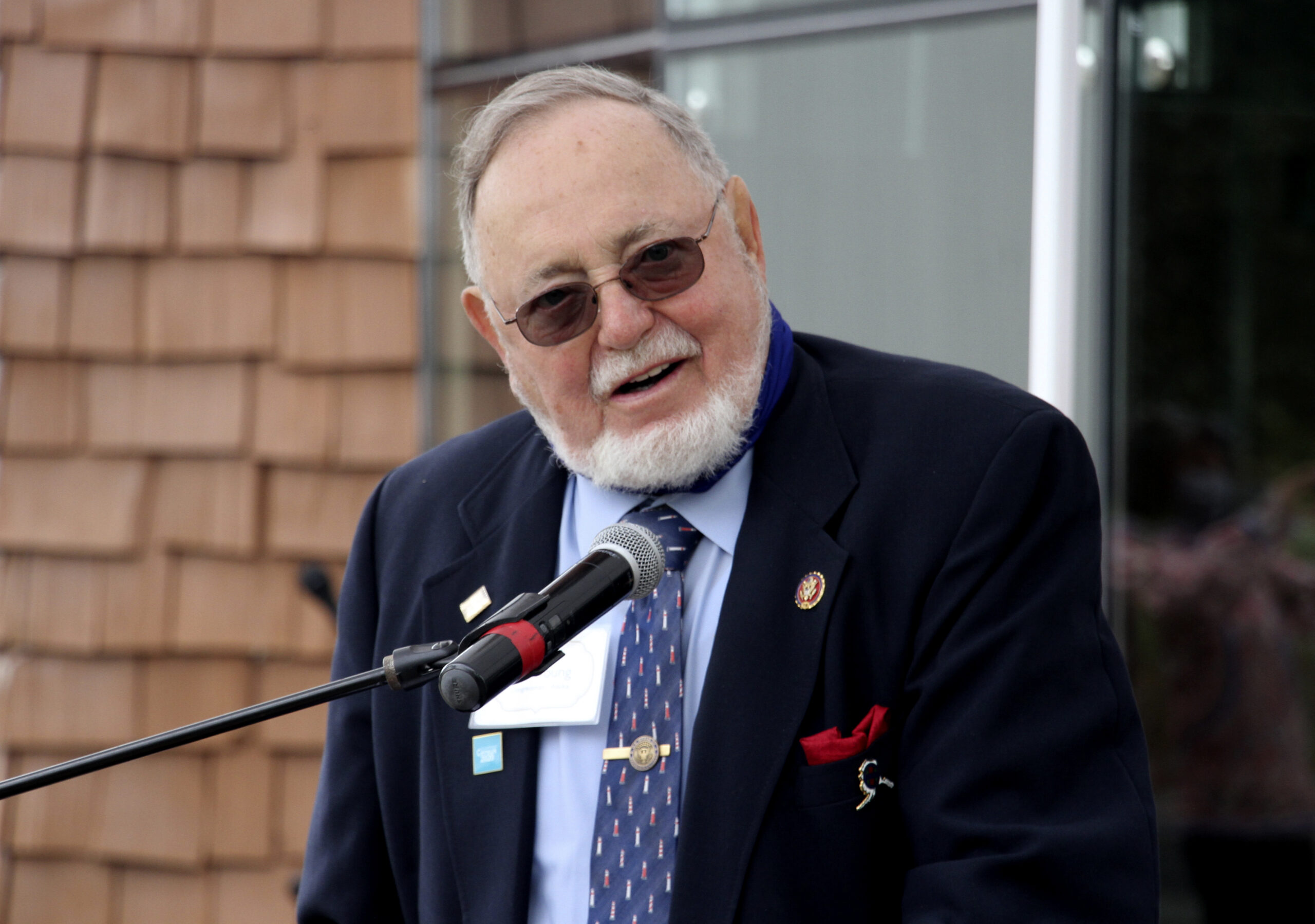
The Alaska Federation of Natives described Young as “the Congressman for all Alaska,” in a written statement.
Leaders at the Arctic Slope Regional Corporation described Young as a partner in the region and tireless advocate for all of Alaska and a fierce advocate for Alaska Native rights, in a statement.
Don Young, who was the longest-serving Republican in the history of the U.S. House died at the age of 88. READ MORE. — Mary Annette Pember, Indian Country Today
—
SUPPORT INDIGENOUS JOURNALISM. CONTRIBUTE TODAY.
—
NDN Collective released a damning climate justice report Tuesday on the controversial Dakota Access Pipeline, the same day as World Water Day.
In a detailed analysis, the Climate Justice Campaign calls on the Biden administration to drain and shut down the pipeline, which the roughly 200-page report argues would protect the nation’s longest river, the Missouri River, and its basin. The report is drawn from court documents, treaties, government documents, news stories, congressional hearings and more.
The purpose of the “Faulty Infrastructure and the Impacts of the North Dakota Access Pipeline” report is to inform and engage industry decision makers, policy makers and the public on the facts and nuances around three major areas. READ MORE. — Carina Dominguez, Indian Country Today
Inupiaq musher Apayauq Reitan made history Saturday, March 19, as the first transgender woman to complete the 1,000-mile Iditarod Trail Sled Dog Race, coaching her team of young dogs through a storm in the final stretch that knocked six teams out of the event.
Reitan had seven dogs in harness when she arrived at Nome just before midnight at 11:39:13 p.m. Alaska time. She is only the second transgender person to complete the race; Will Troshynski completed the race in 2021.
Reitan’s time was 13 days, 8 hours, 39 minutes and 13 seconds.
As the last musher to reach the finish line, Reitan received the “Committed through the Last Mile” Red Lantern Award and $1,000, and had the honor of extinguishing the so-called widow’s lamp on the burled arch in Nome. READ MORE. — Richard Arlin Walker, Special to Indian Country Today
Leadership for the largest and oldest Native organization advocating on behalf of tribal governments gathered here in-person for the first time since the start of the COVID-19 pandemic.
The National Congress of American Indians’ executive committee met for a strategic planning retreat on the homelands of the Akimel O’otham and Pee-Posh in the Gila River Indian Community. Gila River Gov. Stephen Roe Lewis, who was elected in February as the organization’s recording secretary, hosted the retreat at the Gila River Wild Horse Pass Resort and Casino.
In an interview with Indian Country Today, NCAI President Fawn Sharp said the retreat allowed the executive committee to work on a “strategic direction” for the organization. Sharp is the vice president of the Quinault Indian Nation in Washington state. READ MORE. — Dalton Walker, Indian Country Today
—
Sign up here to get ICT’s newsletter
—
On Tuesday’s ICT newscast, we meet a South Dakota state lawmaker and an award-winning musician. Plus, all of the sights and sounds from this year’s Denver March Powwow.
Watch:
More than a dozen tribal communities around the U.S. will share $9 million in federal grant funding for renewable energy projects, the U.S. Department of Energy announced Monday.
Nearly $1.2 million will support a solar and battery storage project in the Navajo Nation community of Kayenta in northeastern Arizona. Tribal officials said the project will provide electricity to 24 homes on the vast reservation where an estimated one-third of all residents are not connected to the power grid.
The 14 projects among tribes based in Arizona, Idaho, California, Alaska, Washington, New Mexico and Minnesota are expected to produce 3.3 megawatts of renewable energy and 3.6 megawatt-hours of battery storage. The amount of energy isn’t huge, but will chip away at the need across Indian Country. READ MORE. — Associated Press
—
FOLLOW ICT ON SOCIAL MEDIA: FACEBOOK, TWITTER, INSTAGRAM, TIKTOK.
—
- Lake hits historic low, raising hydropower concerns:It comes as hotter temperatures and less precipitation leave a smaller amount flowing through the over-tapped Colorado River.
- Tribe takes the lead in marijuana industry: Flandreau Santee Tribe sees big opportunity in cannabis.
- Disney ‘regrets’ performance by school drill team:New measures have been implemented to prevent that from happening again, a Disney spokeswoman said.
- Denver March Powwow returns after a pandemic hiatus:For some, the event became a celebration of survival after weathering the last two years.
- Arizona ranks high with offensive place names:The state has 67 locations that have the ‘S-word’ in their name.
- Ancient DNA could help California tribe get federal recognition.
- Native communities at the heart of ‘Boardz and Arrowz’ exhibit.
- ‘I’m going to keep carrying it on’: Hoop dancer’s spirit is stoked by her brother’s legacy.
We want your tips, but we also want your feedback. What should we be covering that we’re not? What are we getting wrong? Please let us know. icteditors@indiancountrytoday.com.

