
Stewart Huntington
ICT
When she launched her campaign for governor in Maine more than a year ago, Hannah Pingree promised to back full sovereignty for tribes in the state.
Now that pledge has earned the Democratic nominee a near unanimous endorsement from Maine’s Indigenous nations.
“She has been clear that inequities need to be fixed,” Penobscot Nation Chief Kirk Stevens told ICT. “It’s been a long time coming.”
The Penobscot Nation, Passamaquoddy Tribe, Houlton Band of Maliseet Indians and Mi’kmaq Nation — collectively known as the Wabanaki Nations — are governed by the Maine Indian Claims Settlement Act of 1980 that stipulates they’re bound by state law. As such they are treated differently than other federally recognized tribes – more akin to municipalities than sovereign nations.
Pingree, the former speaker of the state’s House of Representatives, has vowed to amend the act.
“As governor, I will introduce a bill to … restore full tribal sovereignty,” Pingree said in a social media post following the Friday announcement of the endorsements. “It will be developed in partnership with the tribal nations, because that is how it should be done. Creating a government-to-government relationship between Maine and the Wabanaki Tribes will remain a top priority for my administration.”
The state Legislature has passed bills in the past that would put the Wabanaki Nations on footing equal to the other nearly 600 federally recognized tribes – only to have Indigenous communities’ hopes dashed by vetoes from the sitting Democratic Governor, Janet Mills.
Stevens said the pledge from Pingree is “historic” and was in some measure a reflection of years of work by tribal leaders to restore full sovereignty.
“It’s a credit to our tubes’ work over decades,” he said.
As part of the work, the tribes formed the Wabanaki Alliance that serves in part as a unified lobbying organization in the state and beyond.
“We need to make folks understand that the (1980) act is … not in line with self determination,” Stevens said.
At a recent debate between the three candidates for governor hosted by Maine Public, the Portland Press Herald and News Center Maine, GOP candidate Bobby Charles did not commit to a stance on tribal sovereignty.
“Come to me as governor, sit down, and put it before me,” Charles said according to News Center Maine. “We’ve talked details with them, and as a lawyer, I understand the complexity.”
Independent candidate Rick Bennett said he would support sovereignty legislation.
“I’ve fought for it in committee and on the floor of the Senate,” Bennett said. “I was named a tribal champion by the Wabanaki Alliance,” according to the outlet.
The Charles campaign did not respond to inquiries from ICT.
Pingree said she is not taking the endorsements lightly.
“Sovereignty is not a favor from the state. It is overdue. Restoring it means tribal Nations will have the same rights and autonomy as every other federally recognized tribe. It is an issue of fairness. Getting this done will be a top priority for me,” she said in a statement.
“Moving forward on this is going to be a huge opportunity for the people of Maine and for the tribal nations,” Pingree told ICT in June not long after she secured the Democratic nomination for governor. “The tribes have not had the same access to some parts of Indian law that other tribes around the country have. … But moving forward, our tribes are located in some of the lowest income counties in our state. They have some economic opportunities that they want to bring to their regions, the ability to work in greater collaboration. … There’s so much opportunity if we have a better relationship and they have access to the same laws that every other tribe around the country have.”
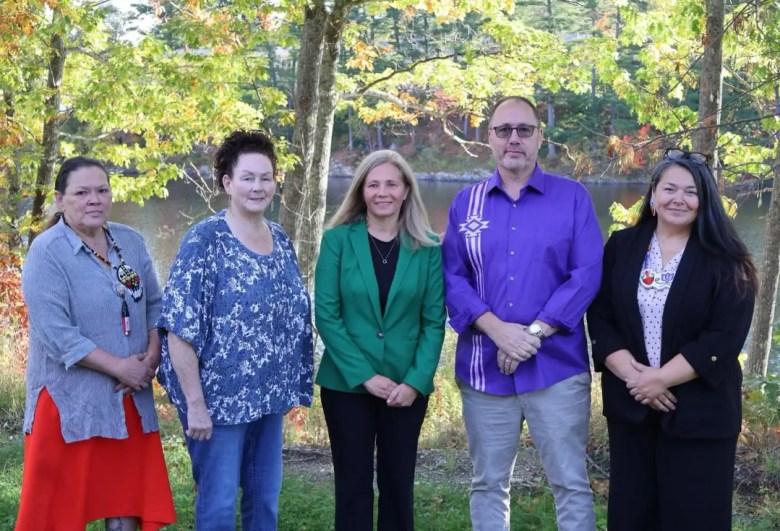
At an endorsement event on Friday tribal leaders from four of the state’s five Wabanaki communities stood with Pingree.
Chief Sheila McCormack of the Mi’kmaq Nation said in a statement, “Hannah Pingree has my full support to be the next Governor of Maine. She has demonstrated a consistent commitment to working together with Tribal governments … to deliver on her campaign promise of Tribal Sovereignty within her first 100
days in office.”
Houlton Band of Maliseets Chief Clarissa Sabattis echoed the thought in a statement: “Hannah Pingree … sees a future where tribal nations and the State of Maine thrive side by side.”
An idea Pingree said she stands by.
“I look forward as governor … to bringing a whole new era where state and tribal governments can work together,” Pingree told ICT.

