

Sandra Hale Schulman
ICT
Summing up 2025 is a challenge, a year that saw major films make headlines, new artists emerge, elders walk on, books tell decades of stories from food to family, and fashion taking global leaps. It was all entertaining, with Indigenous art and artists making news worldwide.
FILM: Activists, hoop dancers fill the screens
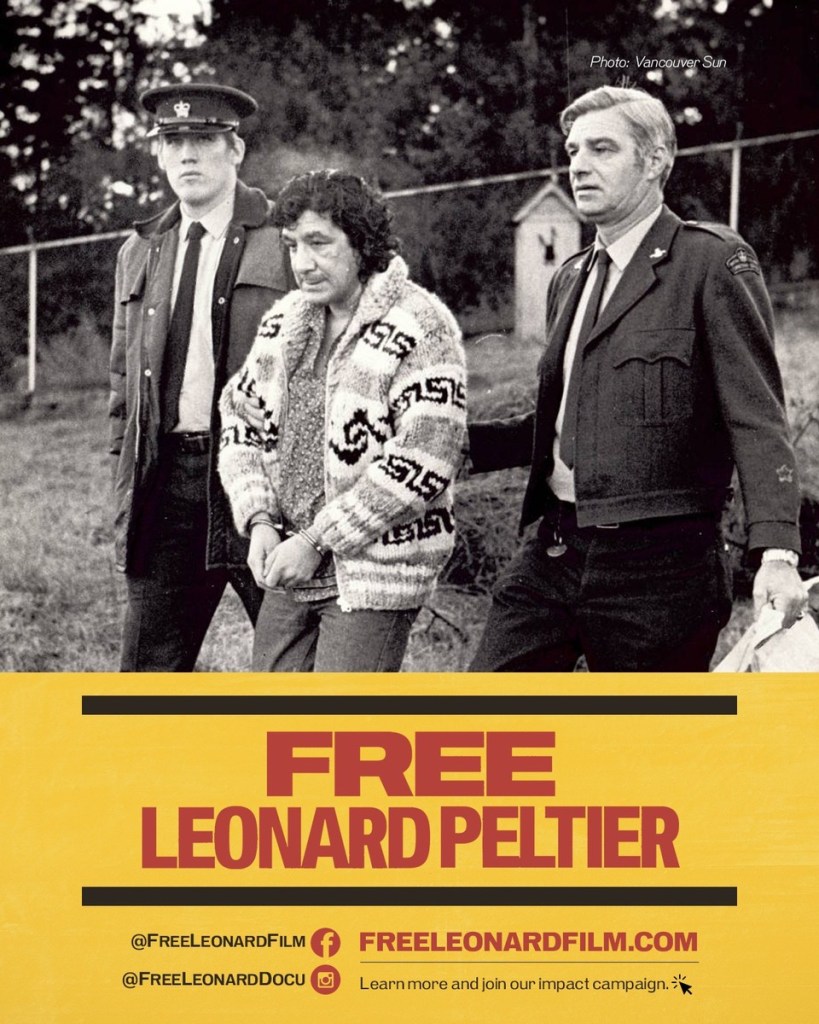
The year started with the remarkable culmination of the Leonard Peltier story as a Native crew-made documentary, “Free Leonard Peltier,” premiered at the Sundance Film Festival days after Peltier, in prison for nearly 50 years, was granted clemency minutes before former President Biden left office. This story could not have been scripted with any more drama.
The film crew, with directors David France and Jesse Short Bull at the helm, caught the announcement of Peltier’s release on film and scrambled to add the new ending with words from Peltier so the film would be current as they embarked on a reservation-screening tour. Negotiations taking place will see the film streaming in the new year.
The short but mighty film “Courage” by champion hoop dancer Eric Hernandez has won over a dozen awards at 2025 film festivals and recently landed at FNX. He assembled a powerhouse cast, including chef Pyet DeSpain, Cara Jade Myers, PJ Vegas, and Mateo Ulibarri, a three-time world champion hoop dancer from Pojoaque Pueblo, in the lead.
“Dark Winds Season 3” notched more wins for the series with star turns from Jessica Matten and Zahn McClarnon; season 4 has already been filmed and will premiere in February.
“American Primeval” stood out for the new villain story of the murderous Mormons and a searing performance from a black-masked Derek Hinkey, who was also featured in “Dark Winds.”
The complicated journey of the Colorado River was the focus of the extraordinary documentary “The American Southwest,” narrated by model and activist Quannah Chasinghorse with scenes of scaly and furry wildlife, astonishing landscapes, and man-made desolation.
ART: From desert art to mural walls
Desert X in the Coachella Valley brought a robot-made adobe and a G.H.O.S.T. ride to the dusty, windy terrain of the California Mojave. Ronald Rael, Indo-Hispano, made a geometric Adobe Oasis out of mud using contemporary technology. Way off the beaten path, Cannupa Hanska Luger drove his G.H.O.S.T. Ride, a tank-like survival vehicle, into the hills of Desert Hot Springs.

Jeffrey Gibson brought his stellar exhibit, “the space in which to place me,” direct from the Venice Biennale to The Broad Museum in Los Angeles, adding some new sculptures and murals. Gibson later unveiled four impressive animal bronze sculptures in front of The Metropolitan Museum to wind up another big year.
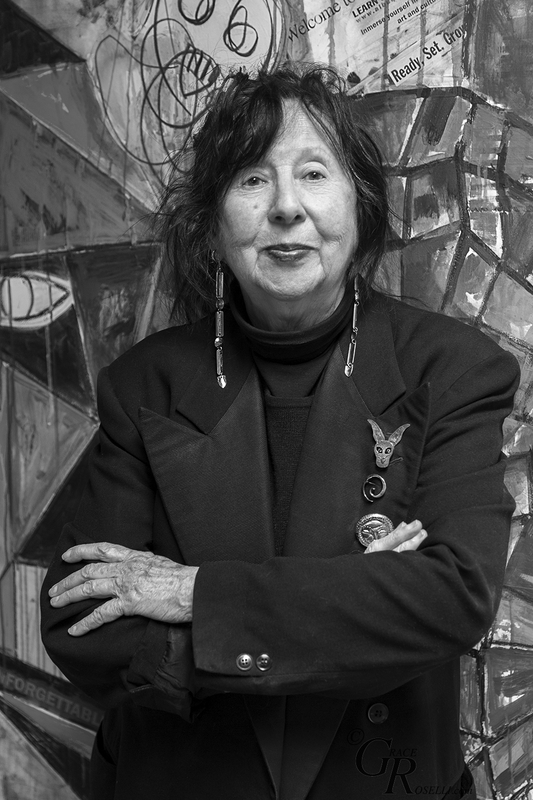
A big exhibition at the Zimmerli Art Museum at Rutgers University through Dec. 21 was organized by the artist Jaune Quick-to-See Smith, who died in January just days before the opening. She had wanted to start the equivalent of a Whitney Biennial that would gauge the breadth of contemporary Indigenous work. Her exhibit, “Indigenous Identities: Here, Now & Always,” included high-profile artists Nicholas Galanin, Brad Kahlhamer, and Cara Romero, with artists not as well known, for a show so important it was named one of the Best of the Year by the New York Times.
Santa Fe’s SWAIA Indian Market had a stellar year, with Regina Free taking home Best in Show for her bison sculpture; and hundreds of top Native artists selling out their booths around the Plaza.
BOOKS: Cooking up beaver and coyote tales top the lists
Sioux Chef Sean Sherman dished up a cookbook that is more of a history lesson with stories of Indigenous foods in 13 regions of the country. “Turtle Island: Foods and Traditions of the Indigenous Peoples of North America” finds Sherman going deep and wide with wildly imaginative recipes and the back story of who ate what where. There are 150 dishes here with lush photography and an explanation for why food is never just something to eat.

In a tribute to her dual Mexican and Prairie Band Potawatomi heritage, award-winning chef Pyet De Spain released her first book that shines light on the diversity of food, the stories, traditions, culture, and philosophies of Indigenous people. “Rooted in Fire: A Celebration of Native American and Mexican Cooking” is from the Next Level Chef-winner who wowed the judges with her love of her dual heritage. This collection of mouth-watering recipes cooks up a vibrant fusion tied to the land and made Amazon’s list for Best Books of the Year.
Julian Brave Noisecat followed up his Oscar-nominated documentary “Sugarcane” with a book, “We Survived the Night,” the deeper story of his journey through boarding schools, abuse, a father saved from the incinerator, fractured families, and how coyote howls through it all. It’s a daringly deep dive that spans generations of damning secrets and ultimate acceptance.
FASHION: From corn husk dresses to global collectives
To support the wildly growing Indigenous fashion industry, several groups have stepped up to address the bigger issues of the business, such as production, sustainability, distribution, and fair pay.
International Indigenous Fashion Council is a nonprofit, Indigenous-led global network of chapters, sectors, and founding partners, built to stand shoulder-to-shoulder with existing fashion councils, labor organizations, and brands while creating space for Indigenous governance, standards, and fair work. Started by Dante Biss Grayson of Sky Eagle Collections, he has already amassed chapters in almost every country to support each other.
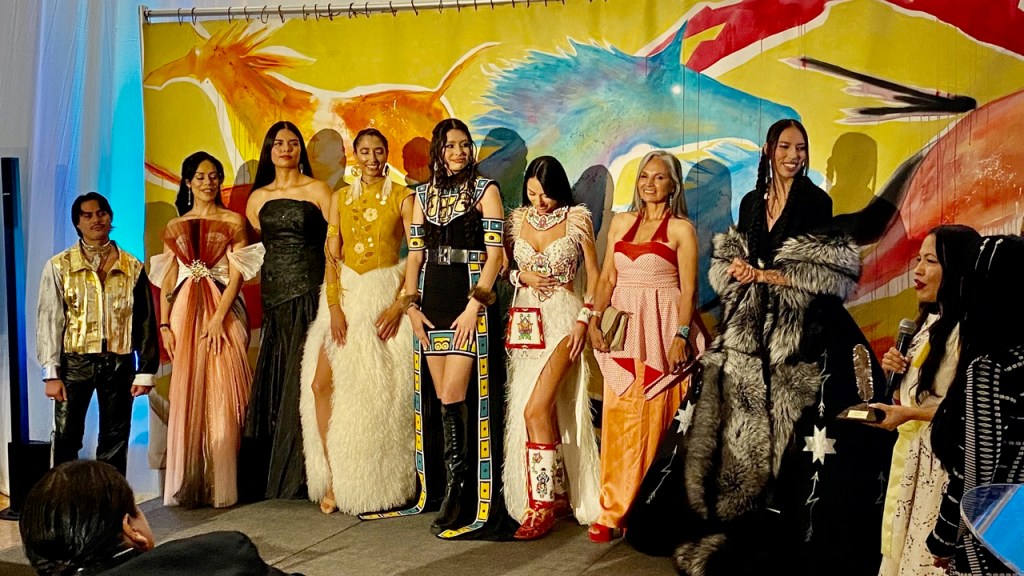
Another ambitious group, the Indigenous Fashion Collective, or IFC, is inspired by the rich heritage and contemporary innovations of Indigenous cultures worldwide. The group provides a platform dedicated to the promotion, preservation, and advancement of Indigenous fashion. They have held several high-profile events at Volume Studios in LA and a recent gala at the Autry Museum of the American West that featured Taboo of the Black-Eyed Peas, Quannah Chasinghorse, Kiowa Gordon of “Dark Winds,” PJ Vegas, D’Pharoah Woon A Tai, and dozens of models and top Native designers. A dinner by Sean Sherman preceded an award show and an uplifting speech by founder Sarah Eagle Heart, and co-founders include Twila True and Lillian Sparks Robinson. Also at the Autry is a show “Future Imaginaries: Indigenous Art, Fashion, Technology,” up through June 2026 and curated by Amber Dawn Bear Robe.
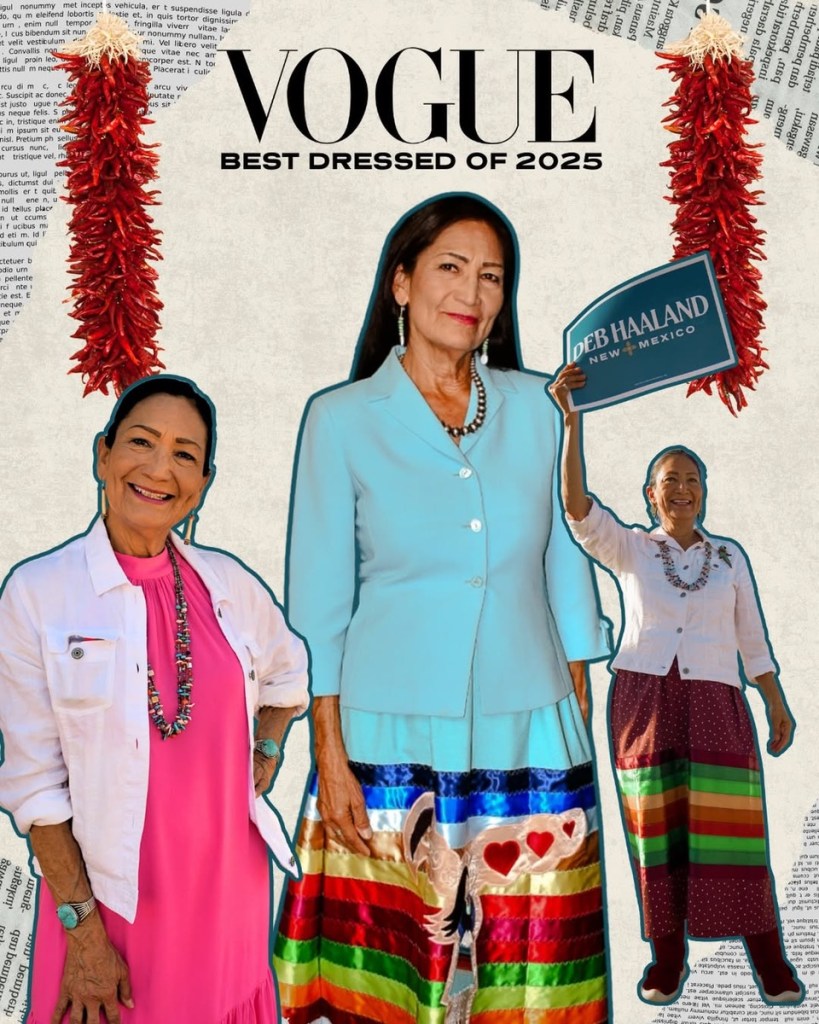
The second Native Fashion Week in Sante Fe had two simultaneous shows going down, including one at the convention center produced by SWAIA with runway shows, panel discussions, industry networking events, pop-up shops, and activation spaces. A new partnership with Vancouver Indigenous Fashion Week produced knockout runway shows with dancers and singers, celebrity models – actress singer Kahara Hodges, Gene Brave Rock, Tantoo Cardinal – and a standing ovation turn from former Secretary of the Interior Deb Haaland wearing Patricia Michaels who was named one of the Best Dressed People of 2025 from Vogue Magazine who said she “routinely sports colorful ribbon skirts, beaded earrings, and traditional moccasins, highlighting some of the Indigenous community’s top artisans along the way.”
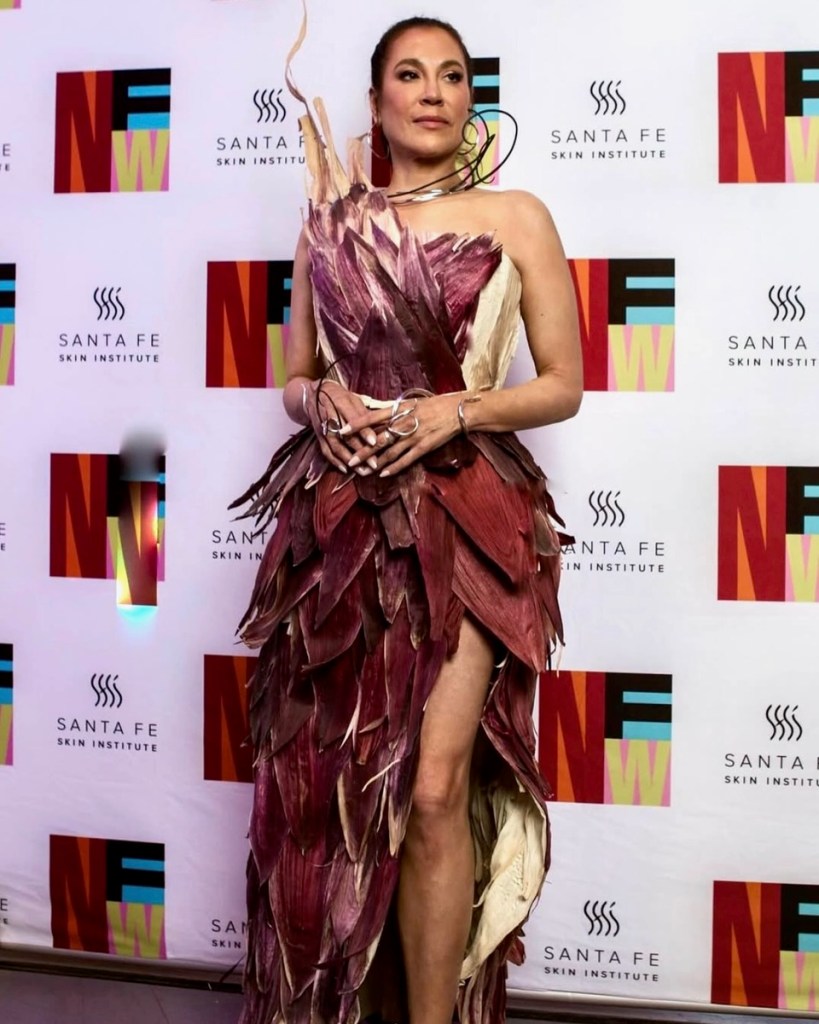
The other group of shows produced by Amber Dawn Bear Robe were held at the Farmers Market with vendors and panels, then shows at a nearby space where edgy shows that found skateboarders and rappers on the runway were attended by Zahn McClarnon and his “Ride” buddy Norman Reedus. Panels with Vogue’s writer Christian Allaire and designer Jamie Okuma added to the glam. There were fashion-themed films at the Sky Cinemas theater.
Standout designers this year were Jason Baerg and his blue horsehair earrings, Lauren Good Day with her gorgeous floral designs, Tierra Alysia of VIVIDUS, who made a winning silver fox fur cape, Jontay Kahm, a master craftsman who uses beads and ribbons, Pamela Baker’s intricate designs, Adrian Stevens and Sean Snyder, who take menswear to stylish heights, and Wabanoonkwe’s super dressy dresses, to name a few.
MUSIC: Soundtracks, TV shows and musical success in Japan
Genevieve Gros-Louis is carving out an unusual and successful career as a violinist/composer whose soundtracks graced the Emmy-nominated season 12 of “Life Below Zero” (National Geographic); “Rez Comedy” (Tubi/Amazon Prime); “A Savage Art” on illustrator Pat Oliphant (Magnolia Pictures); “Guardian of the Land” (Oregon Public Broadcasting/PBS); and the award-winning “Courage” (FNX). She performs her haunting, lush instrumentals at venues across the US and Canada both solo and with dancers, always wearing a stylish Indigenous dress, jewelry, and moccasins.
Mato Wayuhi was all over media, producing the soundtrack for “Free Leonard Peltier,” now nominated for an International Documentary Association Award; appearing in Sterlin Harjo’s masterful “The Lowdown”; and releasing a new CD, “Bygoner.” And he’s only 28.
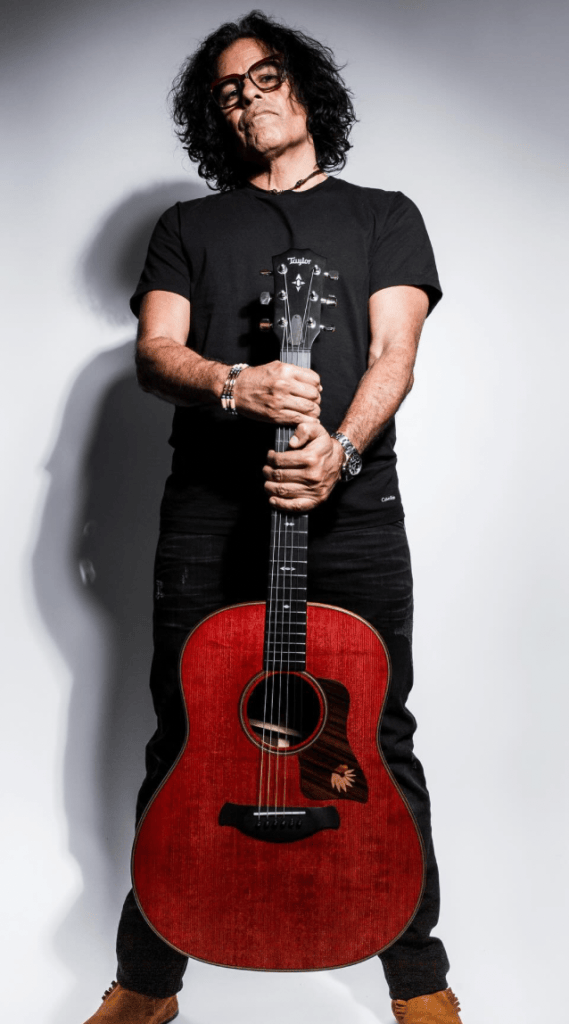
Stevie Salas, Apache, has had a big year – his “Boil Alert” film, about a tribe’s struggle for clean water, is hitting theaters. As part of the group Inaba Salas, fronted by Japanese singer Koshi Inaba, they put out a new album, “Atomic Chihuahua,” and did a tour titled “Never Goodbye Only Hello” that had astounding success, including a No. 1 record and sold-out tour, and they made the cover of “Rolling Stone Japan” (actually two covers, one in black, one in white).

